

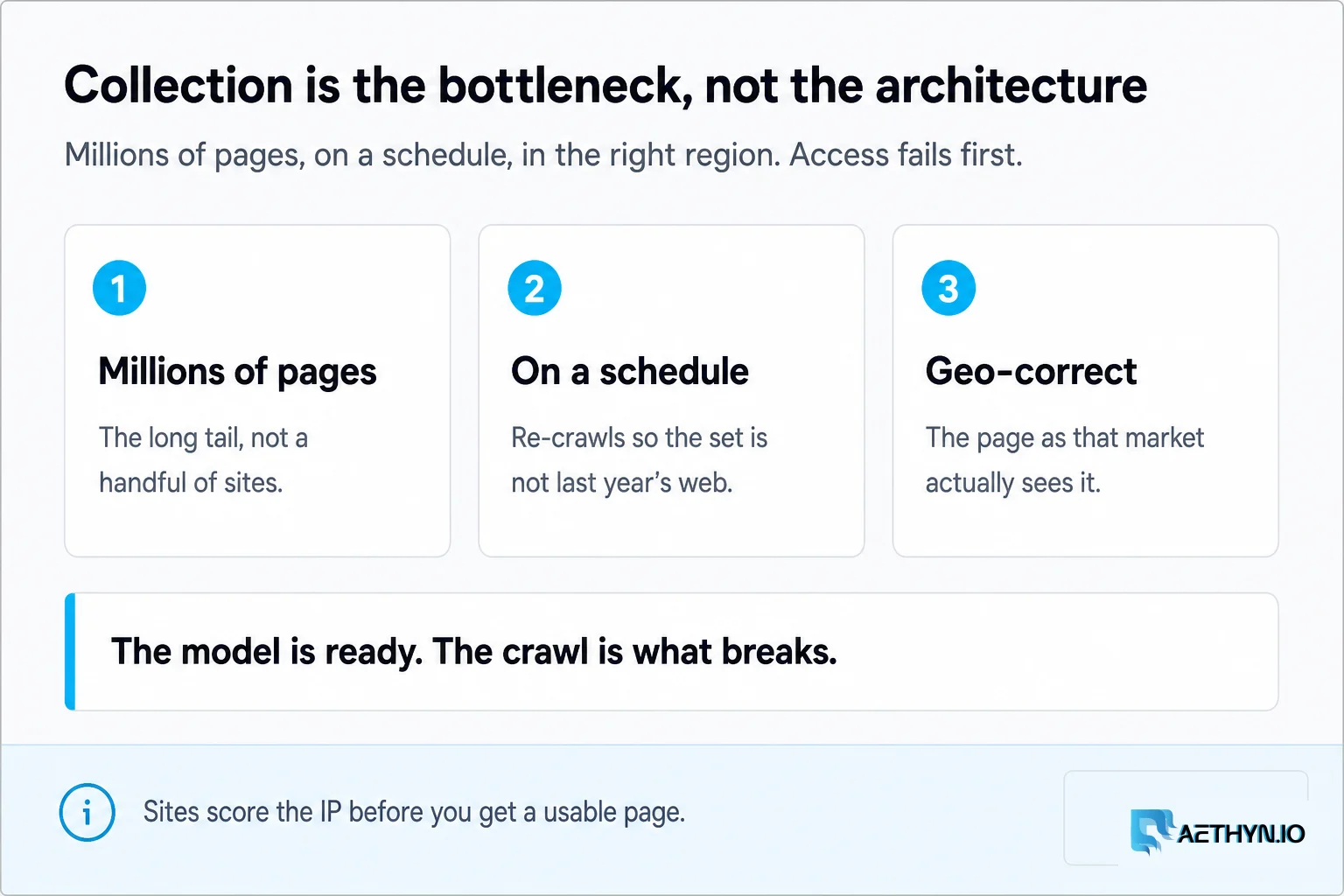
Every AI model is a compression of the data it was trained on. The frontier labs figured out the architectures years ago — the durable advantage now is data: broader, cleaner, more current, more representative of the real web than the next team's. And the wall almost every team hits is not model training. It is collection.
At the scale a modern dataset demands — millions of pages, refreshed on a schedule, across every region and language you care about — the open web stops behaving like it does in a browser. Sites score the IP behind every request, throttle anything that looks automated, and quietly serve stripped-down "bot" versions of pages to traffic they don't trust. A crawl that works on your laptop collapses the moment you point real volume at it.
This is the playbook for keeping that pipeline fed: why datacenter IPs fail at AI scale, where residential proxies fit, how to architect the collection layer, what it costs, and how to do it responsibly.
Why AI data collection is a bandwidth-and-access problem
Training and fine-tuning have an appetite that ordinary scraping never had. A price-monitoring job hits a few hundred product pages an hour. A dataset pipeline for an LLM or a vision model wants:
- Breadth — the long tail of the web, not the top 1,000 sites, so the model sees rare formats and edge cases.
- Freshness — re-crawls on a cadence so the model isn't frozen in last year's world.
- Diversity — the same source as it appears in different countries, languages, and locales.
- Volume — enough raw material that after dedup, filtering, and quality gates, what survives is still large.
Each of those multiplies the number of requests and the bytes per request. And every one of those requests passes through an adversary — the target's anti-bot layer — that is actively trying to tell your collector apart from a human.
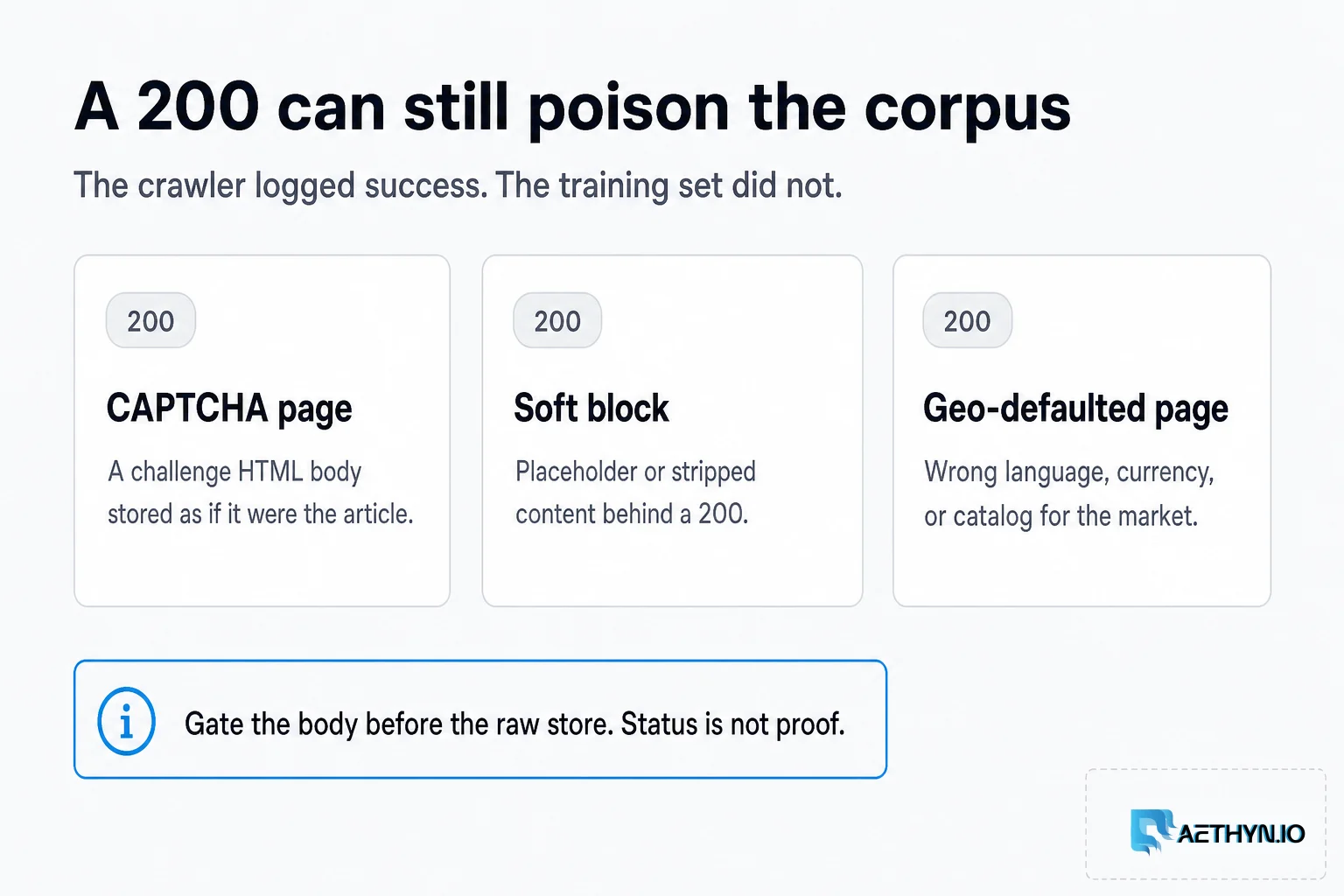
[!IMPORTANT] The dataset you think you collected and the one you actually collected can differ silently. A blocked request that returns a CAPTCHA page, a soft-blocked 200 with placeholder content, or a geo-defaulted page all look like "success" to a naive crawler. They poison the corpus. Fixing collection quality is a data-quality problem, not just an uptime problem.
Why datacenter IPs fail at AI scale
The cheapest way to start is a fleet of datacenter proxies. It is also the fastest way to a poisoned dataset. Anti-bot systems classify an incoming request on the ASN — the network that owns the IP — before they look at anything else. A datacenter or hosting ASN is presumed automated and gets one of three treatments:
- Hard block — an instant 403 or Cloudflare 1020, so the page never arrives.
- Soft block — a 200 response carrying a challenge, a login wall, or a deliberately degraded page.
- Rate collapse — the first few requests pass, then the whole subnet is throttled or banned together.
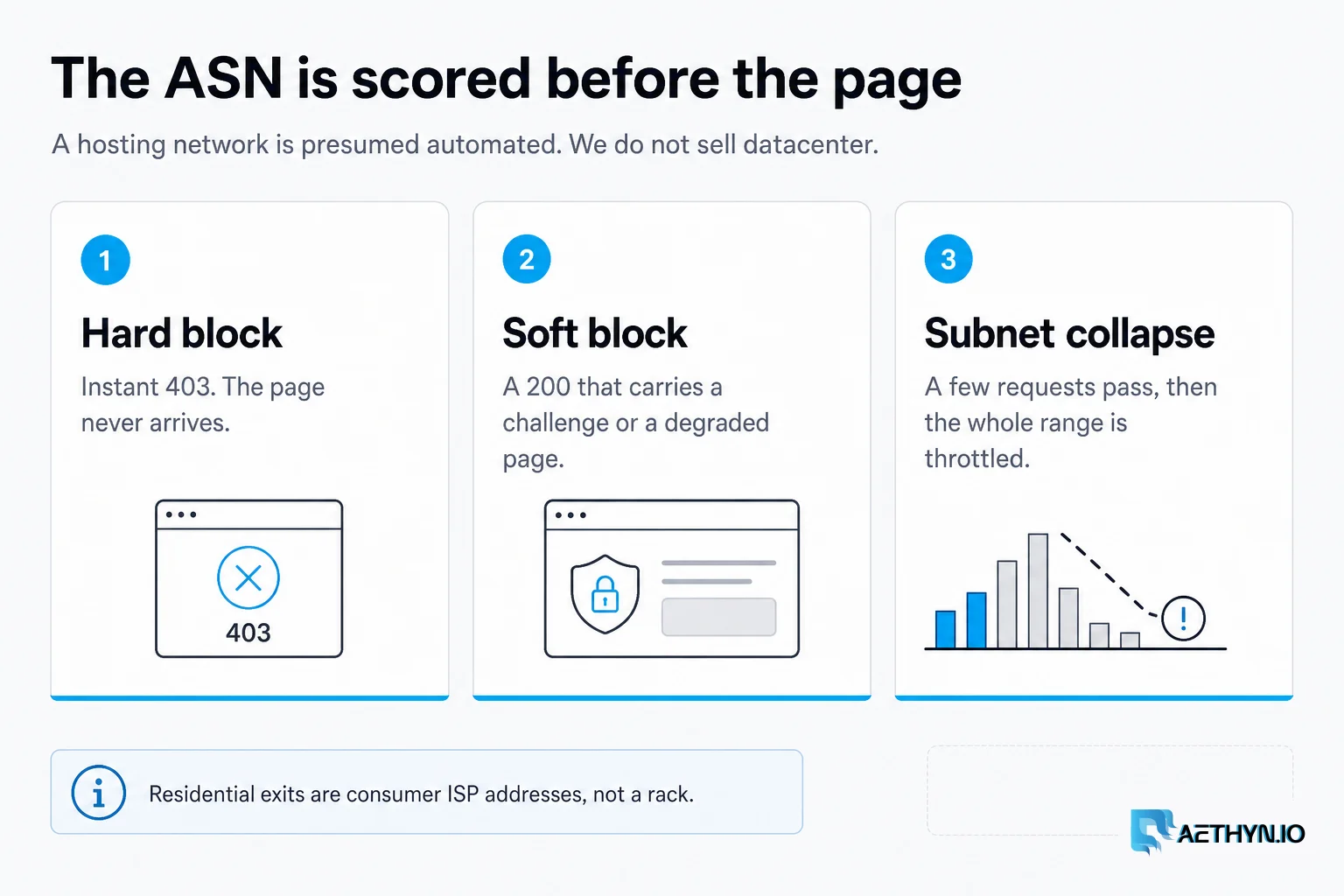
For a small job you notice and move on. For a pipeline pulling millions of pages, soft blocks are the real danger: they enter your dataset as if they were content. See the mechanics in residential vs datacenter proxies and the block modes in how to fix HTTP 403 & 429 when scraping.
Where residential proxies fit
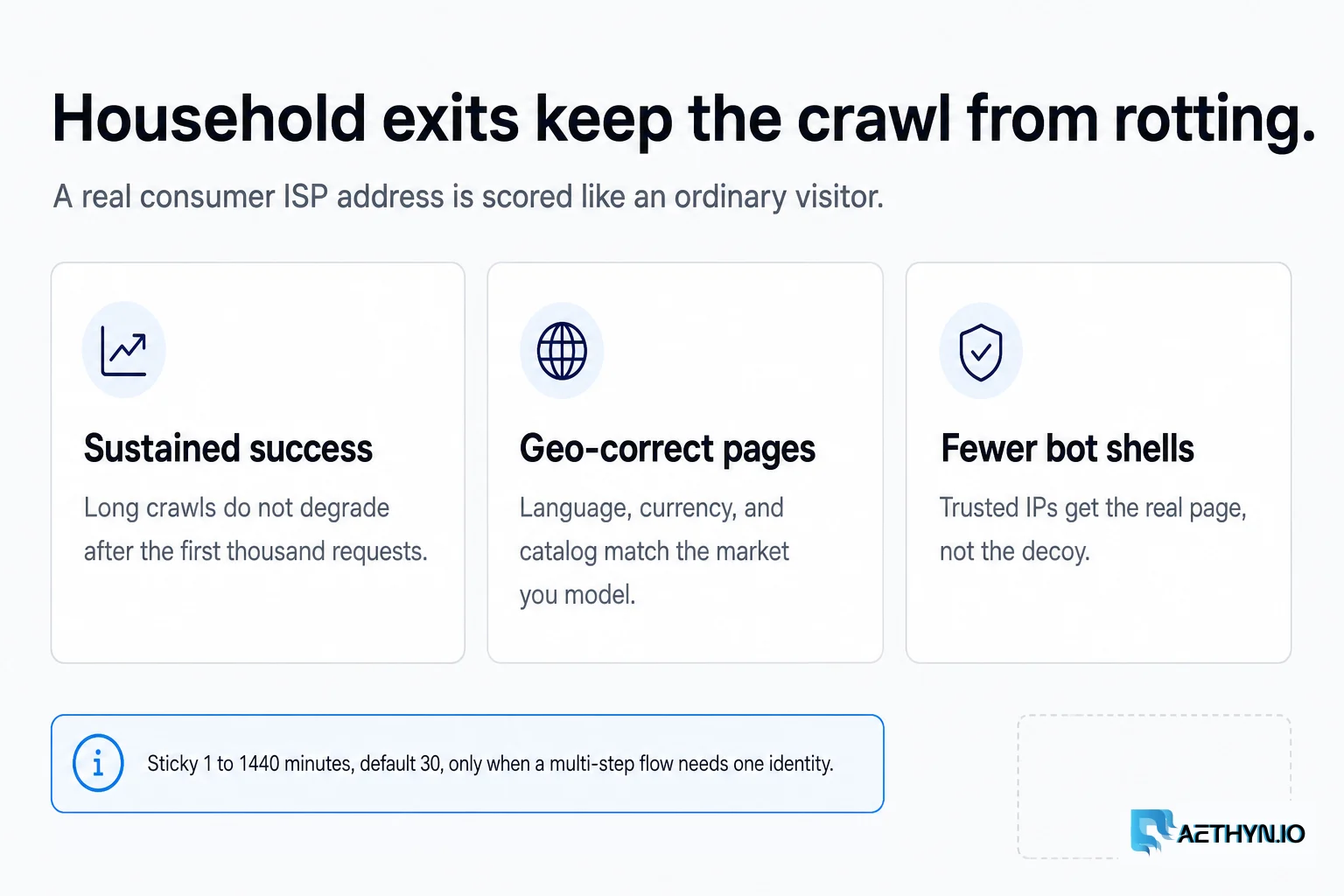
A residential proxy routes your request through a real consumer ISP address, so the target scores it like an ordinary visitor rather than a server in a rack. For AI data collection that buys three things that directly affect dataset quality:
- Sustained success on long crawls. Real-user reputation means the crawl doesn't degrade after the first thousand requests, so a scheduled re-crawl finishes with the coverage you planned for.
- Region-correct data via geo-targeting. Collect a page as it renders in Berlin, São Paulo, or Tokyo — correct language, currency, and catalog — instead of one default locale. For multilingual and multi-market models this is the difference between representative data and a monoculture.
- Fewer poisoned samples. Trusted IPs get the real page, not the bot version, so less garbage reaches your filtering stage.
[!TIP] Pro Tip: Treat success rate as a per-source metric, not a global one. A pipeline can show 95% overall while one high-value domain quietly fails at 60% and starves the model of exactly the data you wanted most. Alert on per-domain drops.
A reference architecture for the collection layer
A resilient AI collection pipeline separates concerns so the proxy layer is a swappable component, not something welded into your crawler logic.
[ URL frontier ] -> [ Fetcher workers ] -> [ Proxy layer (Aethyn) ] -> [ Target sites ]
                                    |
                                    v
                        [ Validation + quality gate ]
                                    |
                                    v
                    [ Raw store ] -> [ Dedup / filter ] -> [ Training set ]
Key decisions at the proxy layer:
| Concern | Recommendation |
|---|---|
| Rotation | Fresh IP per request for stateless page fetches |
| Sessions | Sticky session only for multi-step flows (login, pagination tokens) |
| Concurrency | Start 3–5 workers per domain; scale per-domain, not globally |
| Geo | Set country-xx (and city where needed) to match the market you're modeling |
| Backoff | Exponential + jitter on 429; honor Retry-After |
| Caching | Content-hash pages; never re-fetch unchanged URLs |
Rotation and session control live in the proxy username — see the targeting reference — so your crawler code stays clean. Getting the first request working takes about a minute with Python Requests + Aethyn; for JS-heavy sources drive a real browser via Playwright so your TLS fingerprint matches a mainstream browser.
Once the shape works, the scaling patterns in scaling web scraping with residential proxies — centralized retry policy, per-domain pass-rate tracking, worker isolation by target difficulty — carry directly over to dataset pipelines.
A minimal rotating fetcher
Code Snippetimport requests

# Rotating residential endpoint: a fresh exit IP per request.
proxies = {
    "http": "http://USER:PASS@proxy.aethyn.io:2099",
    "https": "http://USER:PASS@proxy.aethyn.io:2099",
}

def collect(url):
    r = requests.get(url, proxies=proxies, timeout=30)
    r.raise_for_status()
    # Validate BEFORE storing — a 200 is not proof of real content.
    if "captcha" in r.text.lower() or len(r.text) < 500:
        raise ValueError(f"Soft block or empty page: {url}")
    return r.text
The validation step is the part teams skip and regret. A 200 status is not proof of usable content — gate every response before it reaches the raw store.
Text, images, and video: plan for bandwidth
Because residential proxies are billed per gigabyte, cost tracks bytes, and data types differ by orders of magnitude:
| Data type | Relative weight | Notes |
|---|---|---|
| HTML / text | Lightest | Cheap per page; volume is the driver |
| Images | Medium–heavy | Collect at the resolution you'll actually train on, not full-res |
| Audio | Heavy | Consider sampling rather than exhaustive pulls |
| Video | Heaviest | Budget deliberately; fetch segments, not whole libraries |
Estimate cost the boring way: take a real sample run, measure average bytes per item, multiply by target volume, and convert to GB. If a provider can't give you a clean per-GB number without a sales call, you can't forecast a dataset budget — which is a reason to be cautious.
Premium vs Elite for AI workloads
| Source profile | Pool |
|---|---|
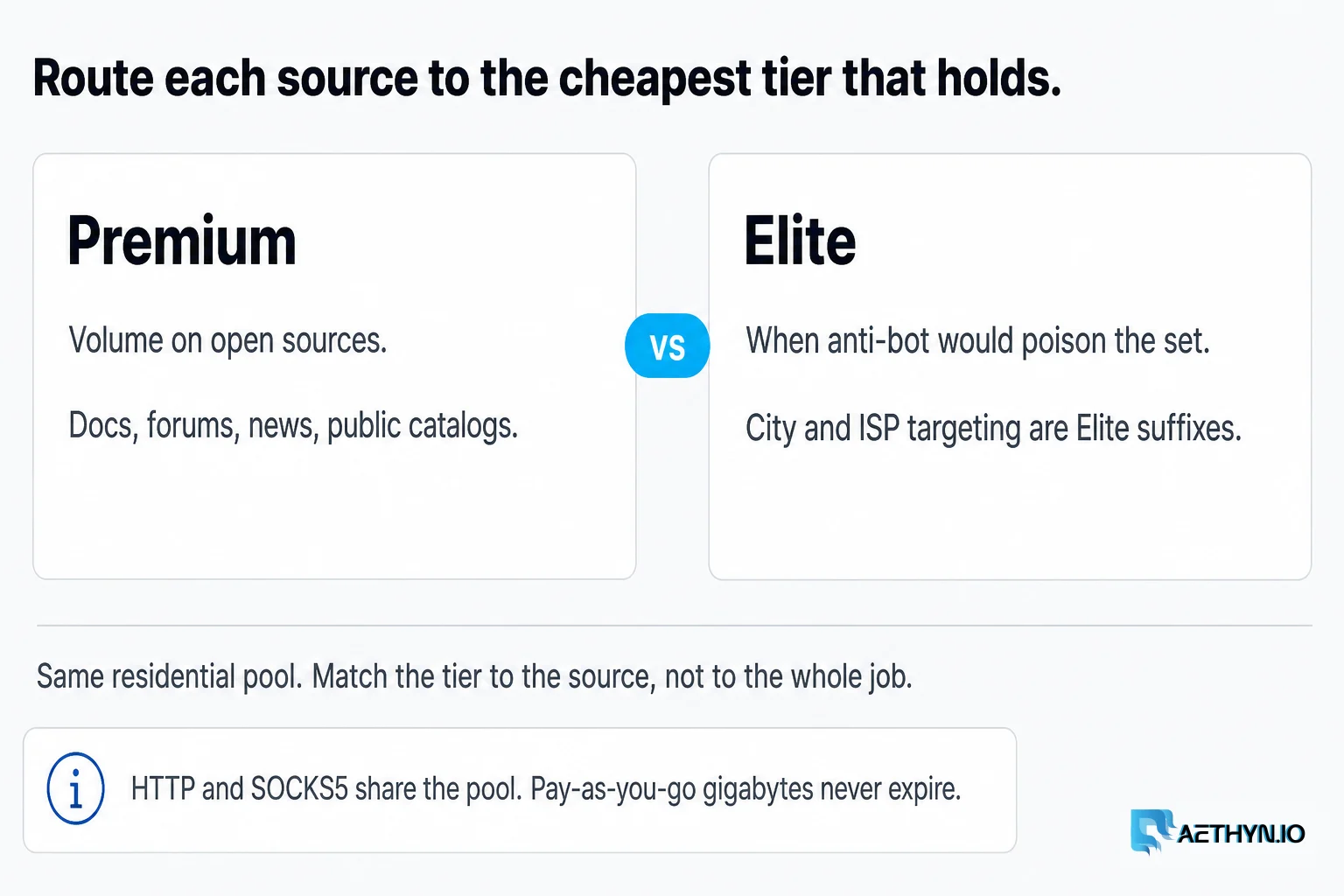
| Docs, forums, news, open catalogs, public datasets | Premium (€2.00/GB) |
| Major retail, social platforms, fintech, Cloudflare Bot Management | Elite (€4.50/GB) |
| Mixed pipeline | Route each source through the cheapest tier that sustains its success rate |
The senior move is not "buy the best tier for everything." It is to measure success rate per source and let each domain settle at the cheapest pool that holds. Premium residential carries the bulk; Elite residential earns its premium only on the hard sources that would otherwise poison your data.
Collect responsibly — it protects the dataset too
Ethics here is not a footnote; it is a data-governance requirement that increasingly shows up in model audits and licensing due diligence.
- Respect robots.txt and terms of service. They define what a site considers acceptable collection.
- Stay on public data. Do not circumvent authentication, paywalls, or access controls. Residential proxies are for accessing the open web like a real user — not for defeating security on systems you shouldn't touch.
- Minimize personal data. Collect only what your task needs, secure it, and honor deletion where required. This matters more for training sets, which are retained and redistributed.
- Mind copyright and database rights on the content, separate from the legality of access.
- Source your IPs ethically. Malware-built "botnet" proxies expose you to legal and reputational liability. Aethyn sources from consented, KYC-verified peers who opted in, keeping the chain lawful from origin to exit.
The full framework — public vs private data, rate limiting, personal-data handling — is in web scraping legal & ethical best practices. None of this is legal advice; treat privacy and licensing review as a stage in the pipeline.
The takeaway
For AI data collection, the proxy layer is not plumbing you bolt on at the end — it is what determines whether your dataset is broad, clean, and representative, or narrow, poisoned, and stale. Datacenter IPs can't sustain it. Residential proxies, sourced with consent and matched tier-by-tier to each source, keep the pipeline feeding your models the data they actually need.
The only benchmark that matters is your own sources. Point a pool at the domains you care about and measure the success rate before you commit.
Common questions about this article
Why do AI teams need residential proxies for data collection?
Do residential proxies improve the quality of AI training data, not just the quantity?
How much bandwidth does AI data collection consume?
Should I use Premium or Elite residential proxies for AI data collection?
Is collecting web data to train AI models legal?
How do I avoid IP bans during long-running AI crawls?
Guides, integrations & docs
Continue reading
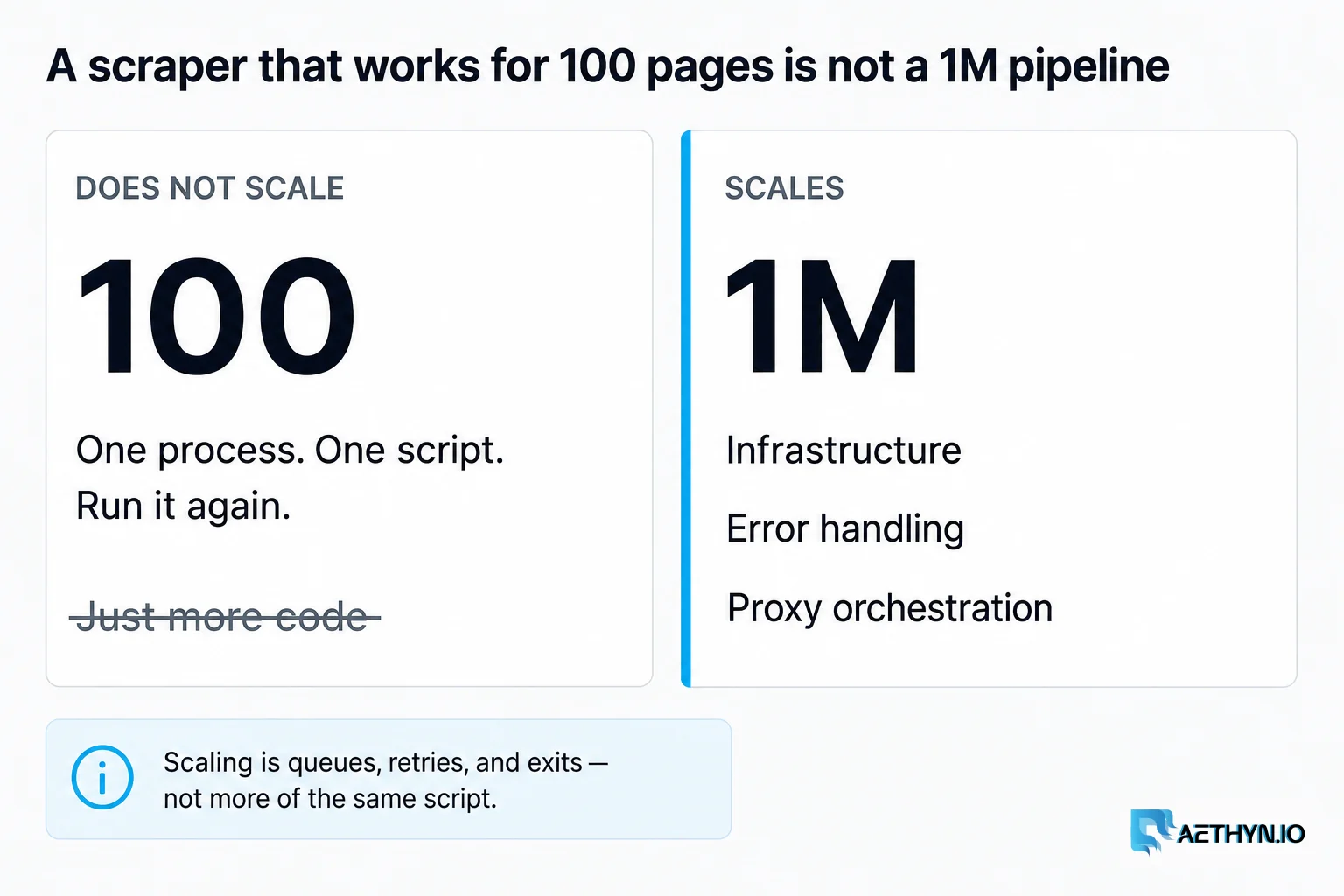
Scaling Web Scraping with Residential Proxies
Ready to go from 1,000 to 1,000,000 requests per day? Learn the architecture of a scalable scraping system.
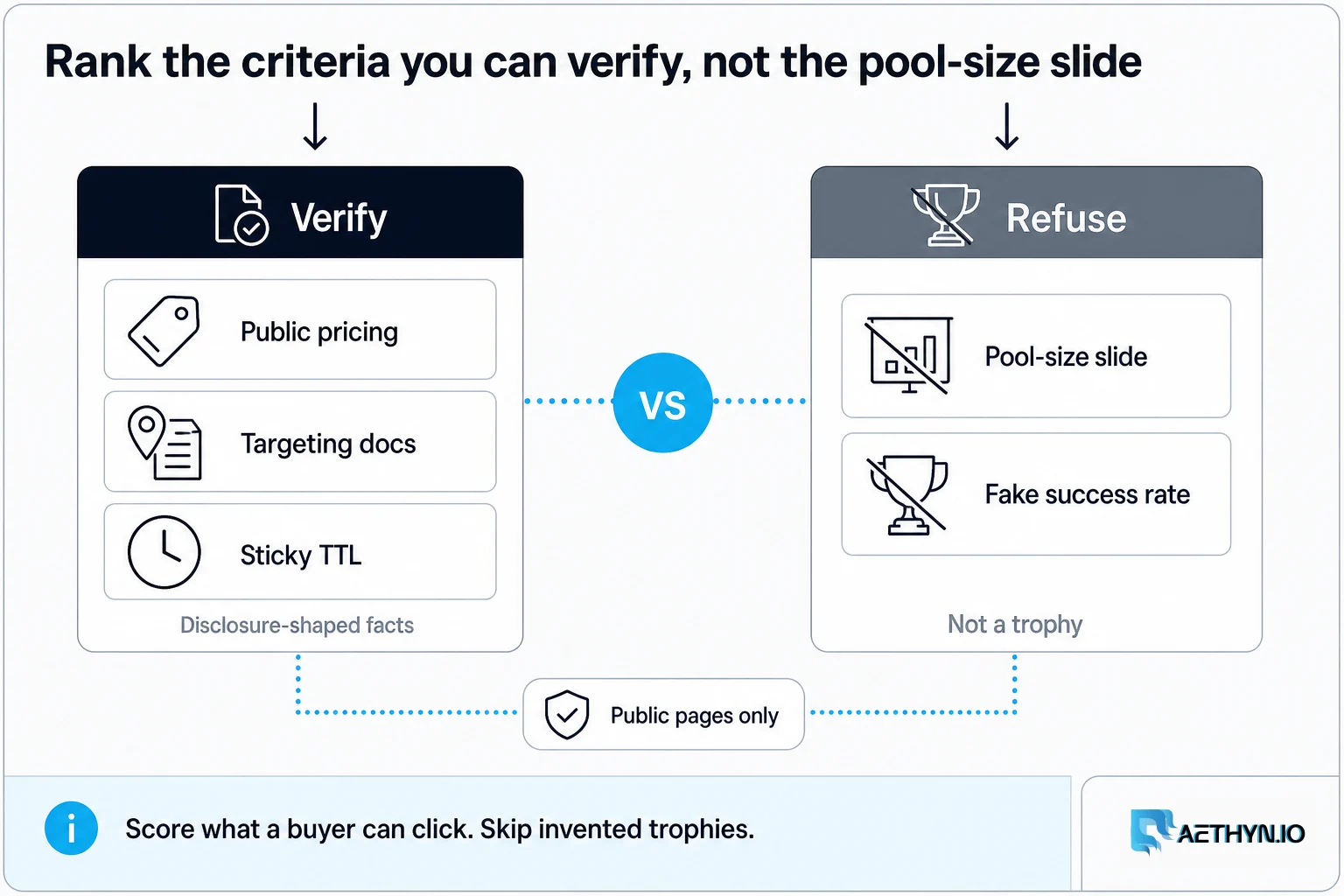
Best Residential Proxies in 2026
Nine residential proxy providers compared on published price, targeting, and self-serve signup. A short list if you want to buy residential proxies in 2026.
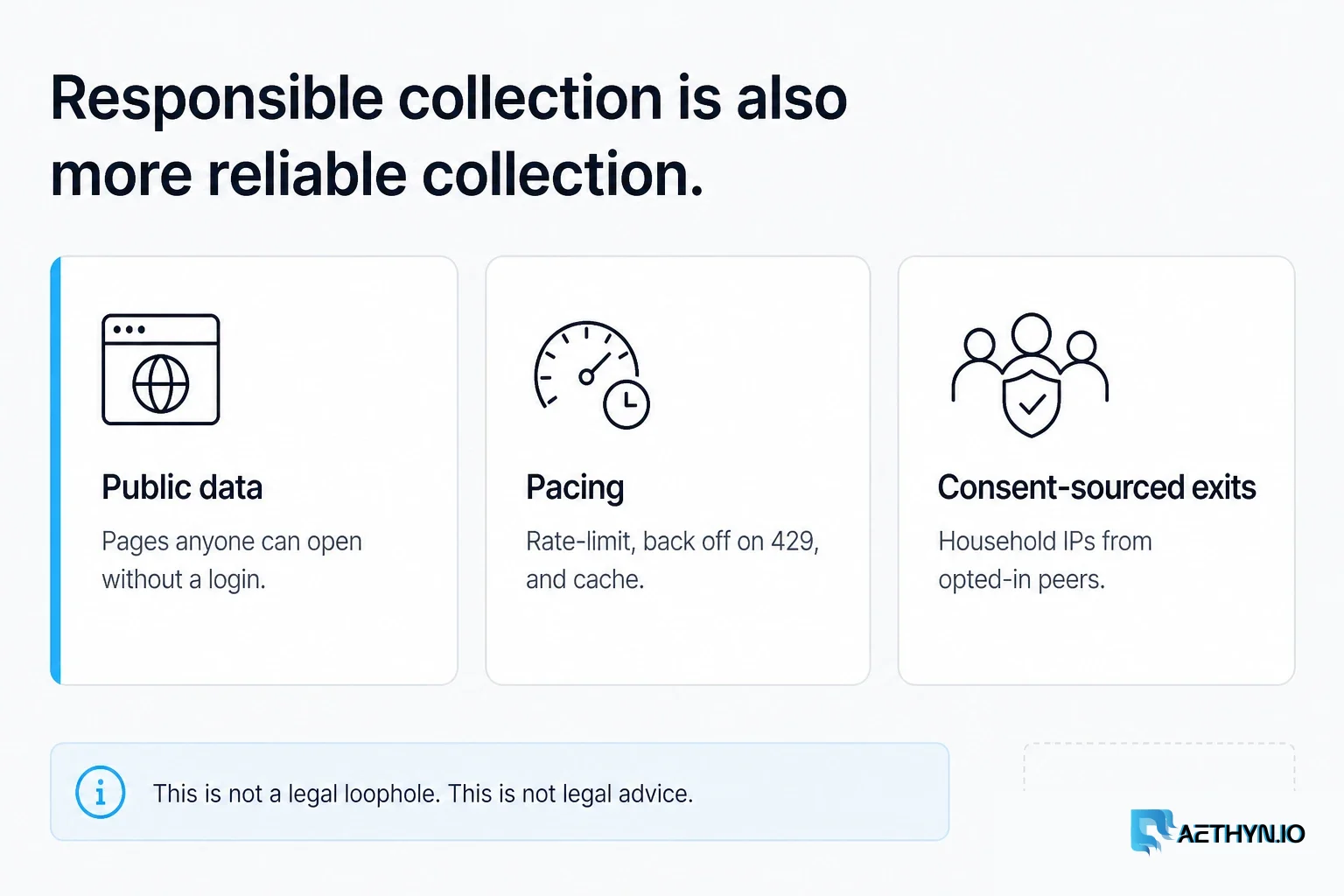
Web Scraping Legal & Ethical Best Practices (2026)
A practical guide to scraping responsibly: robots.txt, rate limiting, public vs private data, personal data, and terms of service. Not legal advice.
Feed your models data that doesn't get blocked
Point Aethyn Elite residential at your hardest sources and measure the success rate on your own pipeline. Consented sourcing, transparent per-GB pricing, and real concurrency for long crawls.