

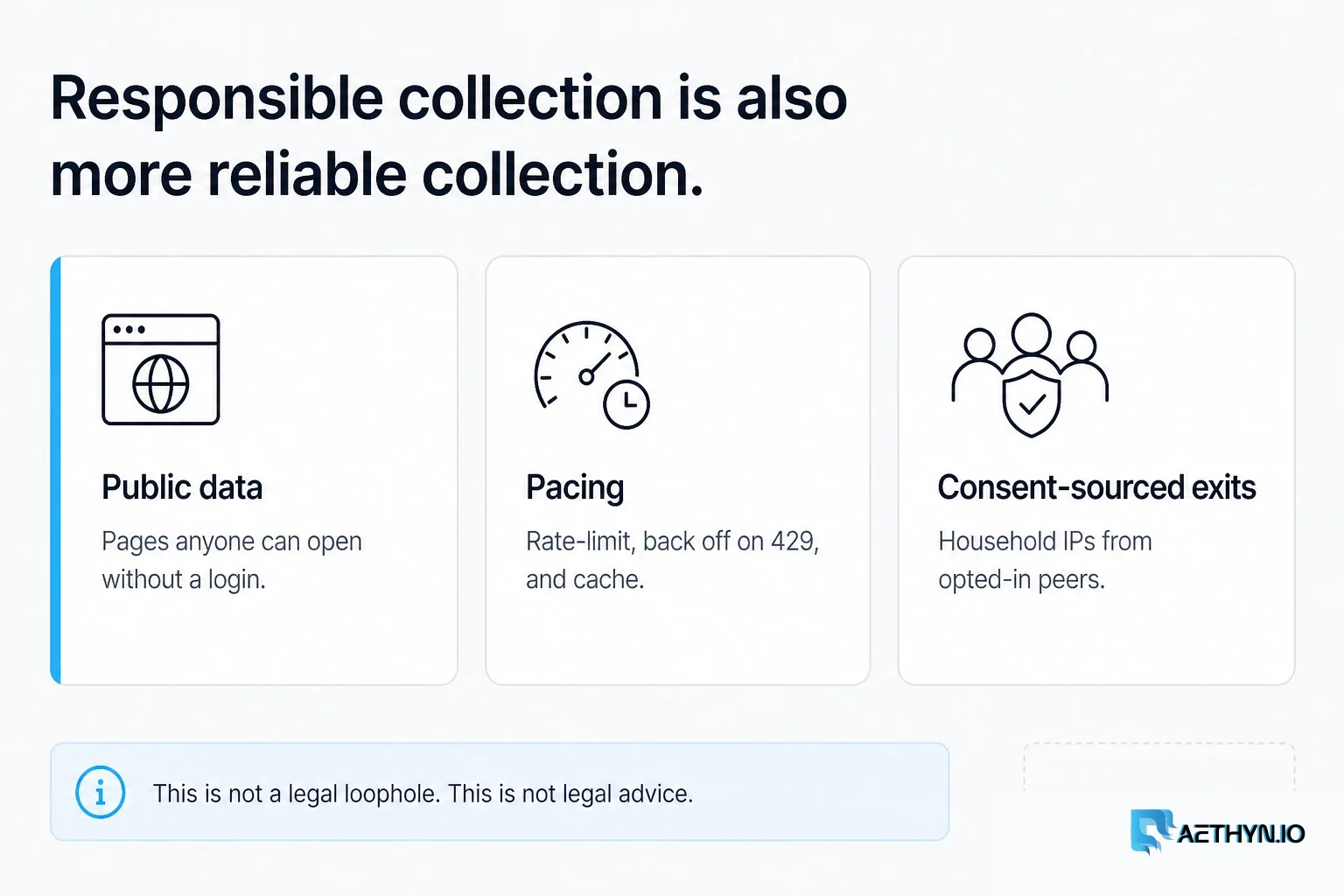
Web scraping is a legitimate, widely used technique — but doing it responsibly protects you legally, keeps target sites healthy, and improves your own success rates. This guide covers the practical principles that separate professional data collection from reckless scraping.
[!IMPORTANT] This is general information, not legal advice. Laws differ by country and change over time. Consult a qualified lawyer before relying on any scraping program, especially anything involving personal data or login-gated content.
1. Prefer public data
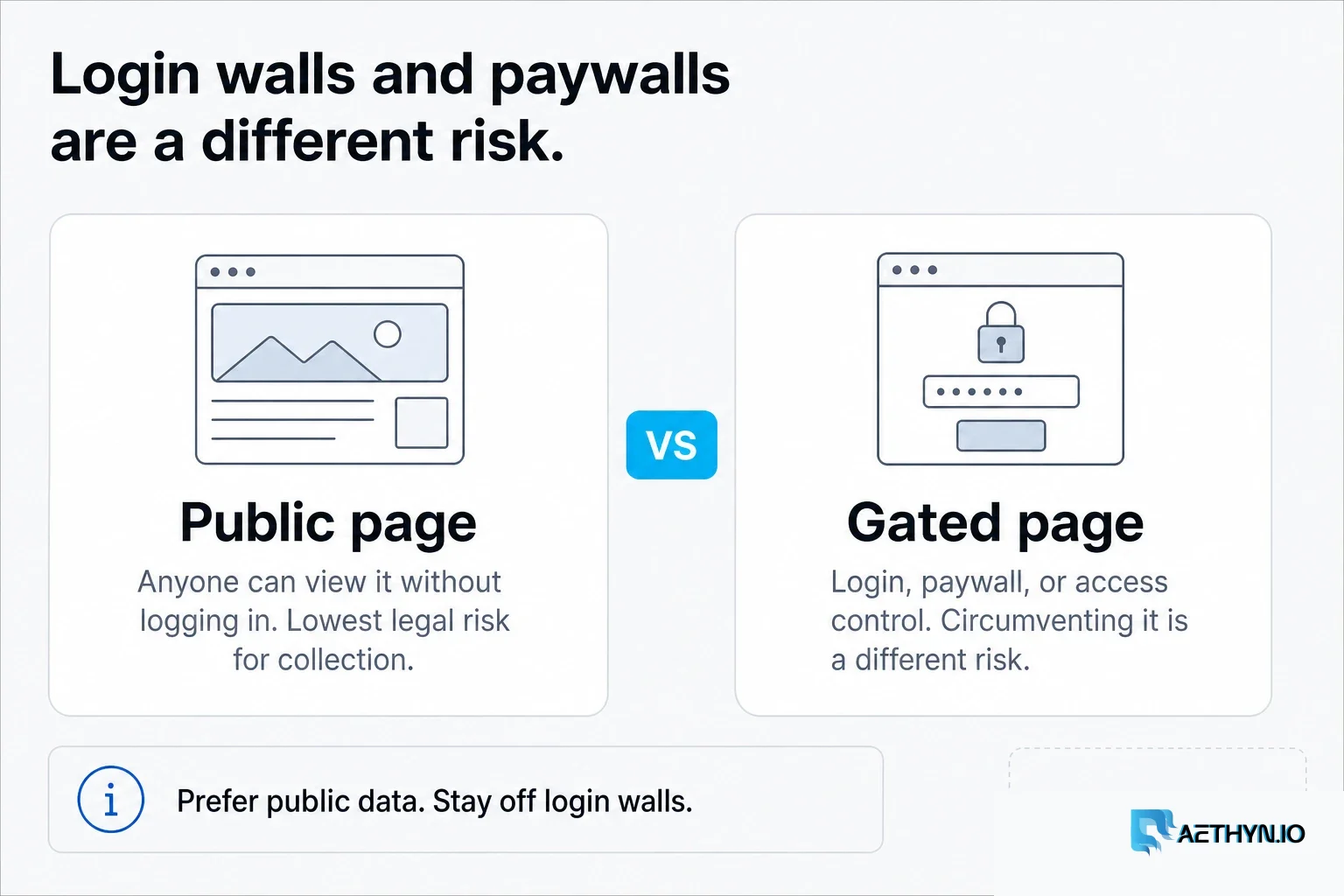
The safest scraping targets publicly available information — pages anyone can view without logging in. Data behind a login, paywall, or access control raises the risk significantly, because accessing it may breach a contract or anti-circumvention rules.
2. Respect robots.txt and terms of service
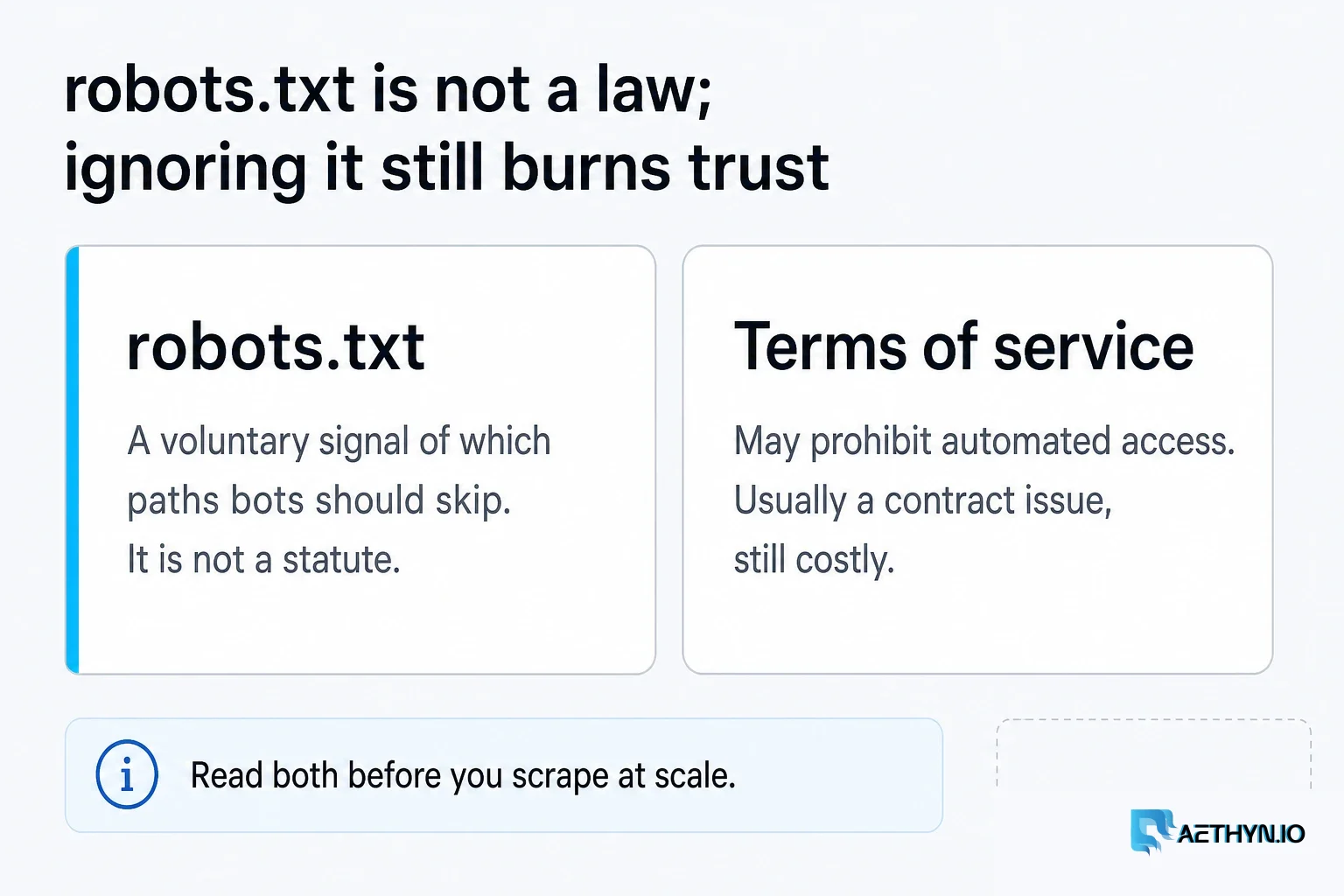
- robots.txt signals which paths a site prefers bots to avoid. It isn't a law, but respecting it is a baseline ethical practice and reduces friction.
- Terms of service may prohibit automated access. Breaching them is generally a contract issue rather than a crime, but it can still expose you to claims. Read them before scraping at scale.
3. Be gentle on infrastructure
Aggressive scraping can degrade a site for real users — which is both unethical and a fast route to a permanent block.
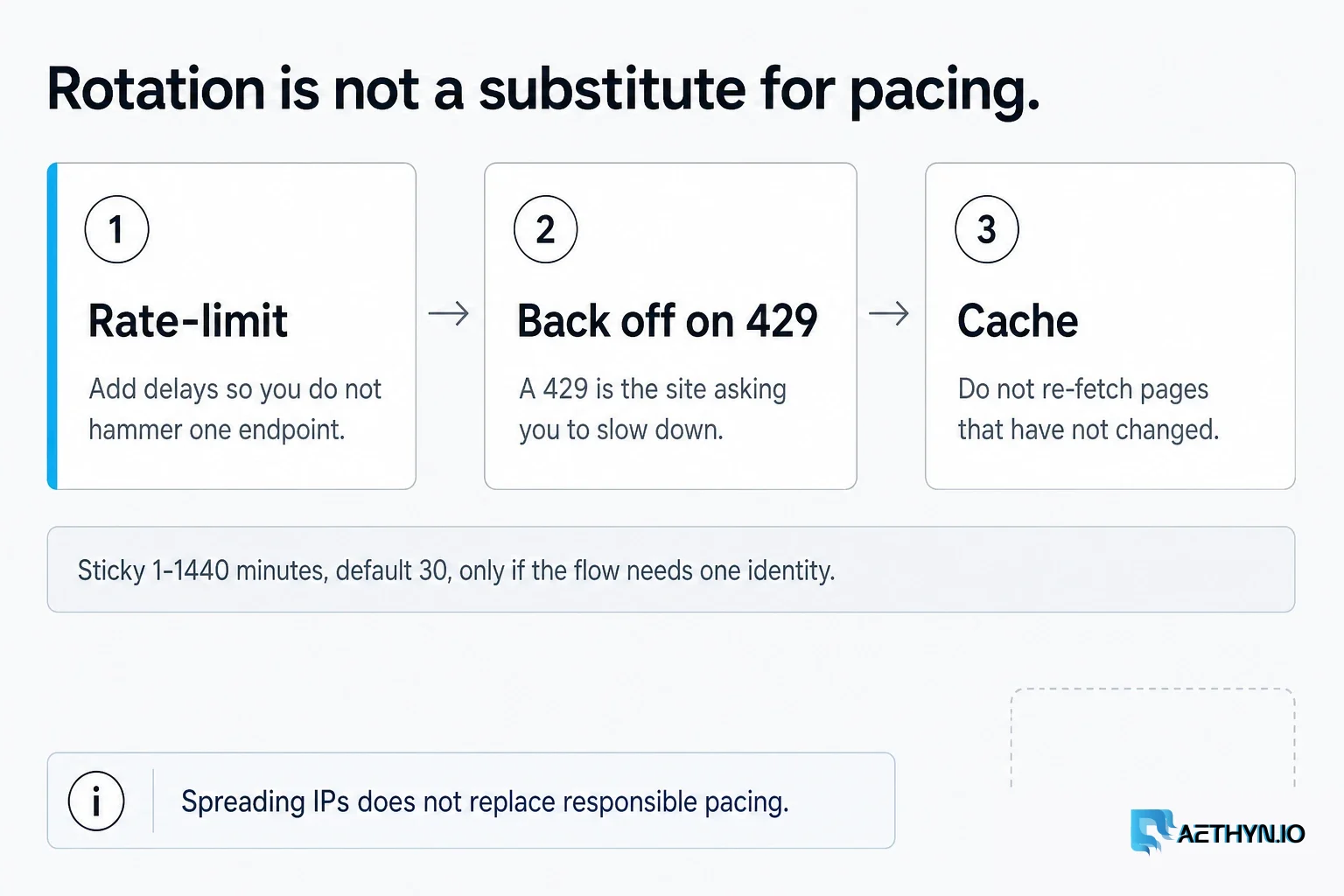
- Rate-limit your requests and add randomized delays.
- Back off when you see 429 or 503 responses.
- Cache results so you don't re-fetch unchanged pages.
- Scrape off-peak where possible.
Spreading load across rotating residential IPs helps, but it does not replace pacing. Hold a sticky session (1–1440 minutes, default 30) only if the flow needs one identity.
4. Handle personal data carefully
Collecting personal data triggers privacy laws like the GDPR and CCPA. If you scrape anything that identifies a person:
- Have a lawful basis and a clear purpose.
- Minimize what you collect.
- Secure and, where required, delete it.
When in doubt, don't collect personal data you don't strictly need.
5. Don't misrepresent or circumvent security
Avoid breaking authentication, bypassing CAPTCHAs on protected systems you have no right to access, or impersonating someone. Using residential proxies to appear as a normal user is fine for accessing public pages; using them to defeat access controls on private systems is not.
6. Identify yourself where appropriate
For lower-risk targets, a descriptive user agent and a contact method signals good faith. Some sites will even grant API access or higher limits if you ask.
Responsible scraping checklist
| Practice | Why it matters |
|---|---|
| Scrape public data | Lowest legal risk |
| Respect robots.txt | Ethical baseline, fewer blocks |
| Rate-limit & back off | Protects the target and your IPs |
| Minimize personal data | Privacy-law compliance |
| Cache aggressively | Less load, lower cost |
| Read the ToS | Avoid contract claims |
Is using a proxy itself legal?
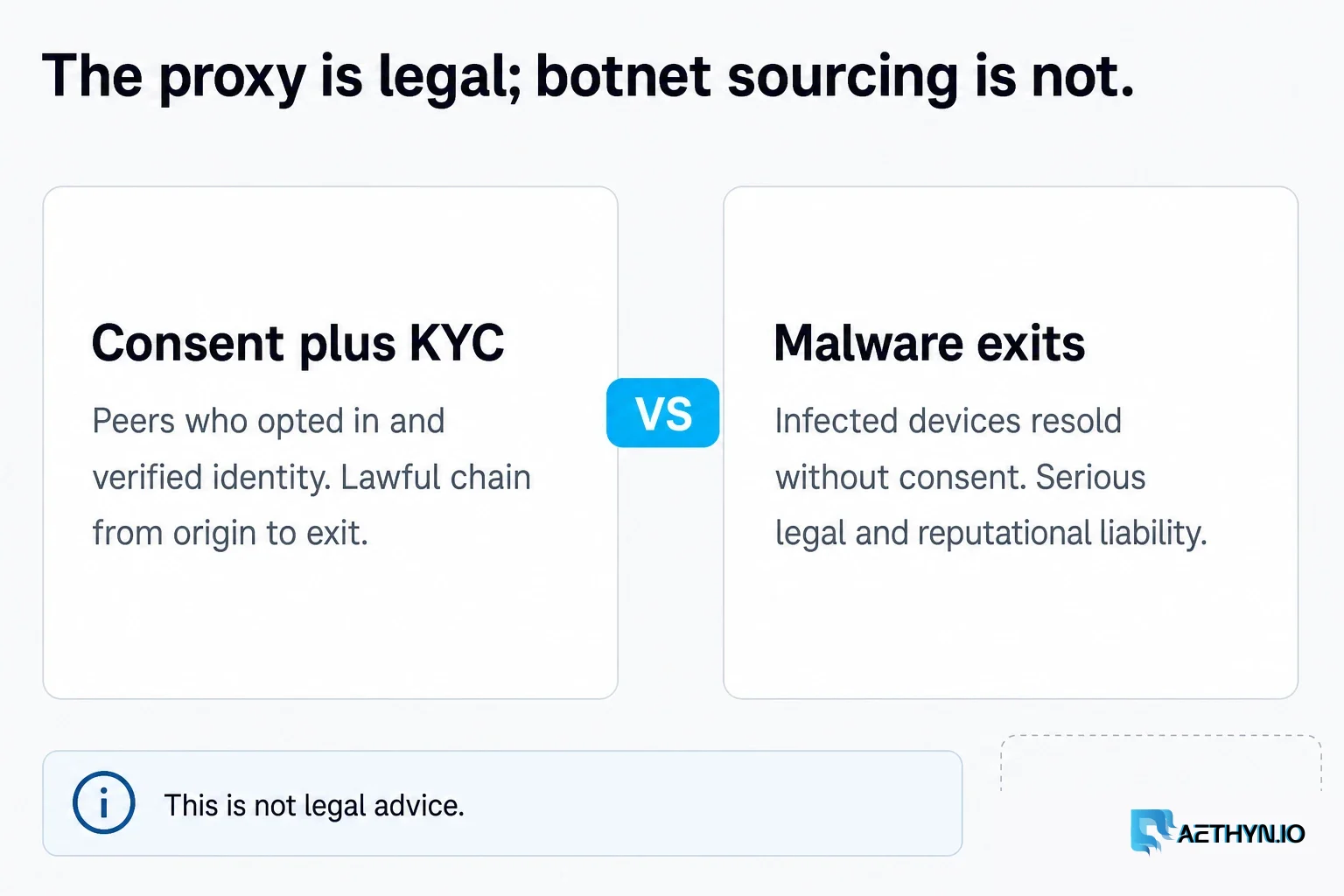
Yes. In almost all jurisdictions — including the US under the Computer Fraud and Abuse Act (CFAA) and across the EU — using a proxy is entirely legal. A proxy is just a tool for routing traffic; the legal questions are about what you do with it and where the IPs come from, not the act of masking your IP.
The real risk sits in sourcing. "Botnet" proxies are built by infecting user devices with malware so their connections can be resold without the owner's knowledge — relying on that traffic exposes you to serious legal and reputational liability. Aethyn avoids this entirely by sourcing IPs from consented, KYC-verified peers who explicitly opted into the network, keeping the whole chain lawful from origin to exit.
Where proxies fit responsibly
Residential proxies help you collect public data reliably and with accurate geo-targeting — they are a tool for accessing the open web like a real user, not a way to defeat security on systems you shouldn't touch. Aethyn sources IPs from consented, KYC-verified peers, which keeps the whole chain ethical from origin to exit.
Common questions about this article
Is web scraping legal?
Do I have to follow robots.txt?
How do I scrape without overloading a website?
Is it legal to use a residential proxy?
Does it matter how proxy IPs are sourced?
Guides, integrations & docs
Continue reading
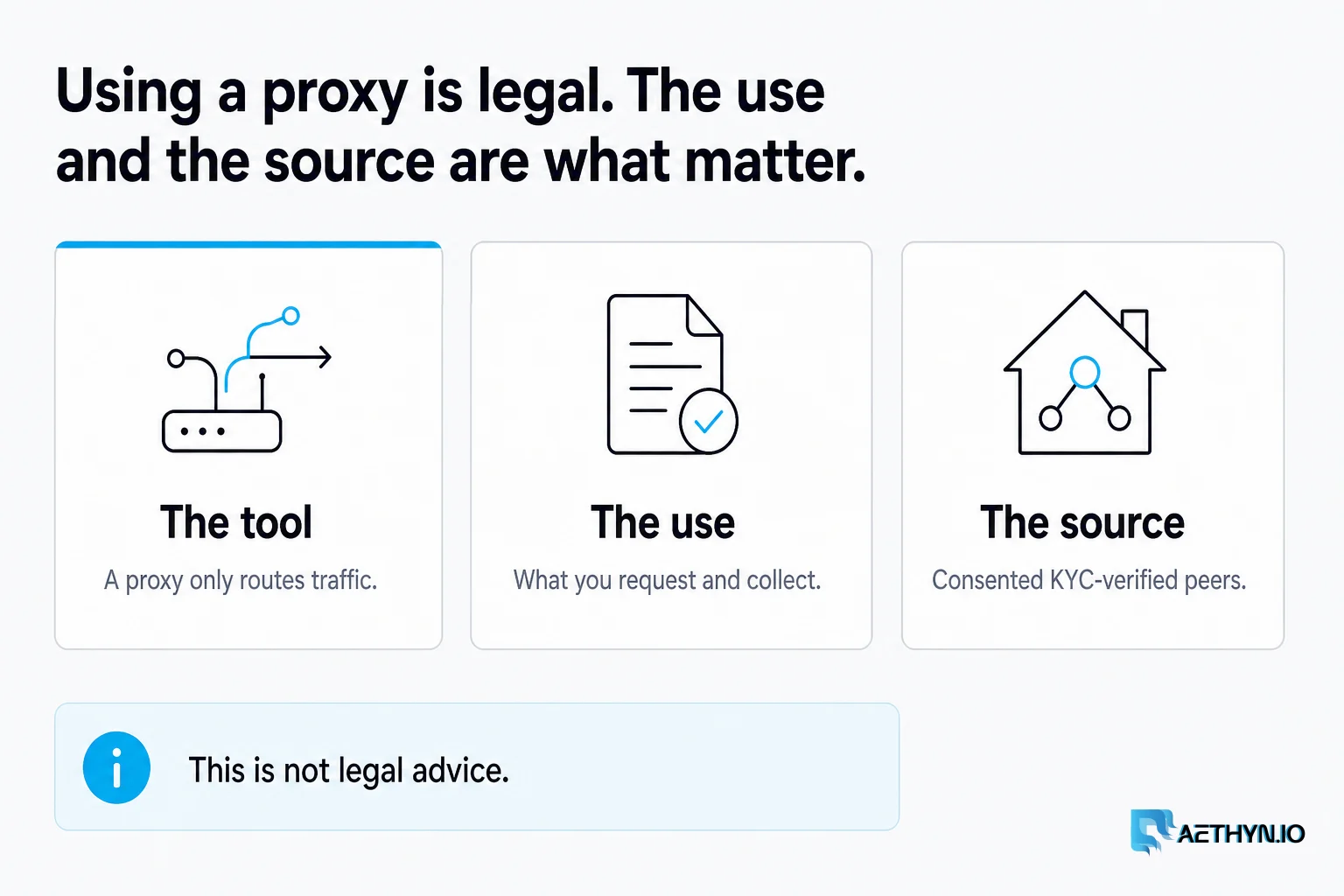
Are Residential Proxies Legal? Everything You Need to Know
Navigating the legal landscape of proxy usage. We break down the laws, terms of service, and ethical considerations for 2026.
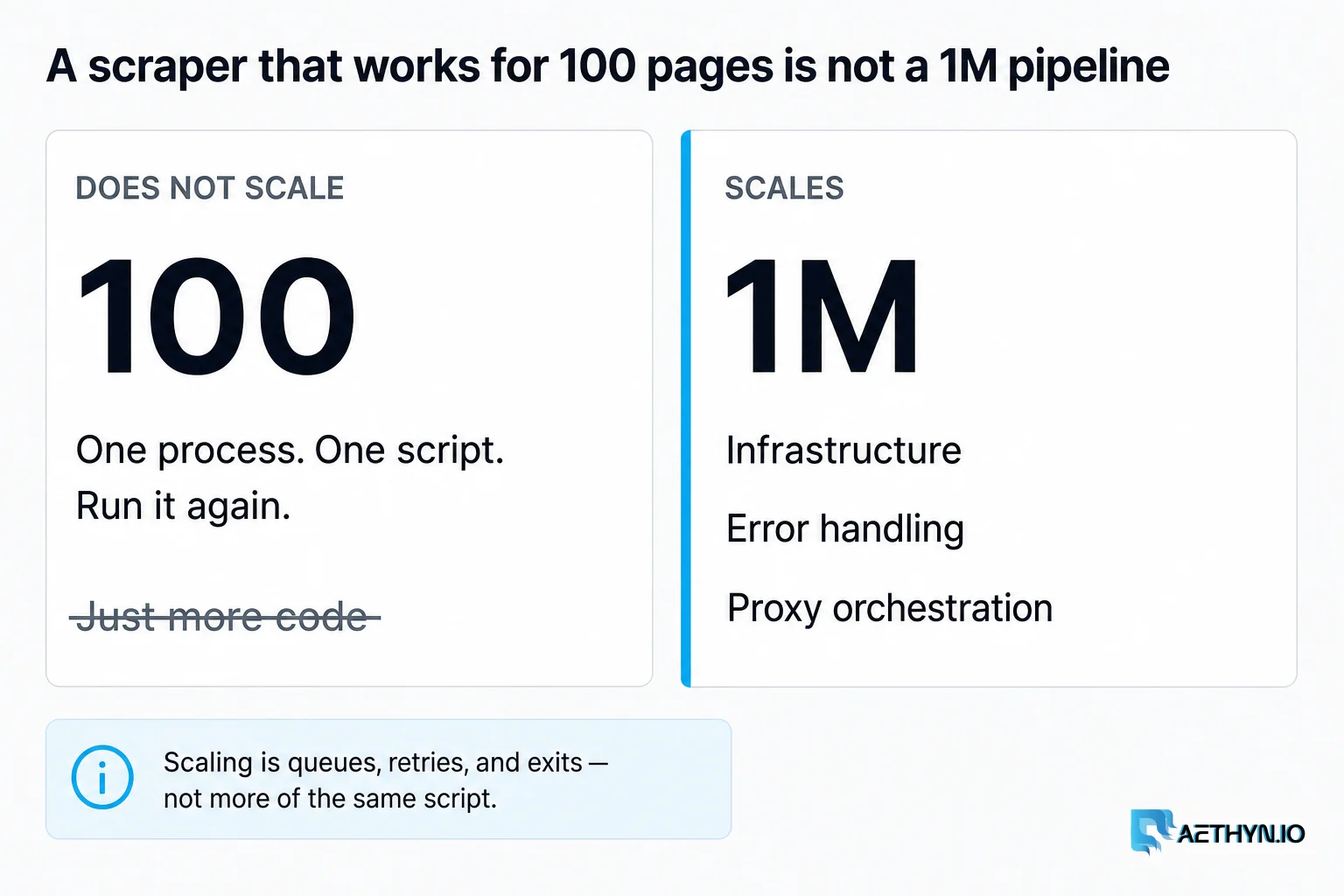
Scaling Web Scraping with Residential Proxies
Ready to go from 1,000 to 1,000,000 requests per day? Learn the architecture of a scalable scraping system.
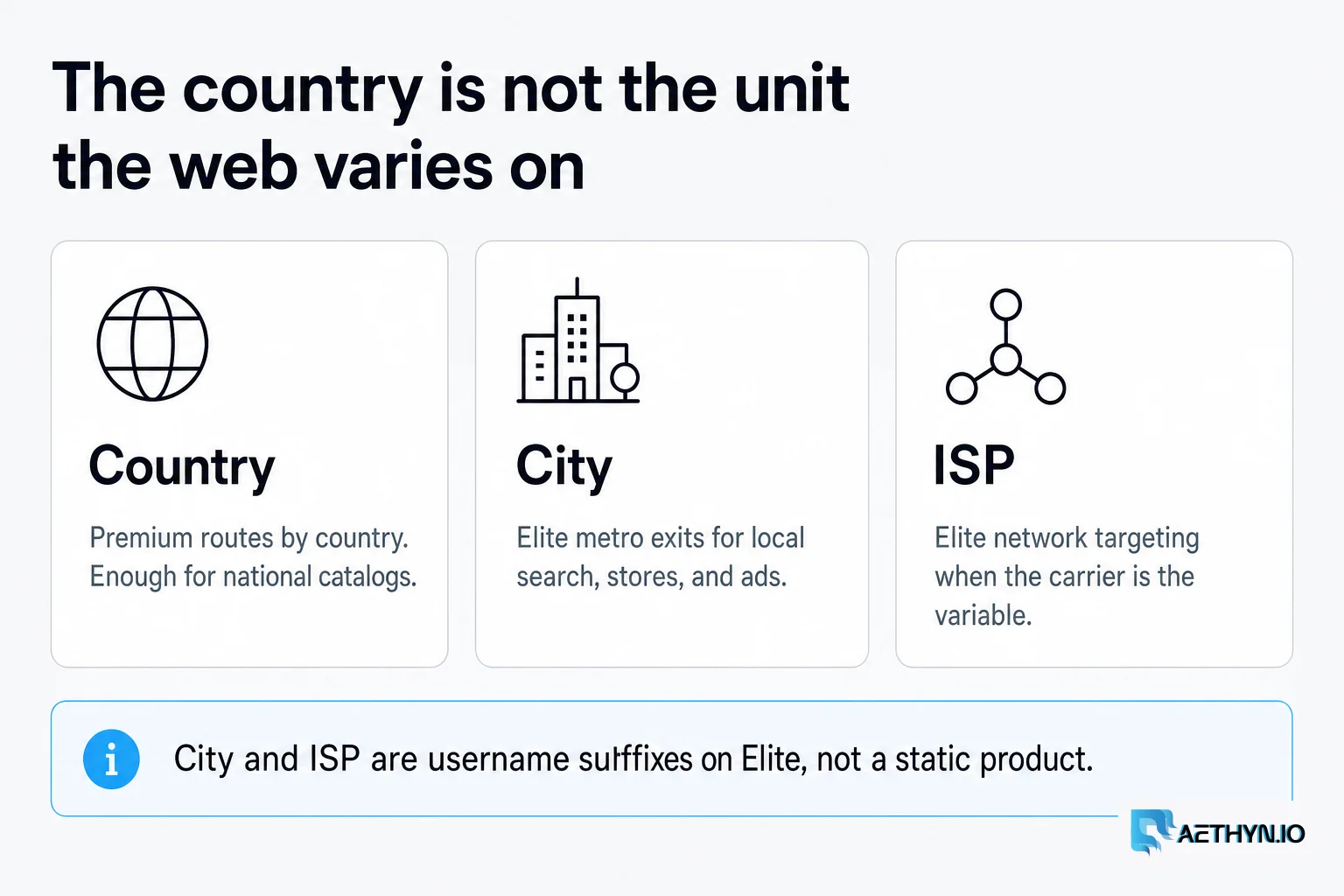
Country-Level Targeting Isn't Enough: City and ISP Proxies Explained
Country targeting fails silently. The page renders, the price parses, the row lands in your warehouse — describing a market nobody sells into. Here's when you need city or ISP granularity, when you don't, and how to prove the exit landed where you asked.
Premium or Elite residential proxies
Join developers scaling scraping and automation with Aethyn Premium and Elite pools from €2.00/GB.