

A residential proxy benchmark sends the same requests through a provider's residential exits and records three things: whether the target returned the page, how long that took, and whether the response was a block. ProxyVero runs that test on a shared script. It states that rankings are not for sale, and that affiliate links do not change how success, latency, or traffic are measured. The method is How we test.
From 24 to 26 September 2026, Aethyn recorded 100% success and a 0% block rate across 75 residential requests, 15 on each of five targets. Average latency was 1,254 ms. P95 latency was 2,325 ms. Timeouts were zero. The figures below match the benchmark page as of 26 September 2026, 03:33 UTC.
ProxyVero publishes three pages for Aethyn:
- Benchmark: https://www.proxyvero.com/benchmarks/aethyn/
Benchmark results
| Target | Success | Avg. latency | Requests | Block rate |
|---|---|---|---|---|
| Google search | 100.0% | 545 ms | 15 | 0.0% |
| Instagram profile | 100.0% | 1,000 ms | 15 | 0.0% |
| TikTok profile | 100.0% | 1,002 ms | 15 | 0.0% |
| Nike product page | 100.0% | 1,767 ms | 15 | 0.0% |
| Amazon product page | 100.0% | 1,956 ms | 15 | 0.0% |
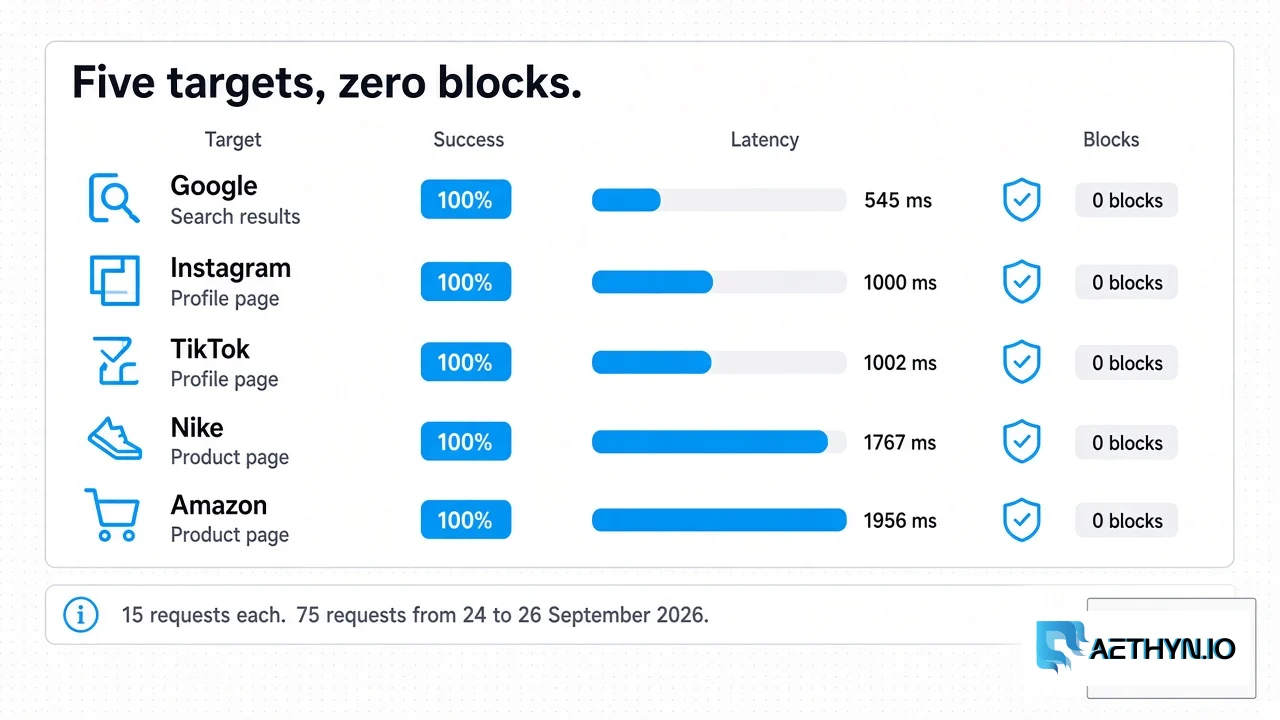
Google is a US results page for "best running shoes". Instagram and TikTok are profile pages. Nike and Amazon are product pages.
What Aethyn offers
Aethyn sells residential proxies in two pools on one gateway. The port selects the pool. Country, city, ISP, and session length sit in the username. Premium is the country-level pool, €2.90/GB at entry and €2.00/GB from 90 GB. Elite adds city and ISP targeting, €6.50/GB at entry and €4.50/GB from 90 GB. Pay-as-you-go is 10% above the subscription rate at the same volume, and those gigabytes do not expire. The full ladder is on pricing.
The ProxyVero Score, as a snapshot
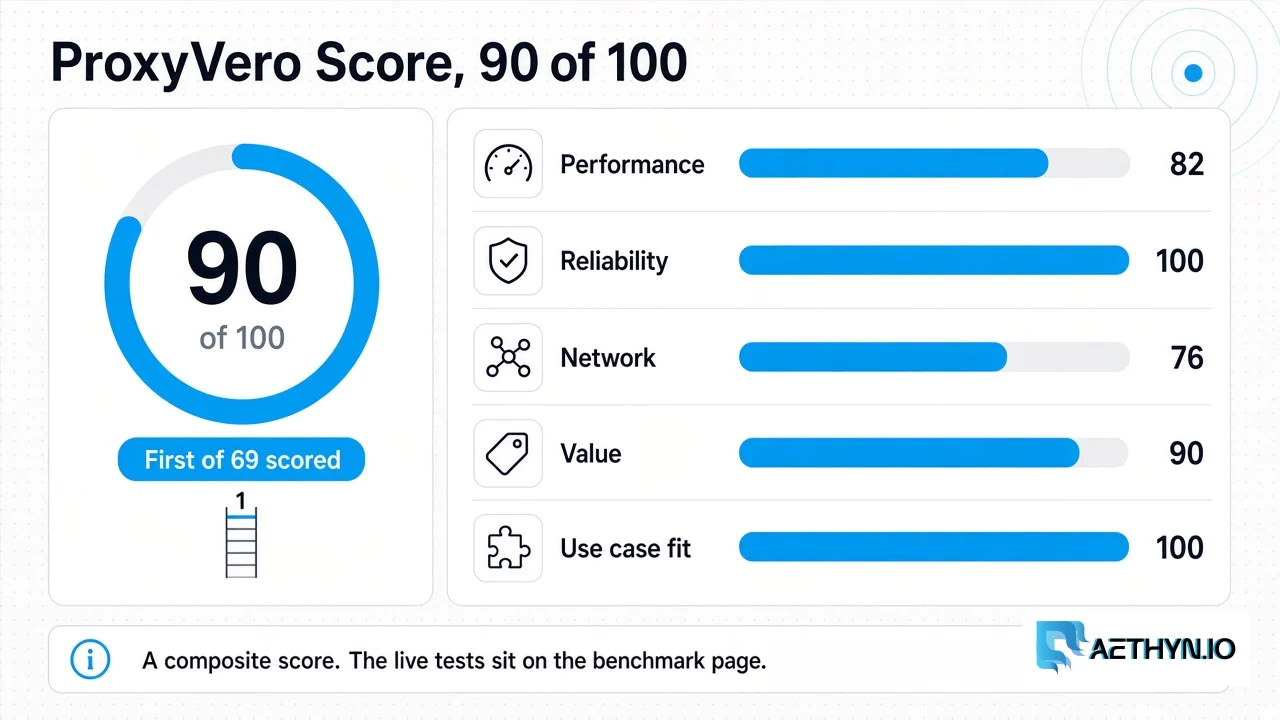
A ProxyVero Score is a 0–100 composite on the profile, built from five pillars. It is a different number from the success rates above.
On 26 September 2026 that score was 90/100. At the time of this snapshot, it placed Aethyn first among 69 scored providers. The directory is live. That order is a reading of 26 September, not a permanent rank.
| Pillar | Score |
|---|---|
| Performance | 82 |
| Reliability | 100 |
| Network | 76 |
| Value | 90 |
| Use case fit | 100 |
Reliability and use-case fit are 100. Value is 90. Performance is 82. Network is 76.
How this window compares with the August cohort
The August 2026 report is the published distribution for 50 residential providers: 49,873 requests from 1 to 31 August. Aethyn's column is the 24–26 September benchmark window. The August column is that month's cohort on the same kinds of targets.
| Target | Aethyn, 24–26 Sep | August success | August block rate | August avg. latency |
|---|---|---|---|---|
| 100% · 545 ms · n=15 | 44.5% | 54.2% | 0.78s | |
| 100% · 1,000 ms · n=15 | 92.6% | 4.2% | 1.15s | |
| TikTok | 100% · 1,002 ms · n=15 | 89.3% | 3.4% | 1.26s |
| Nike | 100% · 1,767 ms · n=15 | 97.8% | 0.1% | 1.54s |
| Amazon | 100% · 1,956 ms · n=15 | 61.8% | 35.6% | 2.77s |
August measured about 8,350 to 8,400 requests on each of these five targets. Google was the hardest target in that edition, then Amazon. Nike averaged 97.8% success and a 0.1% block rate.
Aethyn Google benchmark
Fifteen requests, 100% success, 545 ms, zero blocks, on a US results page for "best running shoes". In August the Google scenario averaged 44.5% success and a 54.2% block rate across 8,408 requests. Its 0.78s average includes block pages, which return quickly. This test window recorded a completed result at 545 ms with no block.
Aethyn Instagram benchmark
Fifteen requests, 100% success, 1,000 ms, zero blocks, on a profile page. August Instagram averaged 92.6% success, a 4.2% block rate, and 1.15s across 8,350 requests. The 1,000 ms latency is close to the August cohort average of 1.15s, while this test window recorded a higher success rate. Stories, posting, and logged-in flows are outside this scenario.
Aethyn TikTok benchmark
Fifteen requests, 100% success, 1,002 ms, zero blocks, on a profile page. August TikTok averaged 89.3% success, a 3.4% block rate, and 1.26s across 8,351 requests. The test window recorded 1,002 ms average latency with zero blocks. The scenario is a profile page.
Aethyn Nike benchmark
Fifteen requests, 100% success, 1,767 ms, zero blocks, on a product page. August Nike averaged 97.8% success, a 0.1% block rate, and 1.54s across 8,357 requests. Aethyn's 1,767 ms latency in this test window is shown alongside the August cohort average of 1.54s.
Aethyn Amazon benchmark
Fifteen requests, 100% success, 1,956 ms, zero blocks, on a product page. August Amazon averaged 61.8% success and a 35.6% block rate, at 2.77s, across 8,353 requests. This test window recorded zero blocks at 1,956 ms. Search results and cart flows are separate scenarios.
How the results map to ProxyVero's reference bands
ProxyVero's reference bands provide context for interpreting the benchmark. These bands are general thresholds across different targets and should be read alongside the individual scenario results.
| Metric | Aethyn | ProxyVero reference |
|---|---|---|
| Success | 100% | Good: above 95% |
| Block rate | 0% | Good: under 2% |
| Avg. latency | 1,254 ms | Good: under 500 ms |
| P95 latency | 2,325 ms | Good: under 800 ms |
Aethyn's 100% success rate and 0% block rate fall within the platform's good bands. The recorded average and P95 latency sit above its good-latency thresholds, reflecting the response times observed across the five targets. Nike and Amazon are the slower rows, and both returned with zero blocks.
How to read a row before you scale
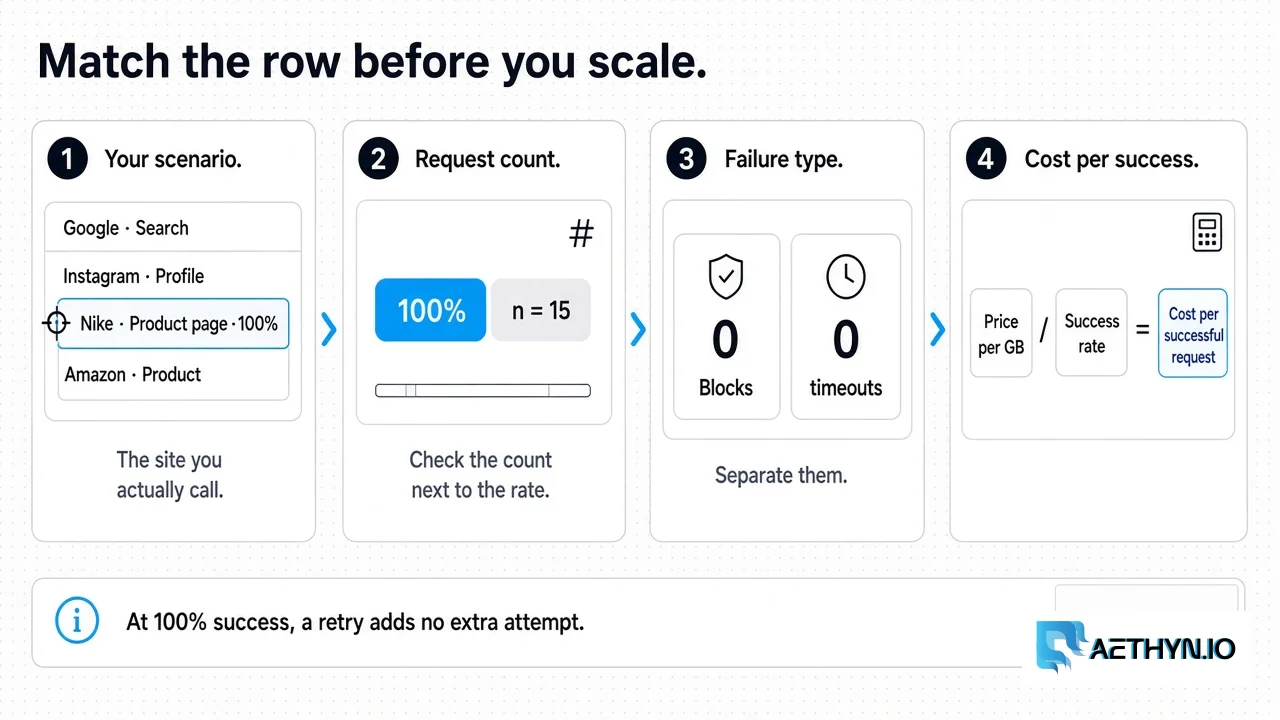
A headline percentage sorts a list. The decision sits in the row that matches the site you actually call.
Find that scenario. A 100% on Nike describes a Nike product page under this script. A login wall, a city-specific price, or a domain absent from the test needs its own run.
Check the request count published next to the percentage. The live benchmark is where the current rows for this test window are listed.
Separate blocks from timeouts. A block means the target recognised the traffic and refused it. A timeout means the request did not finish. Both are zero in this test window.
Turn the rate into cost per successful request: price per gigabyte divided by the share of requests that return the page you wanted. The worked version is in cost per successful request. At 100% success in this test window, a retry adds no extra attempt.
Understanding the benchmark scope
The benchmark covers the specific targets and request types listed above. Results can vary by target, geography, and workflow, so the individual scenario is the most relevant reference for a particular use case.
The Google scenario uses a US results page. Instagram, TikTok, Nike, and Amazon use the specific pages in the table above. For a metro-level job, verify the exit and store the city the session resolved.
The published benchmark represents Aethyn's residential network and does not provide separate Premium and Elite measurements. A sticky session holds one exit from the rotating pool for a lifetime you set, about 30 minutes by default, from 1 to 1,440 minutes. The rotating and sticky guide covers that choice.
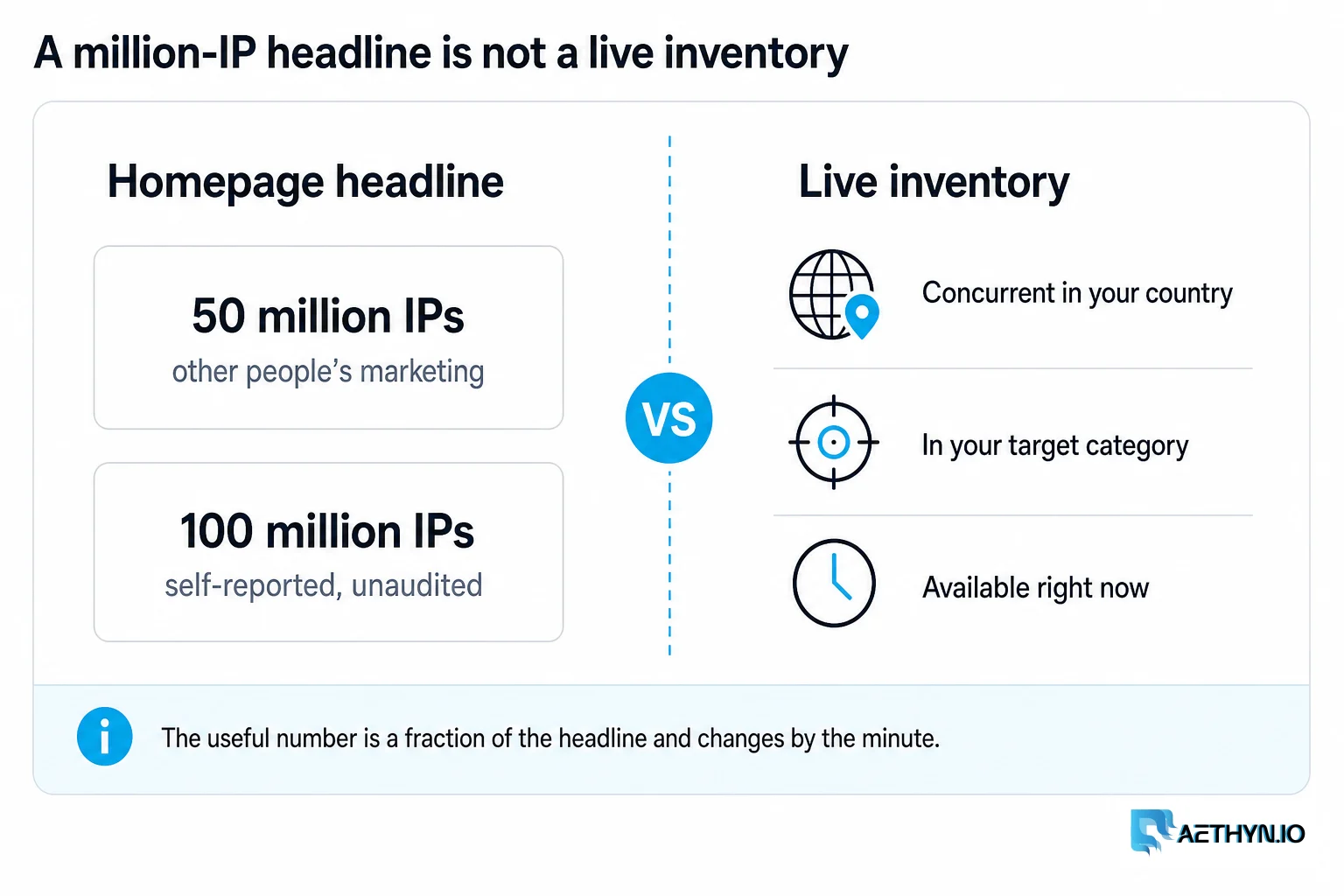
IP pool size is published separately from these rows. Our pages list 85 million-plus residential IPs. What those counts measure is a different question from the success and latency in this test window.
Run your own targets through Aethyn and measure the response rates that matter to your workflow. Start the trial.
The same three pages, for the current rows:
- Benchmark: https://www.proxyvero.com/benchmarks/aethyn/
Residential proxy benchmark questions
What did the Aethyn ProxyVero benchmark measure?
How did Aethyn perform across the tested targets?
How many requests were included in the Aethyn benchmark?
What does Aethyn's ProxyVero Score of 90 out of 100 mean?
How should latency be read next to the success rate?
Does the ProxyVero benchmark guarantee the same results for every website?
What period does the Aethyn benchmark cover?
Guides, integrations & docs
Continue reading
The Residential Proxy Pool Size Myth
Every provider opens with an IP count — 50 million, 100 million. We're not going to. Here's why the number is meaningless, and what we stand behind instead: IP quality.
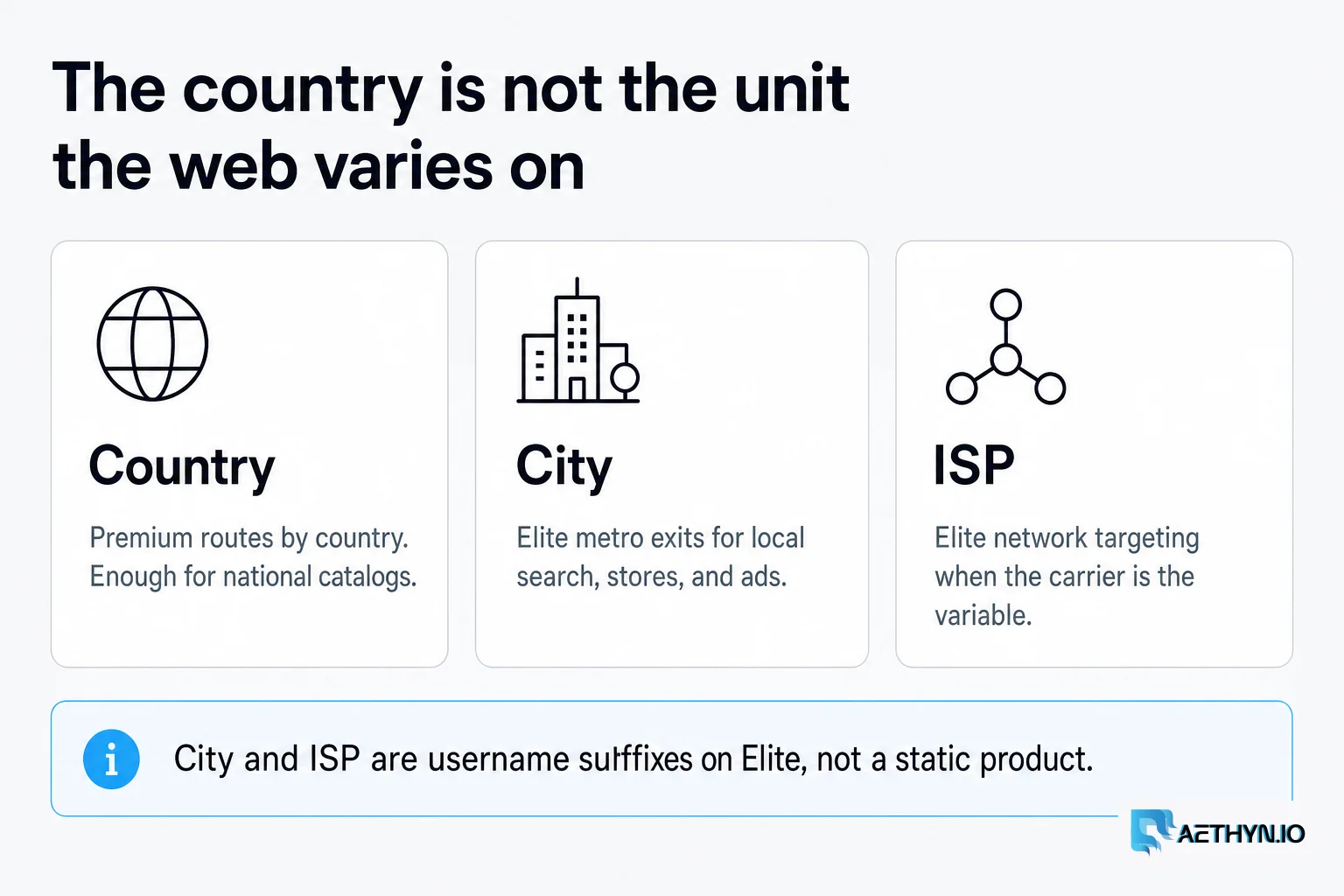
Country-Level Targeting Isn't Enough: City and ISP Proxies Explained
Country targeting fails silently. The page renders, the price parses, the row lands in your warehouse — describing a market nobody sells into. Here's when you need city or ISP granularity, when you don't, and how to prove the exit landed where you asked.
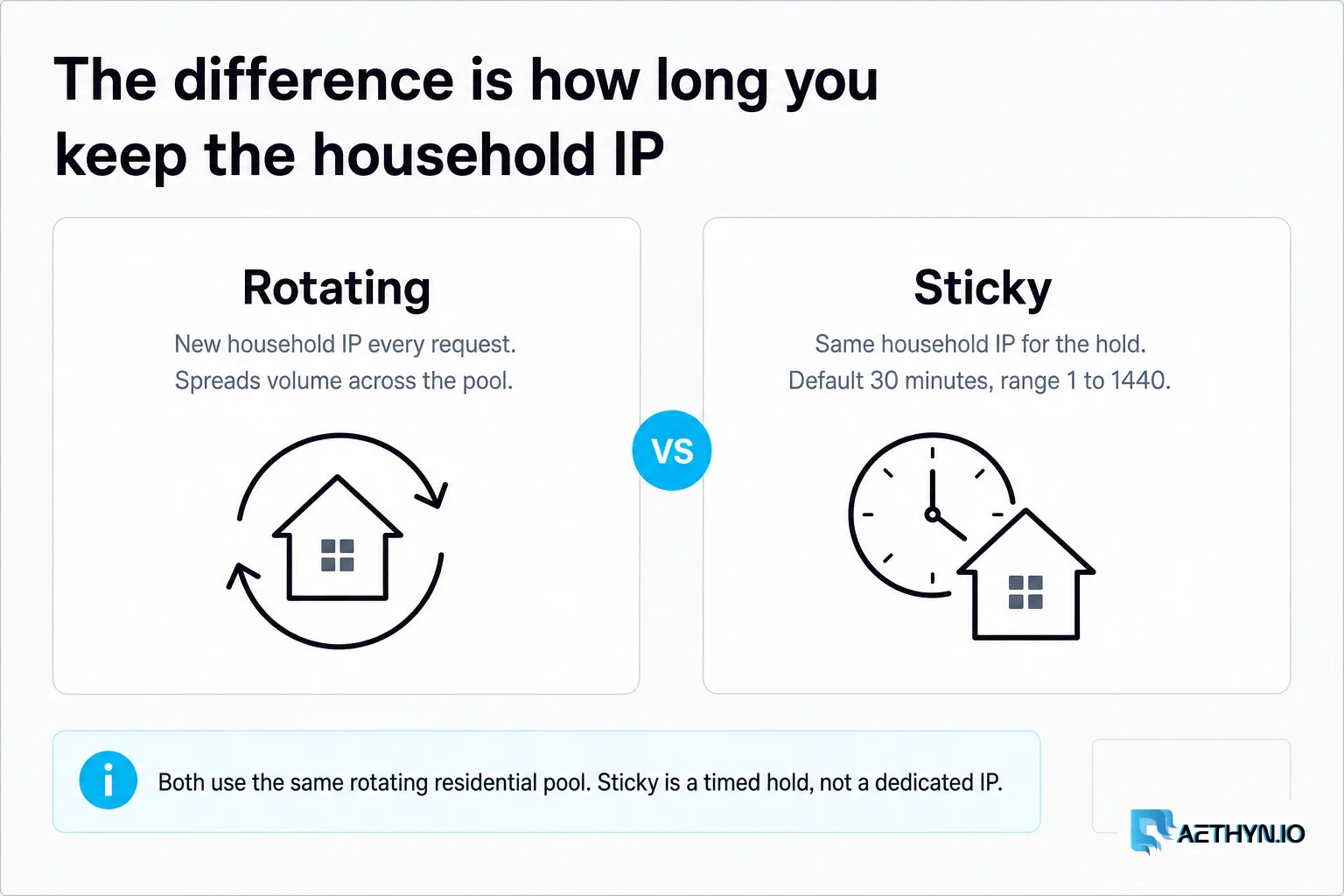
Rotating vs Static Residential Proxies: How to Choose
Rotating residential proxies give you a new household IP per request. Sticky holds that IP for 1–1440 minutes (default 30) on the same rotating pool — not a static ISP product.
Run your own targets through the same gateway
Premium from €2.90/GB and Elite from €6.50/GB, one credential format, pay-as-you-go gigabytes that do not expire. Free trial, no card.