

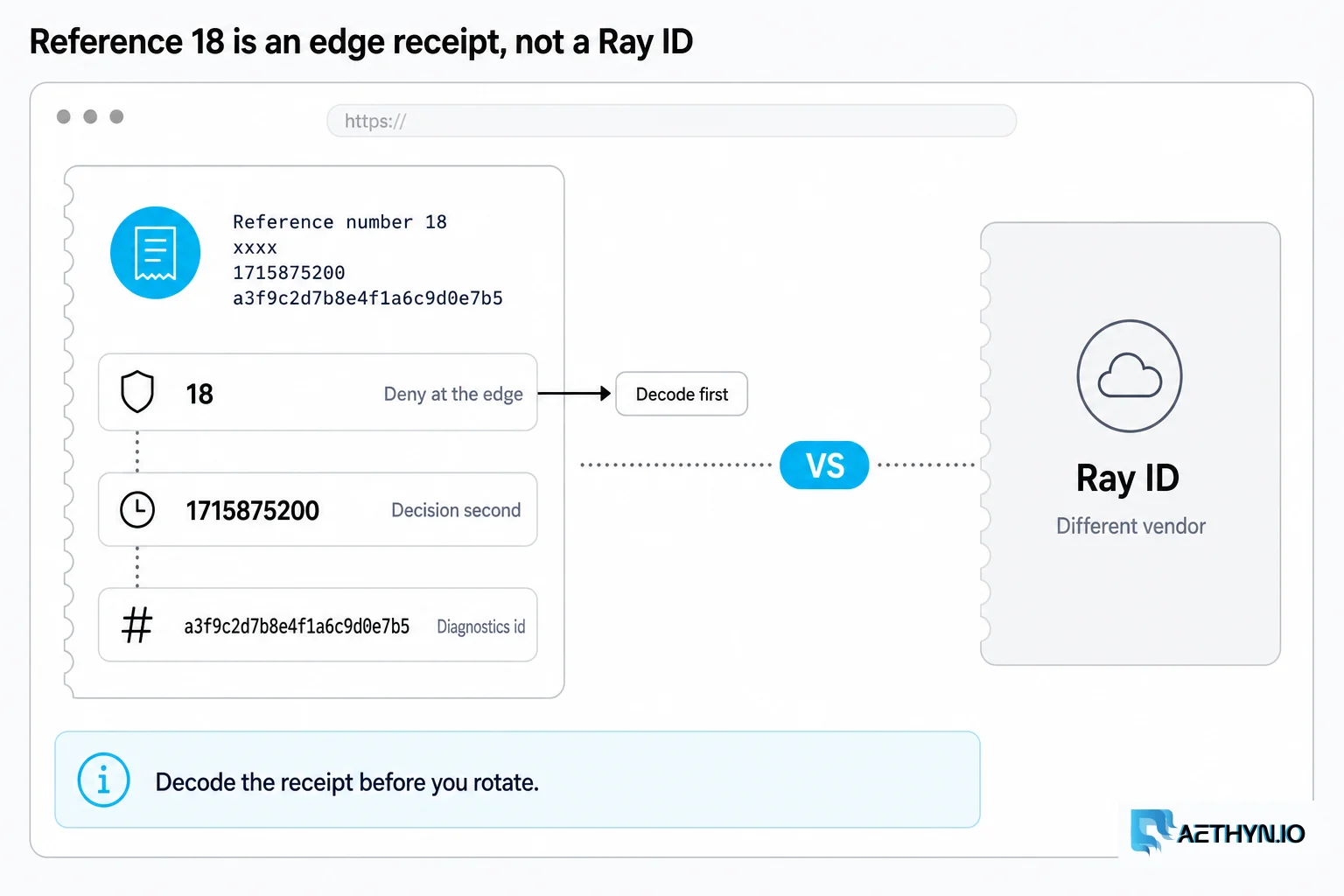
Your scraper logged Access Denied and a string that looks like Reference #18.1371ca17.1714195696.247b9298. That is not noise and it is not a Cloudflare Ray ID. It is an Akamai edge receipt — and reading it correctly is the difference between fixing a malformed URL, rotating an IP, or abandoning a fingerprint fight.
This article is a diagnostic funnel into our full playbook: Fix Akamai Access Denied when scraping.
[!NOTE] Observations below are grounded in live 2026-08-09 probes and Akamai-documented behaviours. Edges drift — re-verify strings on your target before filing an incident.
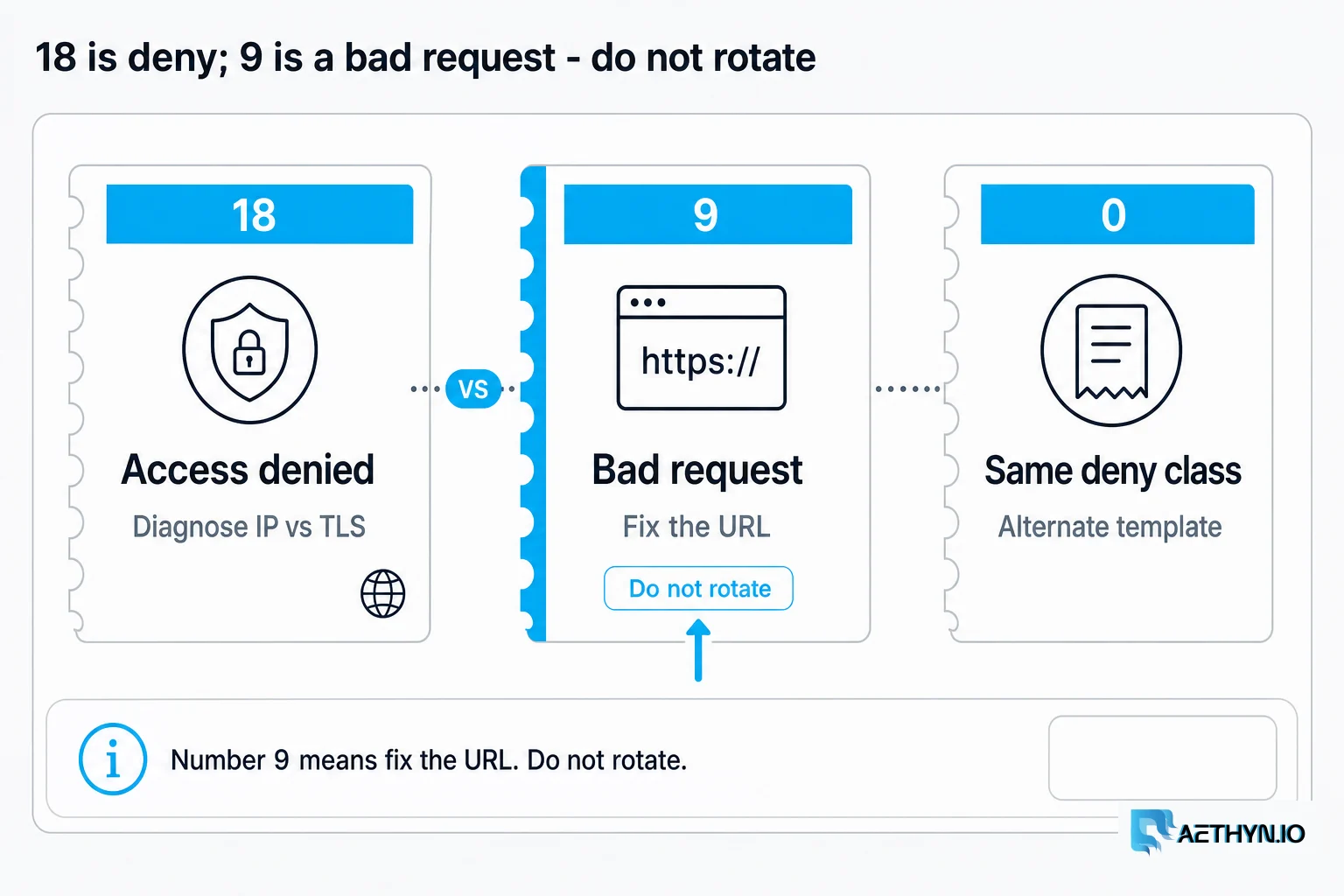
Reference #18 vs #9 vs Reference 0.
| Pattern | Meaning | First move |
|---|---|---|
Reference #18.… | Access denied (ERR_ACCESS_DENIED family) | Diagnose IP vs fingerprint |
Reference #9.… | Malformed URL / bad request | Fix the request — do not rotate |
Reference 0.… (no #) | Alternate Akamai deny template | Same deny class as #18 — do not assume another vendor |
The third segment of the dotted string is a Unix epoch. Decode it locally to timestamp the exact second the edge decided. When you escalate to a site operator, send the full Reference string — it is what their Edge Diagnostics tooling understands.
Also watch for the sibling line https://errors.edgesuite.net/18.… on classic deny pages. edgesuite.net in an error body is a hard Akamai tell.
The entity-encoding trap
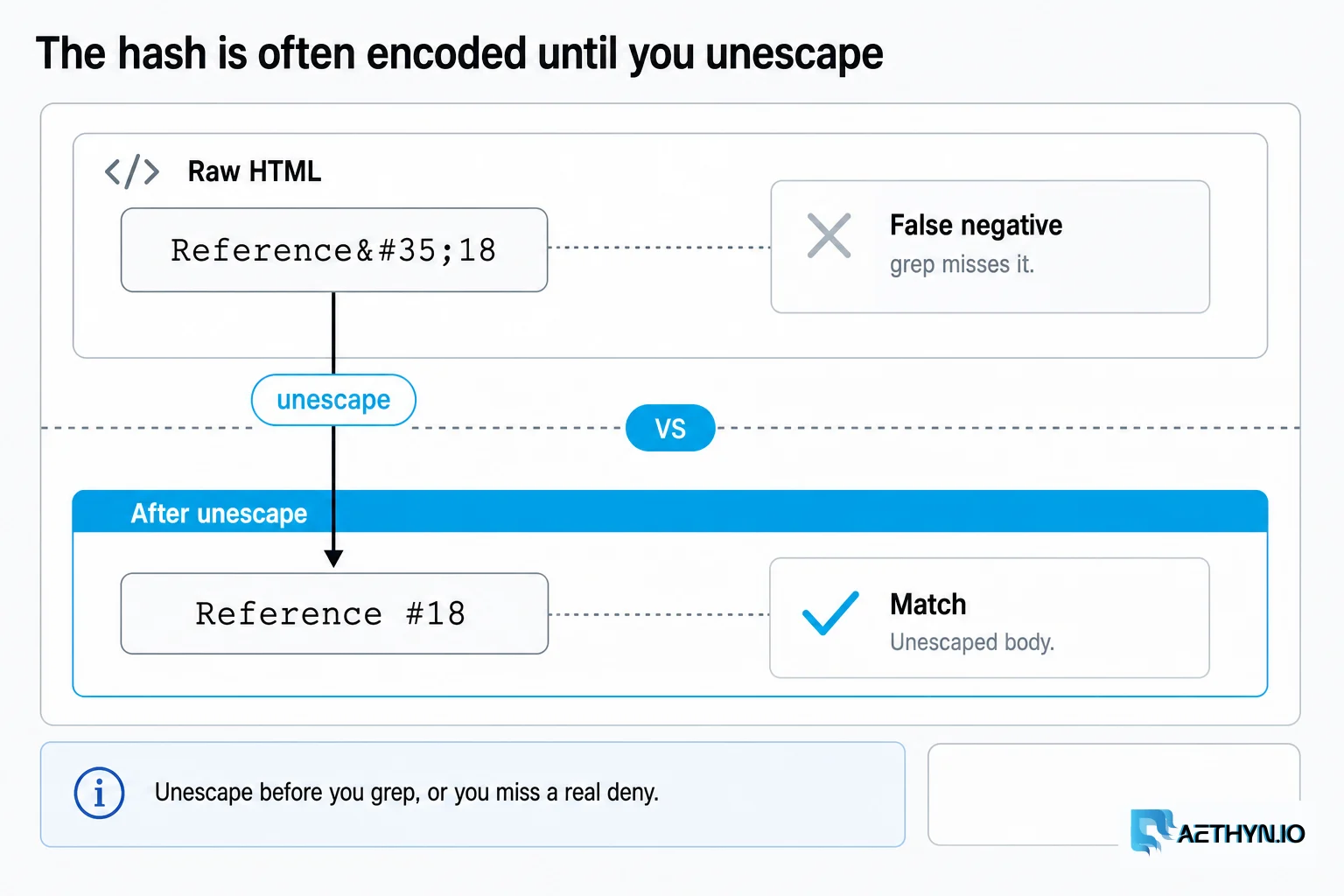
Raw HTML often stores the receipt as Reference#18… (and encodes the echoed URL). In Python:
Code Snippetimport html
text = html.unescape(resp.text or "")
# Only now is ("Reference #" in text) reliable
Without unescape, your detector reports “no Reference #” on a page that is nothing but Access Denied. Pair title checks (an Access Denied document title) with the unescaped reference match. Server: AkamaiGHost and Mime-Version: 1.0 are strong corroboration when present — but not universal on every deny response, so do not require them as the only key.
Cookies that confuse more than they help
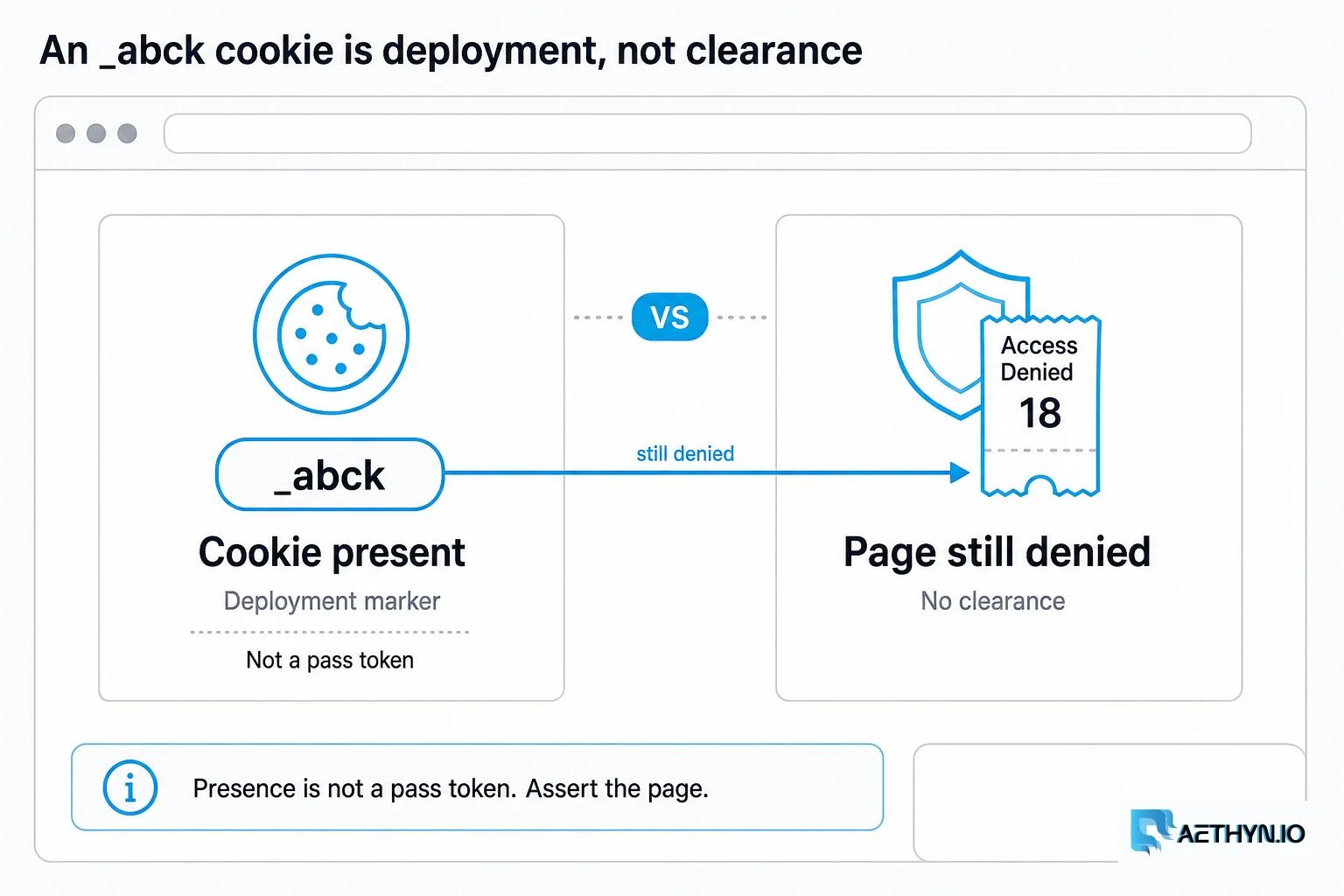
_abck/ak_bmsc— Bot Manager deployment markers. Presence ≠ clearance.AKA_A2— Adaptive Acceleration (performance). Platform presence only, not a bot pass.- Cookie replay across IP / UA / TLS stacks invalidates the session context Akamai bound.
If cookies look “healthy” and search/cart/API still deny, you do not have a jar problem — you have a clearance problem.
Soft siblings: 200 Access Denied and tarpits
Akamai can return HTTP 200 with an Access Denied or NetStorage “page unavailable” body. raise_for_status() stays green while your dataset fills with poison. See HTTP 200 Access Denied soft blocks.
Separately, tarpit actions present as client timeouts with no clean status. Tight retry loops look like abuse and make the hang worse. Cap connect/read timeouts and back off.
Three-way test before you buy more bandwidth
- Plain curl
- Curl with a current Chrome User-Agent
- Same as (2) through residential
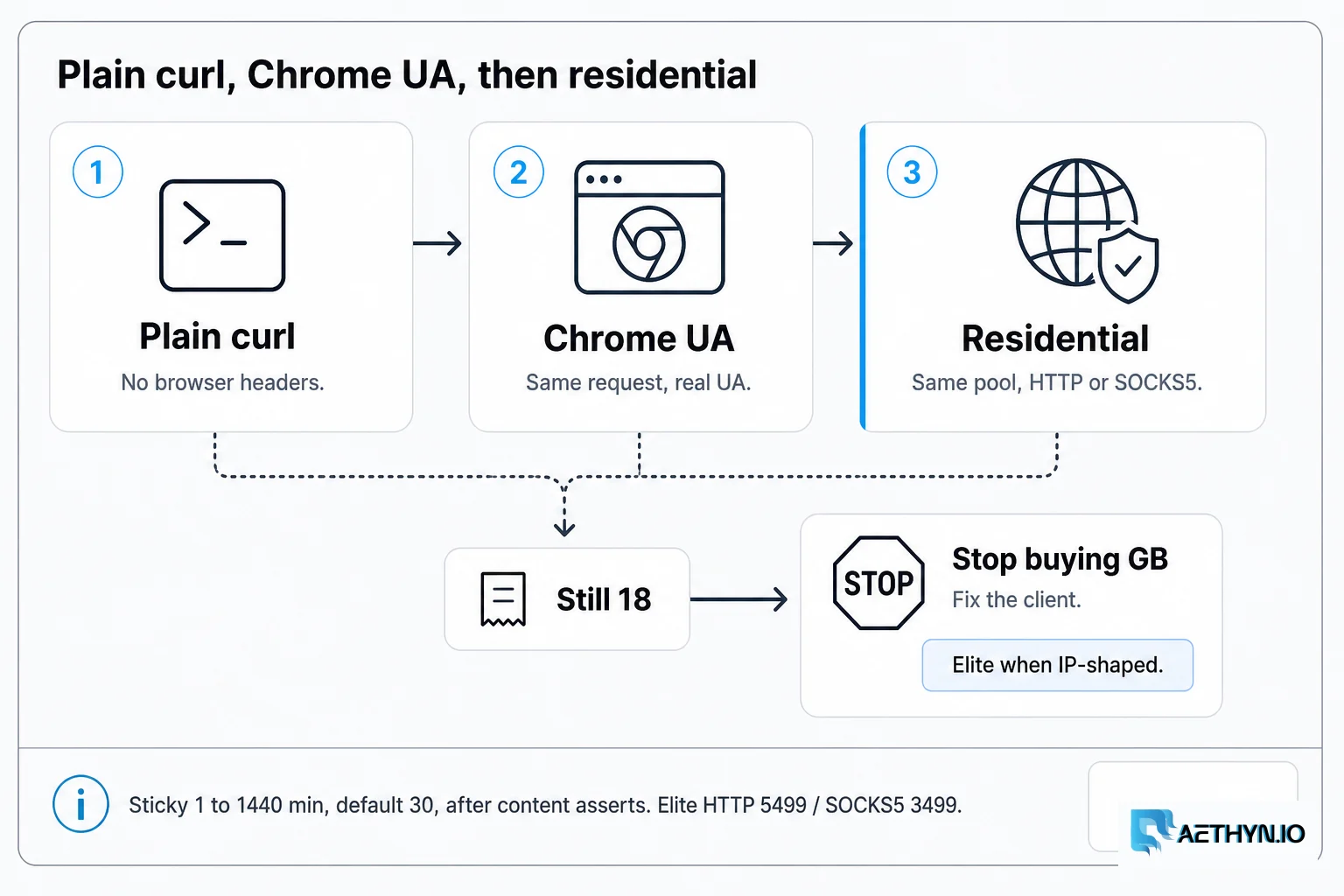
Use Aethyn Elite HTTP proxy.aethyn.io:5499 (SOCKS5 3499) or Premium HTTP 2099 / SOCKS5 1099:
Code SnippetPROXY="http://aethyn-XXXXX-country-us-session-akamai1-lifetime-30:PASSWORD@proxy.aethyn.io:5499"
curl -sS -D - -o /tmp/ak.html "https://TARGET/" -x "$PROXY" \
  -A "Mozilla/5.0 (Windows NT 10.0; Win64; x64) AppleWebKit/537.36 (KHTML, like Gecko) Chrome/128.0.0.0 Safari/537.36" \
  -w "\nHTTP %{http_code}\n" | head -n 30
| Outcome | Interpretation |
|---|---|
| #18 flips only on residential | IP / ASN / velocity shaped — keep rotation or sticky sessions |
| #18 identical on all three | Fingerprint / JS / WAF rule above IP — fix the client |
| #9 appears | Repair URL construction |
Community-shaped reports also show the same IP succeeding in one HTTP library and failing in another against Akamai — treat client stack as a first-class variable. Prefer Playwright over Aethyn or curl_cffi when TLS/HTTP/2 is implicated. Deep dive: TLS fingerprinting for scrapers.
Premium vs Elite on Akamai-heavy targets
| Situation | Tier |
|---|---|
| Diagnosis / moderate properties | Premium €2.00/GB (HTTP 2099) |
| Confirmed Bot Manager + harsh commodity scoring | Elite €4.50/GB (HTTP 5499) + sticky -session-…-lifetime-N |
| Fingerprint-identical #18 on Elite | Stop rotating — change client, keep asserting content |
Proxies fix where you appear from. They do not execute Akamai sensor scripts or shorten a 428 sec-cpt wait. If connects hang until your client times out with no clean status, consider tarpit behaviour: raise timeouts, lower concurrency, and change identity carefully — tight retry loops reinforce the delay.
What not to do
- Rotate forever on Reference #9
- Treat
_abckas a pass token - Attribute Imperva’s “Pardon Our Interruption” to Akamai
- Publish or chase unverifiable success-rate claims — measure accept/assert rate on your URL basket
For the full Reference parser, cookie matrix, and production checklist, continue here: Fix Akamai Access Denied / Reference # when scraping.
Common questions about this article
What does Akamai Reference #18 mean?
Is Reference #9 a bot ban?
Why doesn't grepping for 'Reference #' find the string?
Does an _abck cookie mean I passed Bot Manager?
Will residential proxies fix Reference #18?
Guides, integrations & docs
Continue reading
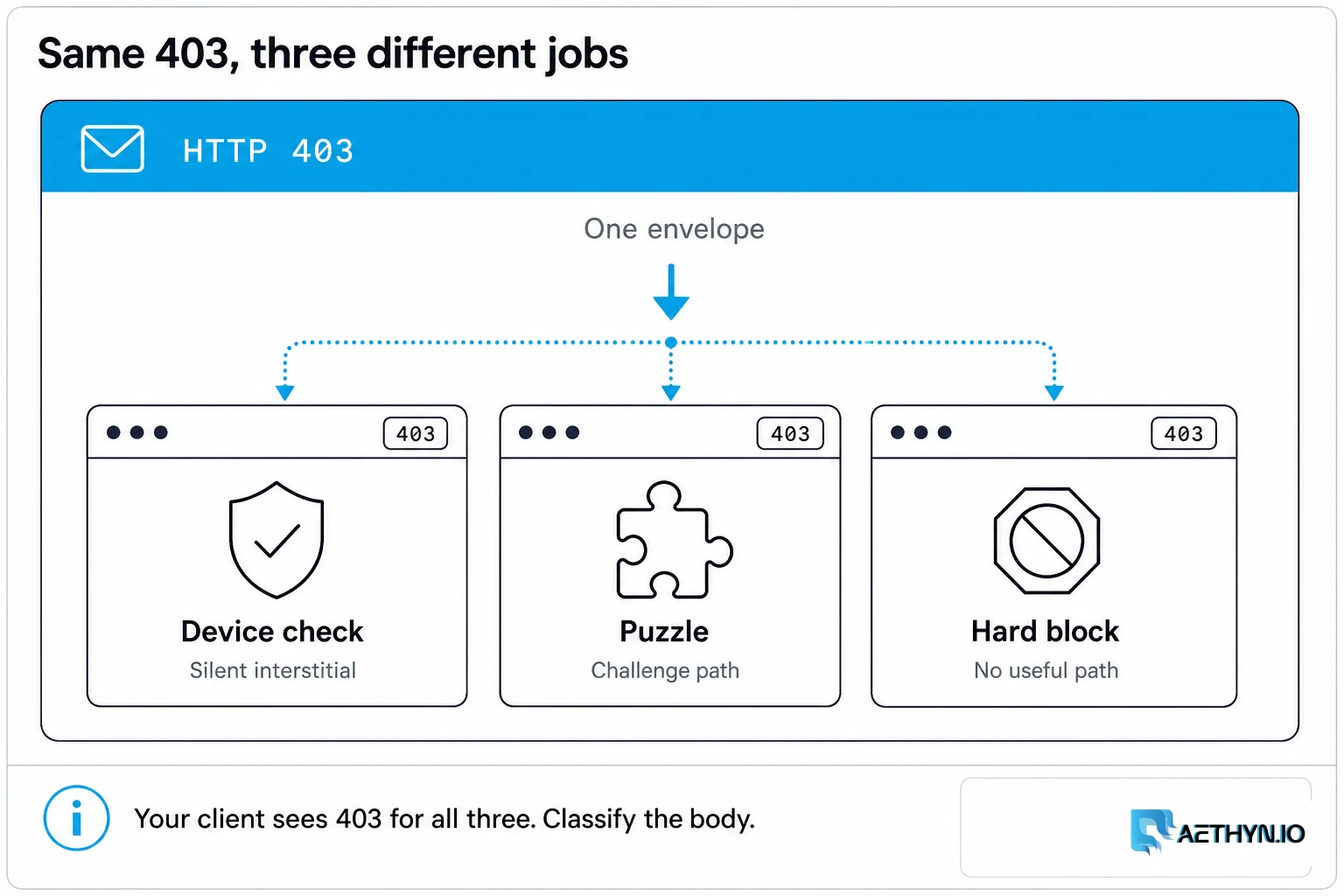
DataDome 403: Same Status, Different Outcomes (Scraping)
DataDome returns HTTP 403 for device check, CAPTCHA, and ban. Learn x-datadome: protected, the datadome cookie, and how to classify bodies before rotating proxies.
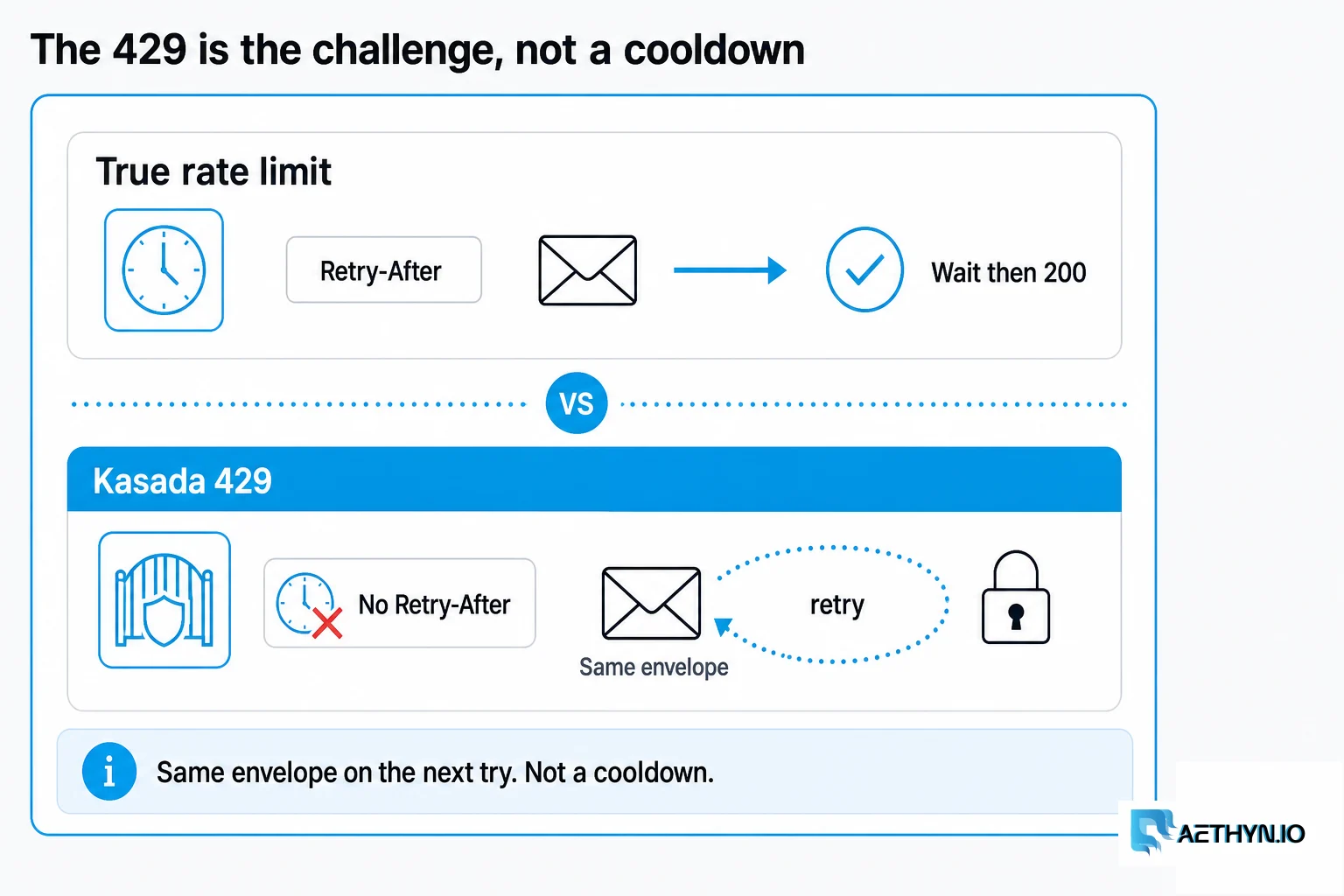
Kasada 429 vs Rate Limit: Stop the Misdiagnosis
Kasada often challenges unverified clients with HTTP 429 (or 403 on API routes) — not a cooldown. Learn x-kpsdk-* tells, the UUID script path, and why backoff burns bandwidth.
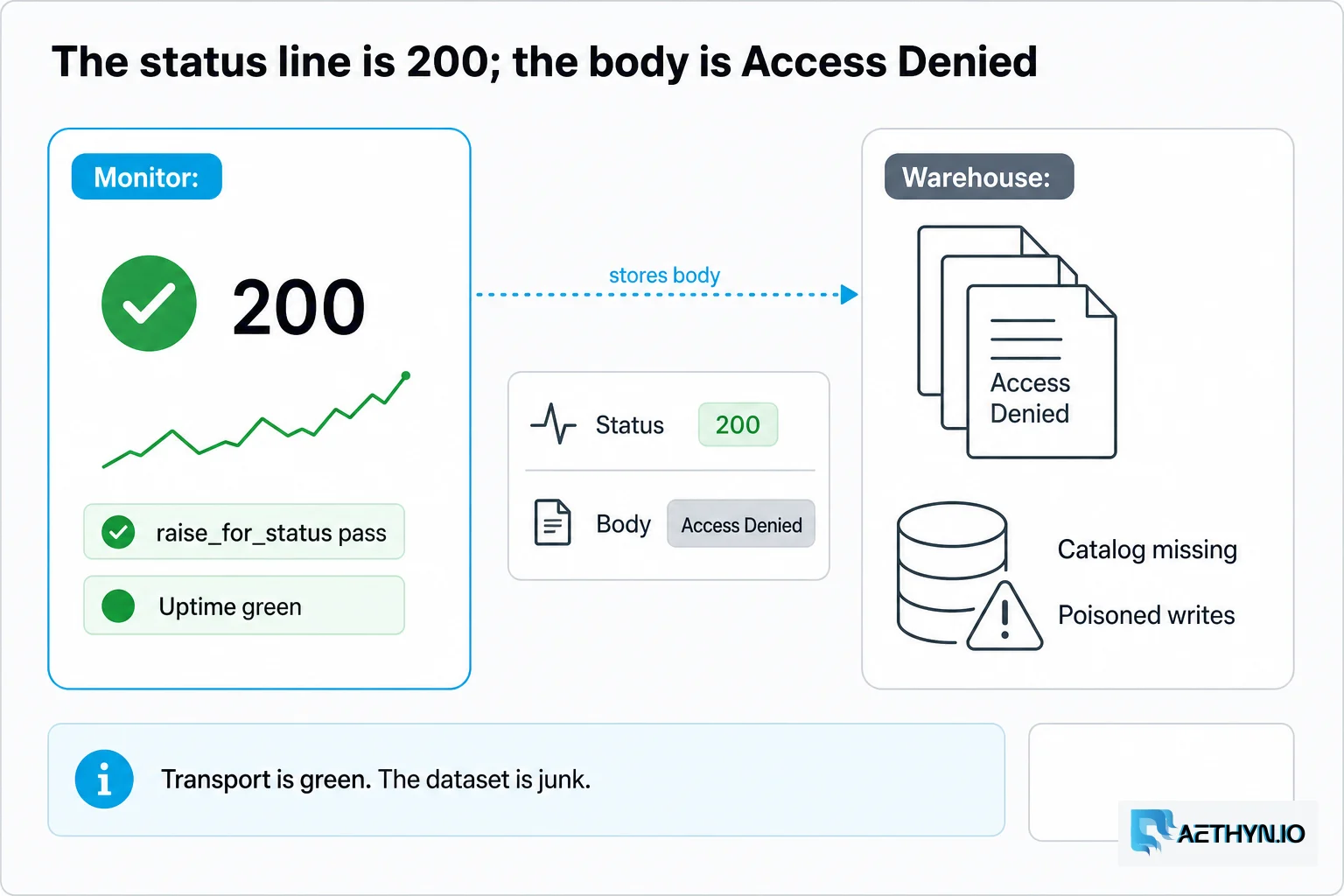
HTTP 200 Access Denied: Soft Blocks That Poison Scrapers
Status 200 can still be Access Denied or an AkamaiNetStorage unavailable page. Build title and content asserts so soft blocks stop looking like successful scrapes.
Diagnose Akamai on clean residential exits
Run the three-way curl test through Premium (€2.00/GB) or Elite (€4.50/GB). Sticky sessions on Elite HTTP 5499 keep a browser-backed flow on one exit once content asserts pass.