

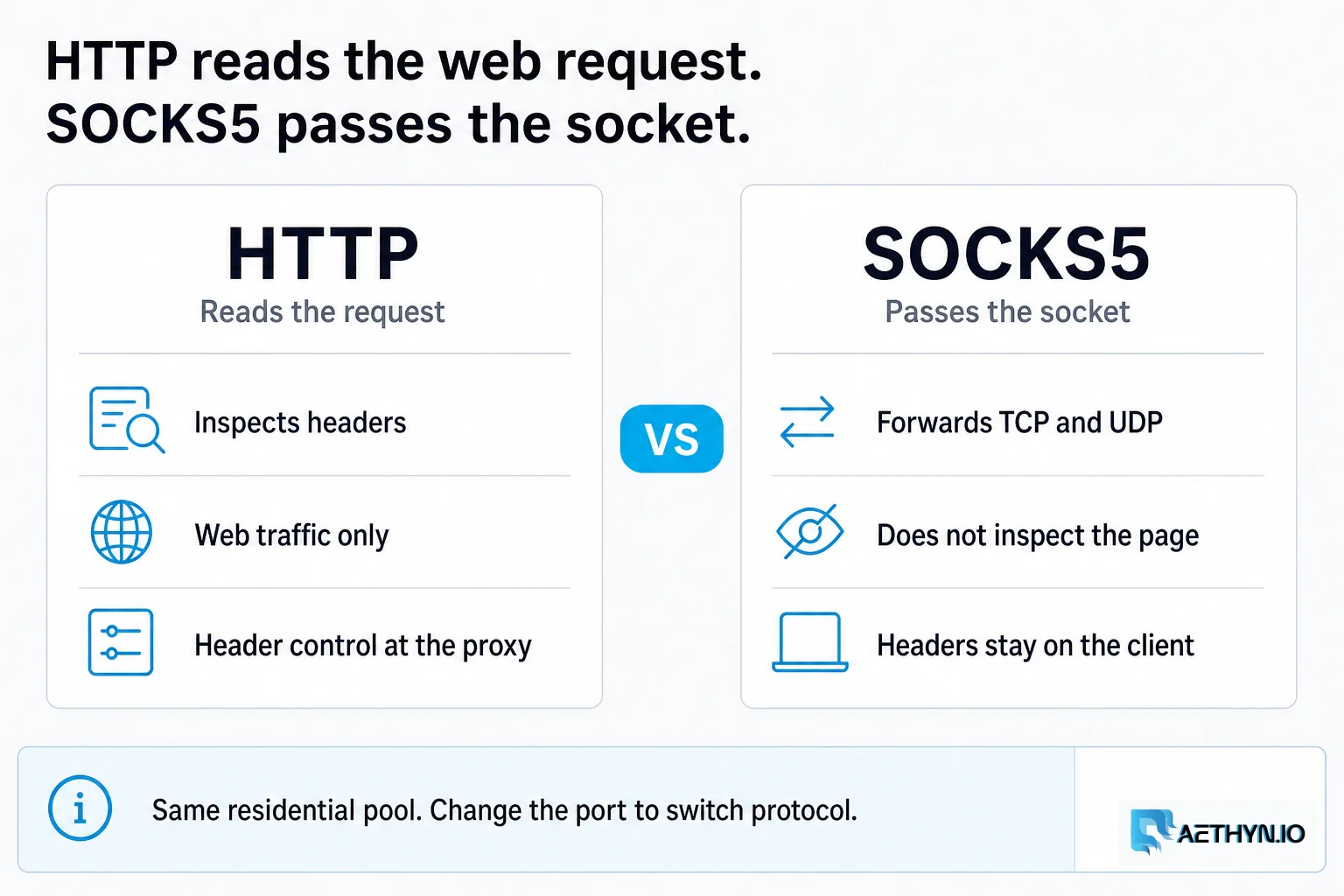
In the world of proxy networking, the protocol you choose is just as important as the IP itself. While HTTP/S is the industry standard, SOCKS5 has become increasingly popular for high-performance automation.
But which one should you use for your next project?
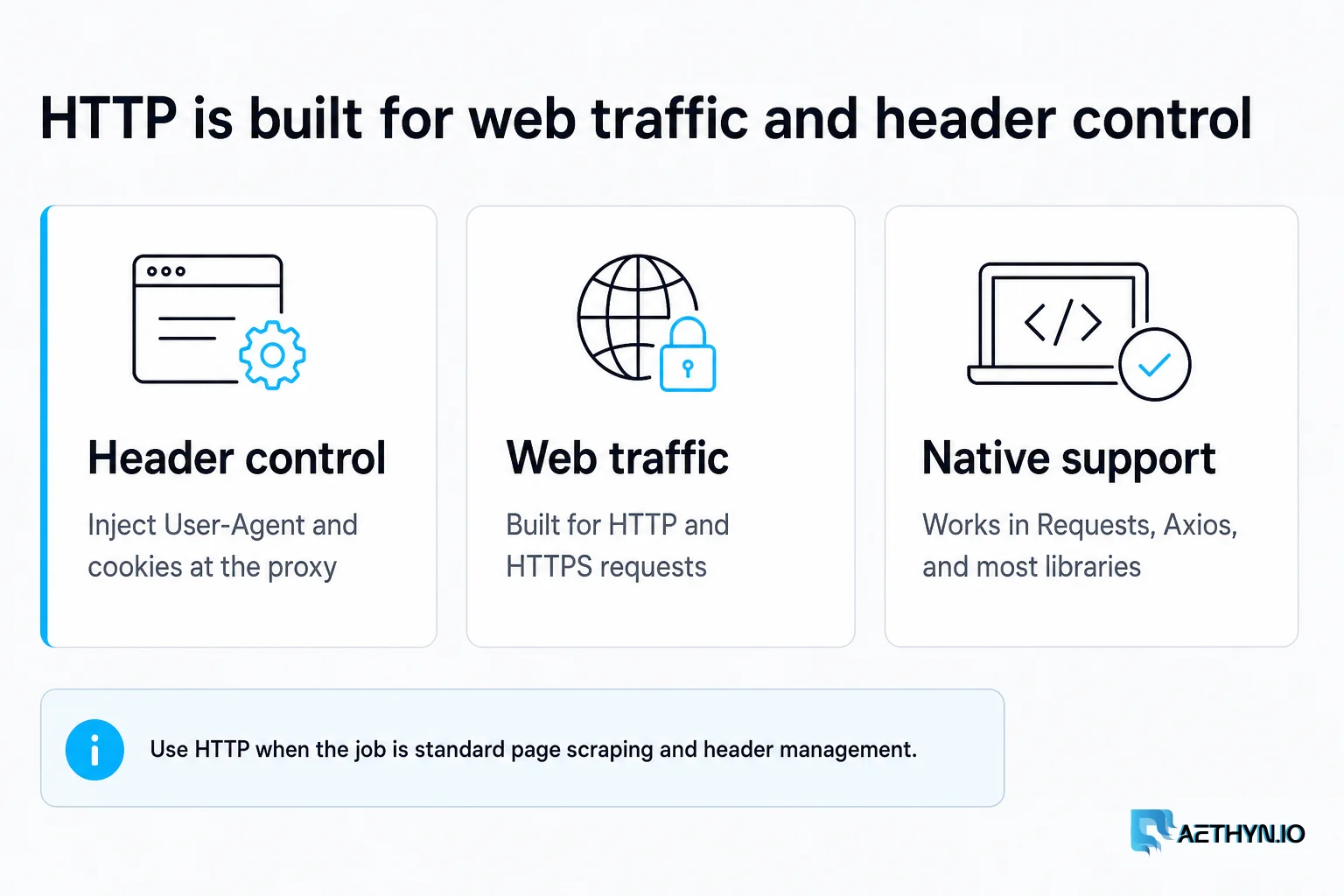
HTTP/S Proxies: The Web Standard
HTTP proxies are designed specifically for the HTTP protocol. They interpret the traffic between your client and the server.
Pros:
- Header Manipulation: Easy to inject custom User-Agents or Cookies at the proxy level.
- Caching: Some HTTP proxies can cache content to save bandwidth.
- Widespread Support: Virtually every library (Requests, Axios, etc.) supports HTTP proxies natively.
Cons:
- Limited to Web Traffic: You can only use them for HTTP/S requests.
- Slightly Higher Overhead: The proxy has to "look" at the packet to route it.
SOCKS5 Proxies: The Versatile Powerhouse
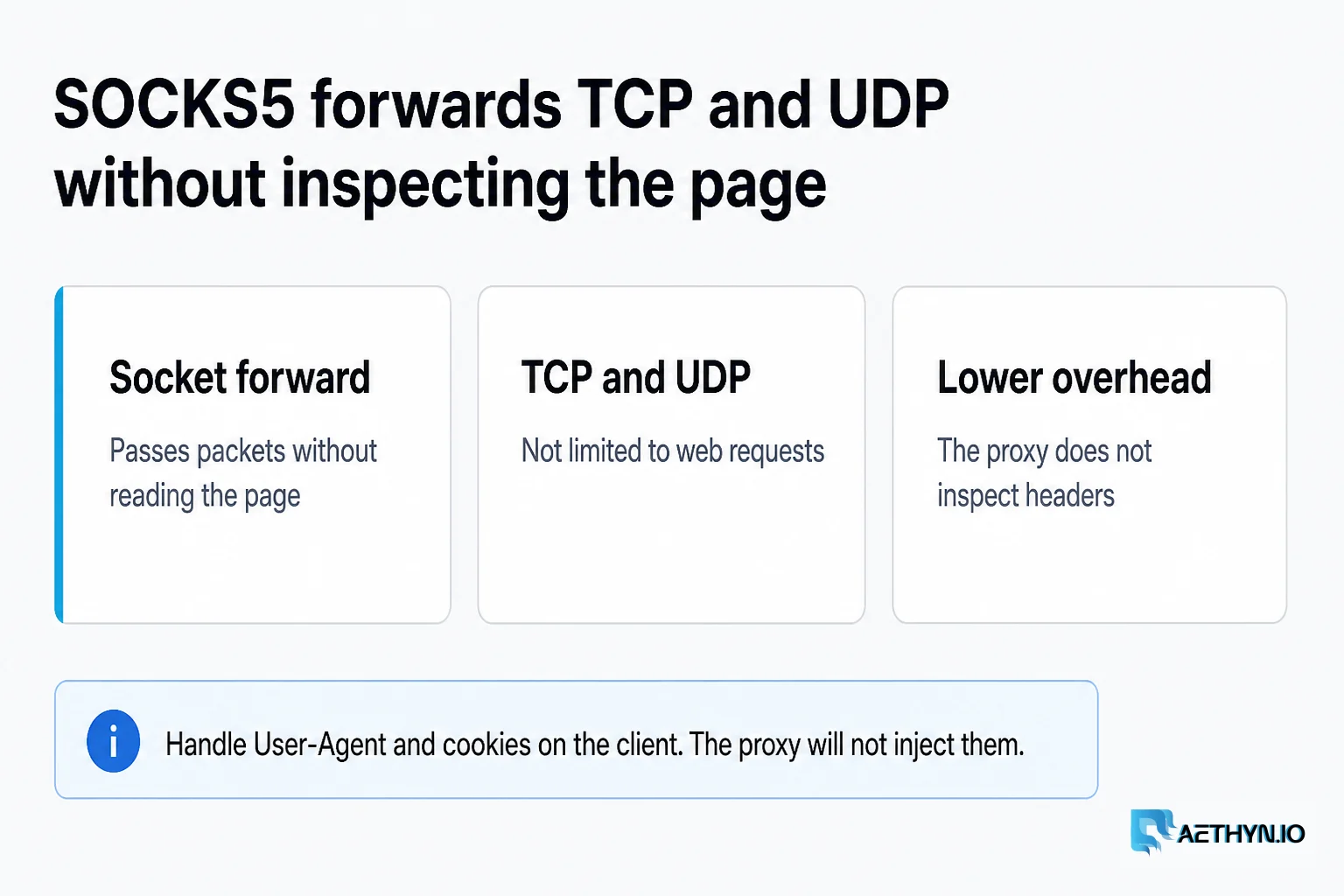
SOCKS5 is a lower-level protocol that doesn't care what kind of traffic is flowing through it.
Pros:
- Speed: Because it doesn't interpret the traffic (it just passes TCP/UDP packets), it's generally faster and has lower latency.
- UDP Support: Essential for applications like VOIP, gaming, or certain high-speed scraping protocols.
- Stealth: SOCKS5 proxies don't add "Forwarded-For" headers, making them more anonymous by default.
Cons:
- No Header Injection: You must handle all header manipulation on your local client.
- Library Support: Some older libraries require additional plugins to support SOCKS5.
The Verdict for 2026
- Use HTTP/S if you are doing standard web scraping where you need to easily manage headers and cookies across a large team.
- Use SOCKS5 if you are building a custom crawler, using sneaker bots, or need the absolute lowest latency for high-frequency trading or data extraction.
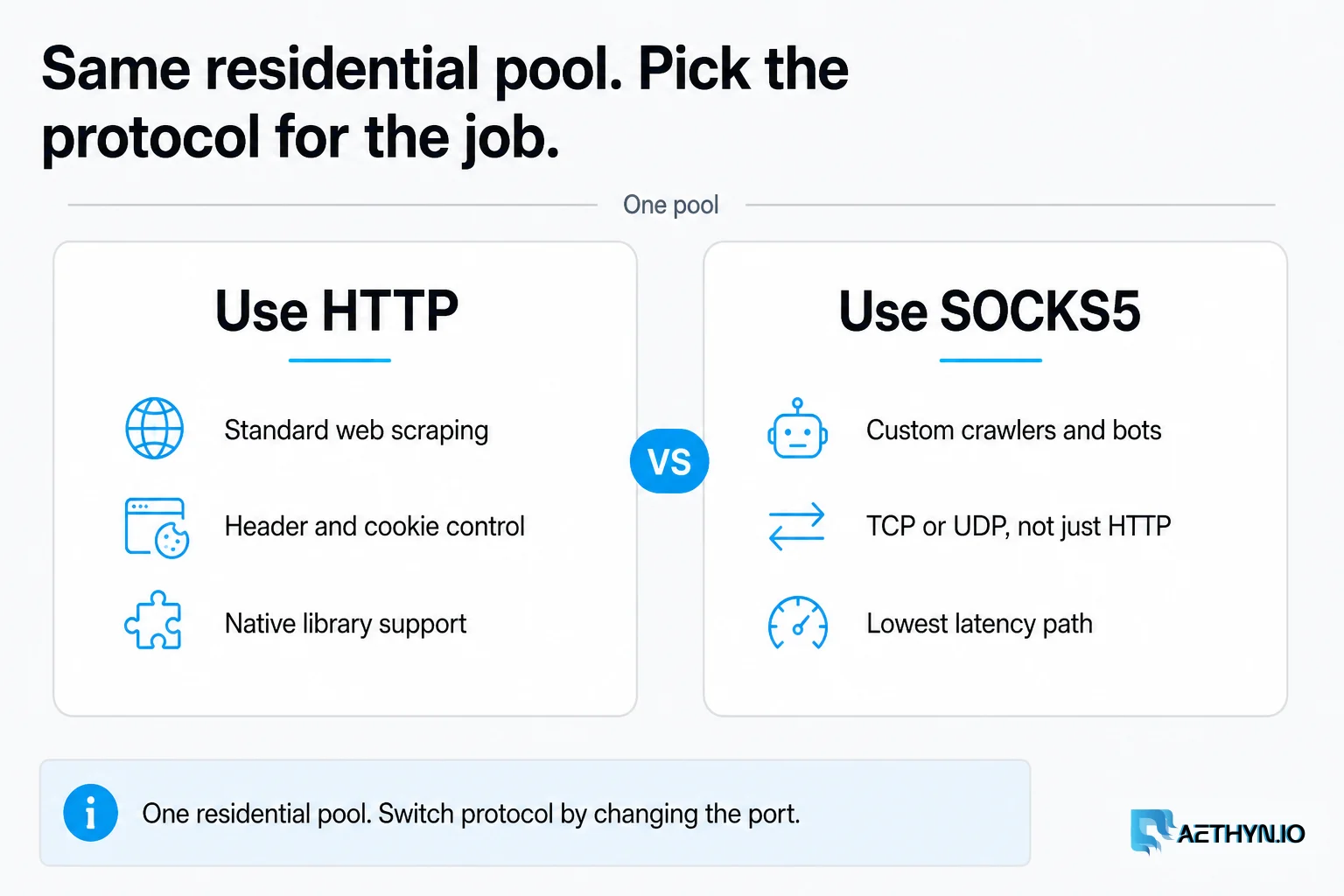
[!TIP] Protocol Tip: Aethyn supports both HTTP and SOCKS5 on Premium and Elite residential endpoints. You can switch protocols instantly by changing the port in your configuration.
Guides, integrations & docs
Continue reading
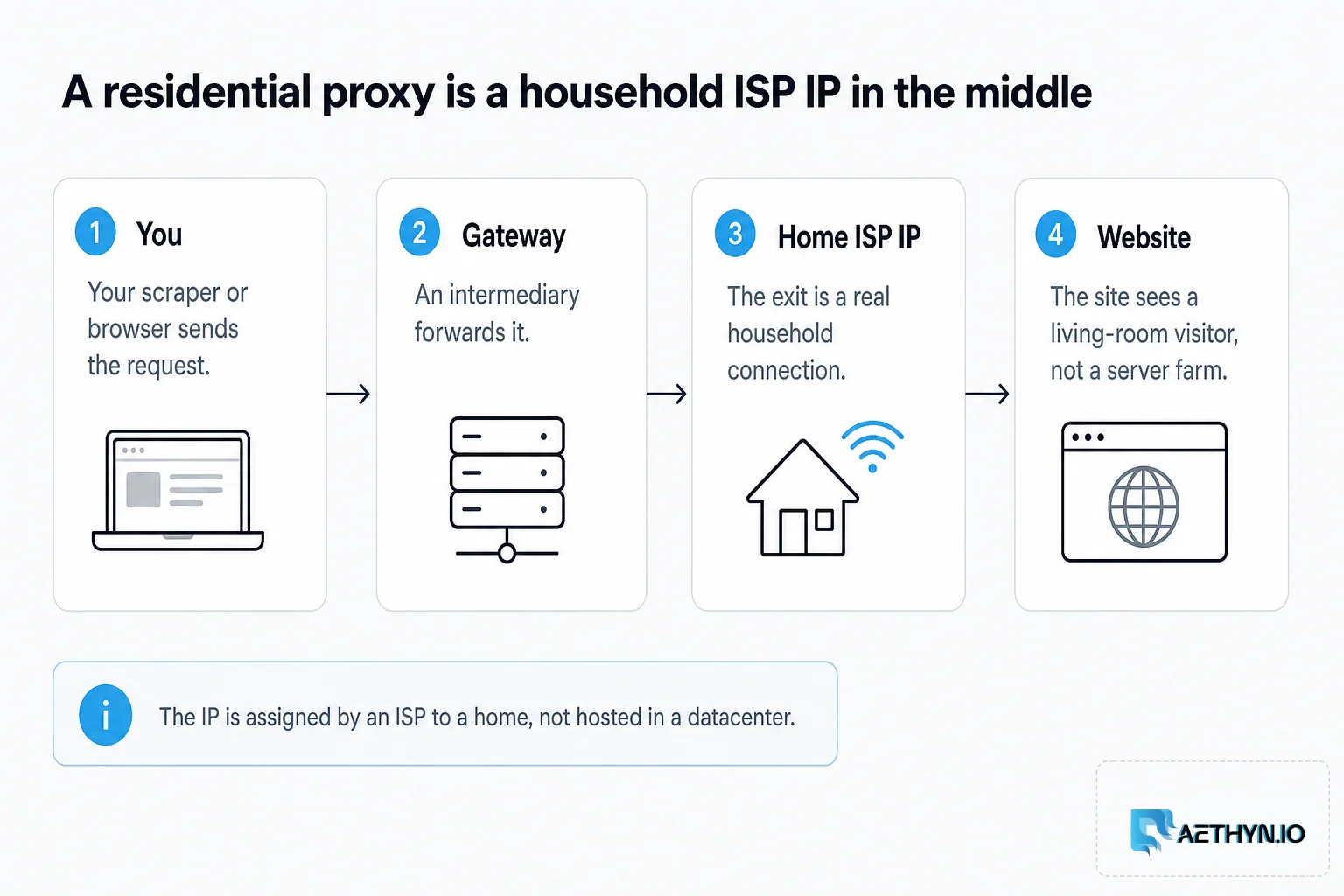
What Are Residential Proxies? Complete Beginner Guide (2026)
Learn everything about residential proxies: how they work, why they are more reliable than datacenter IPs, and how to use them for your business in 2026.
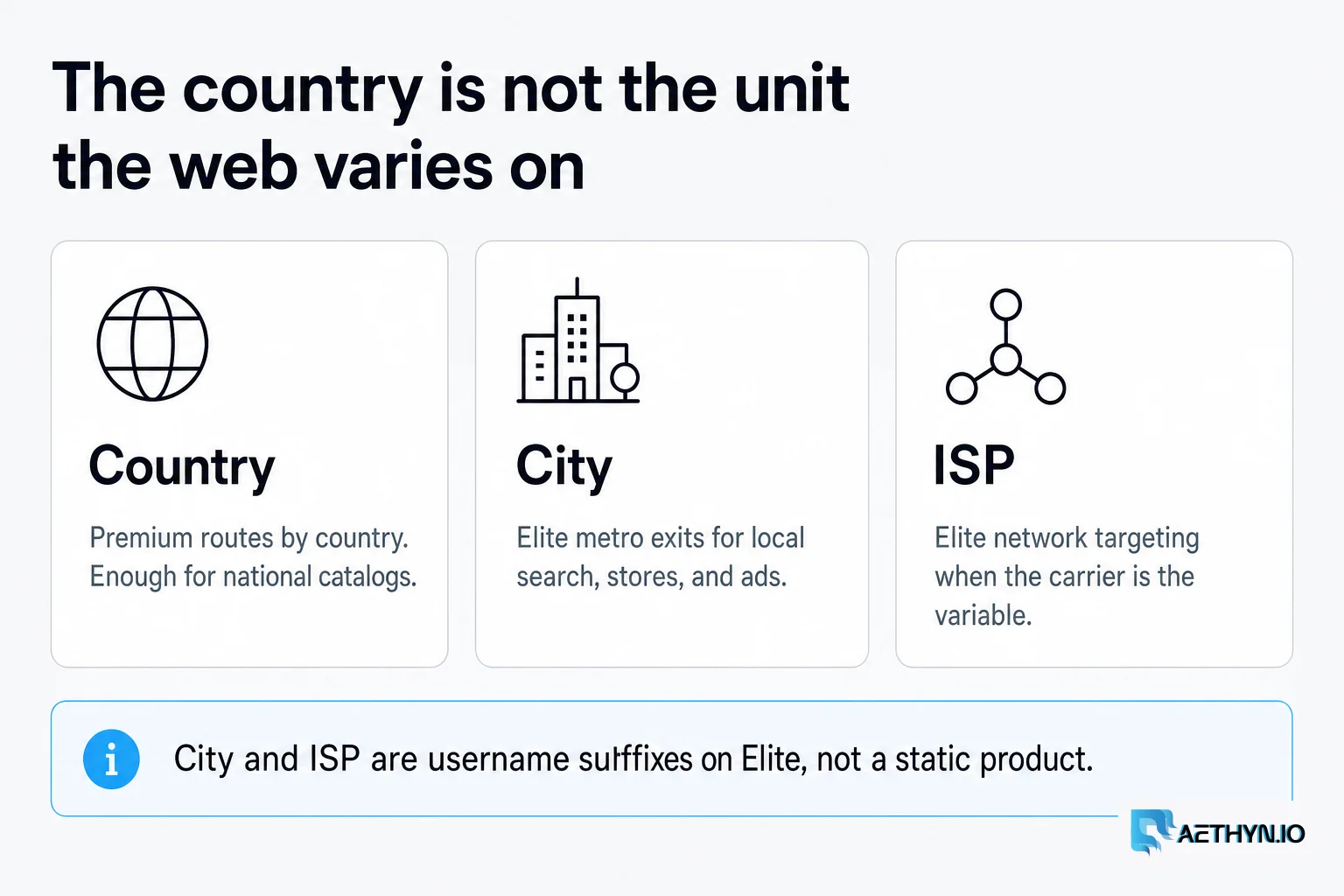
Country-Level Targeting Isn't Enough: City and ISP Proxies Explained
Country targeting fails silently. The page renders, the price parses, the row lands in your warehouse — describing a market nobody sells into. Here's when you need city or ISP granularity, when you don't, and how to prove the exit landed where you asked.
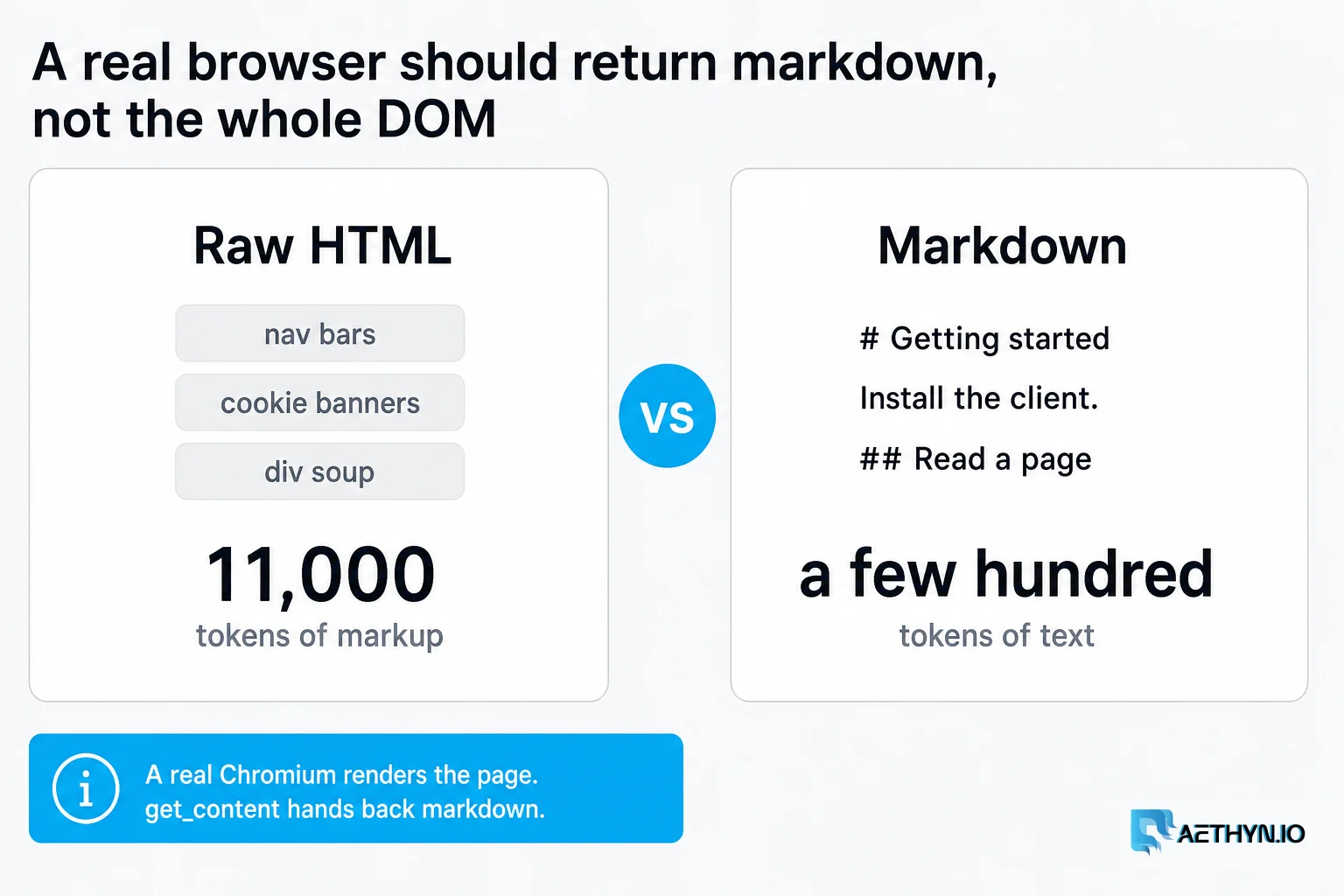
Give Your AI Agent a Real Browser (That Doesn't Eat Your Context Window)
Built-in fetch chokes on JavaScript sites and raw-HTML browser tools flood your context with DOM soup and screenshots. Here's an MCP that renders real pages, returns clean markdown, and routes through residential IPs — one npx command.
Premium or Elite residential proxies
Join developers scaling scraping and automation with Aethyn Premium and Elite pools from €2.00/GB.