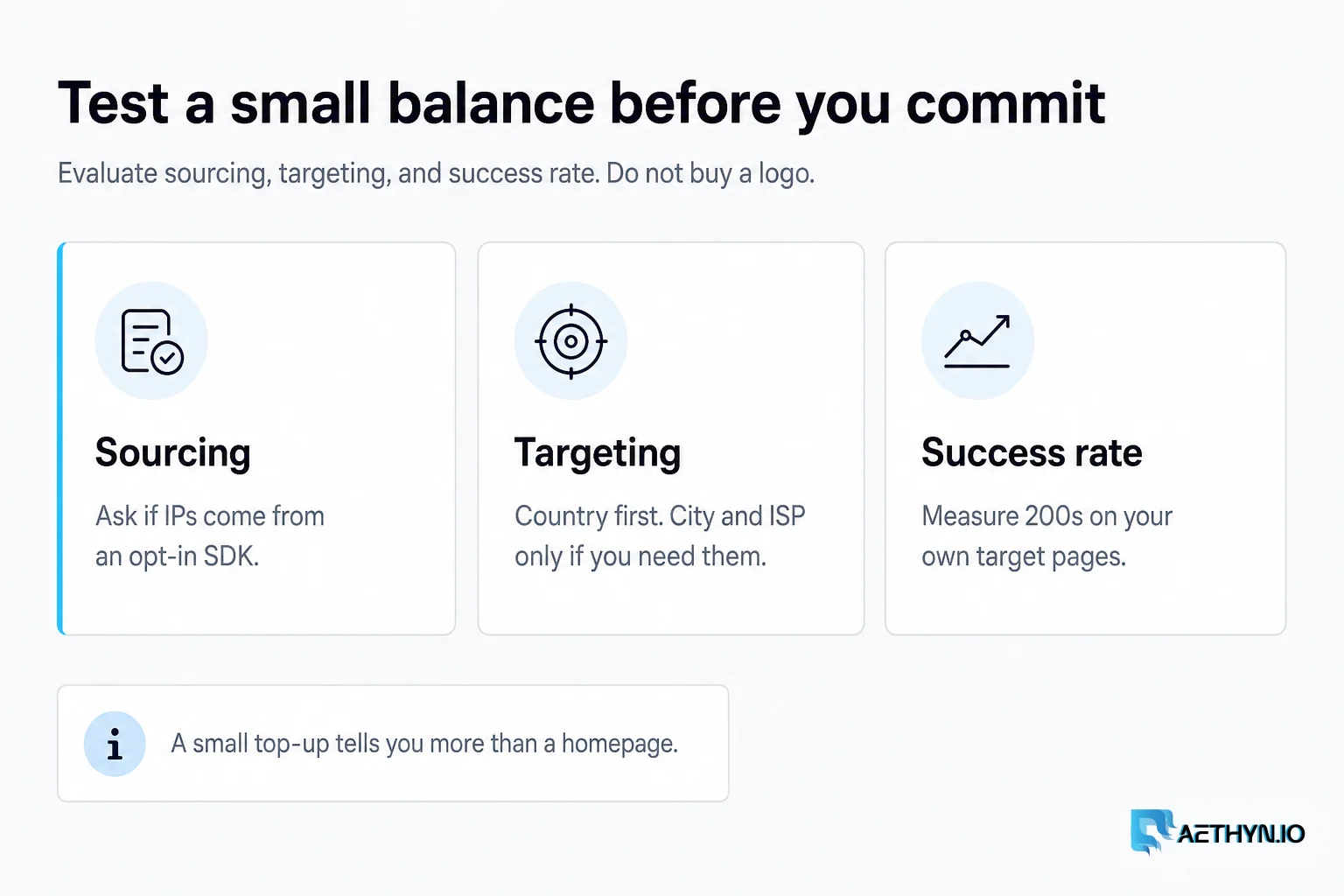
With hundreds of proxy providers flooding the market in 2026, making the wrong choice can lead to wasted budget, account bans, and project delays. Not all "residential" proxies are actually residential, and not all "elite" pools are elite.
Use this 10-point checklist to evaluate any provider before you commit.
The 10-Point Evaluation Checklist
1. Pool Size and Diversity
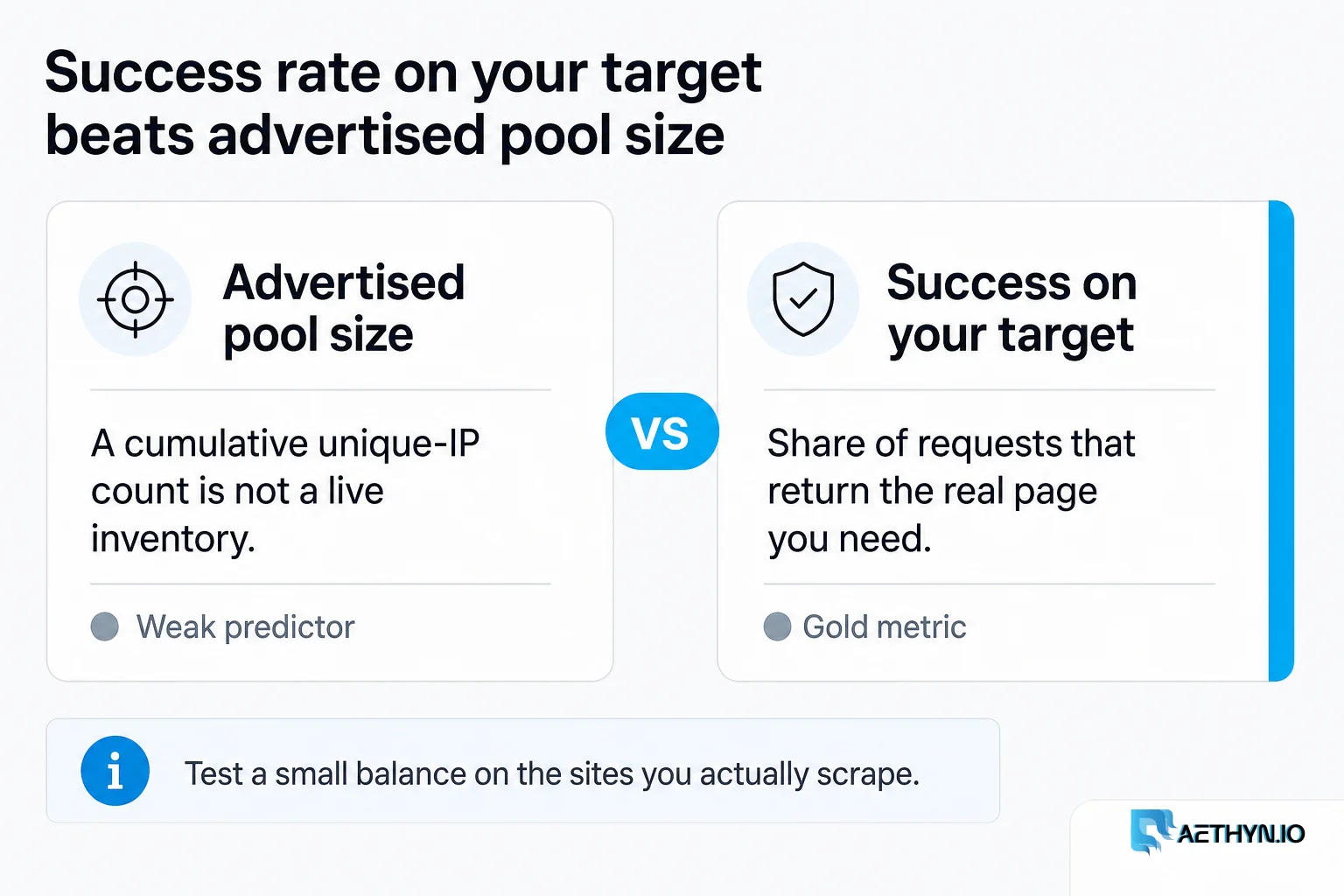
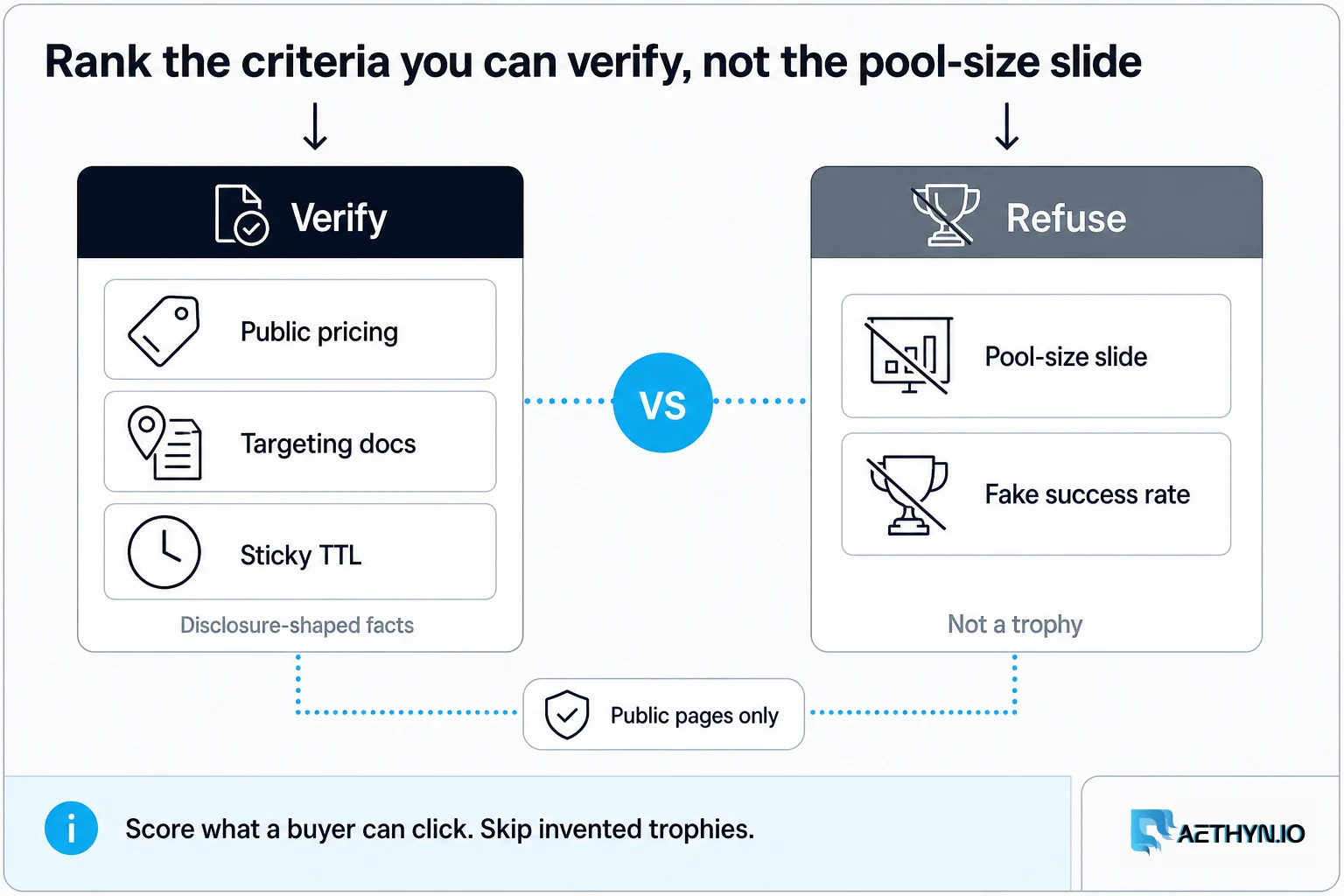
A headline IP count is not a live inventory. Ask how diverse the exits are in the countries you actually need — reuse and bans show up in a test, not on a homepage.
- Check: Measure success on your target. See the pool-size myth.
2. Sourcing Transparency
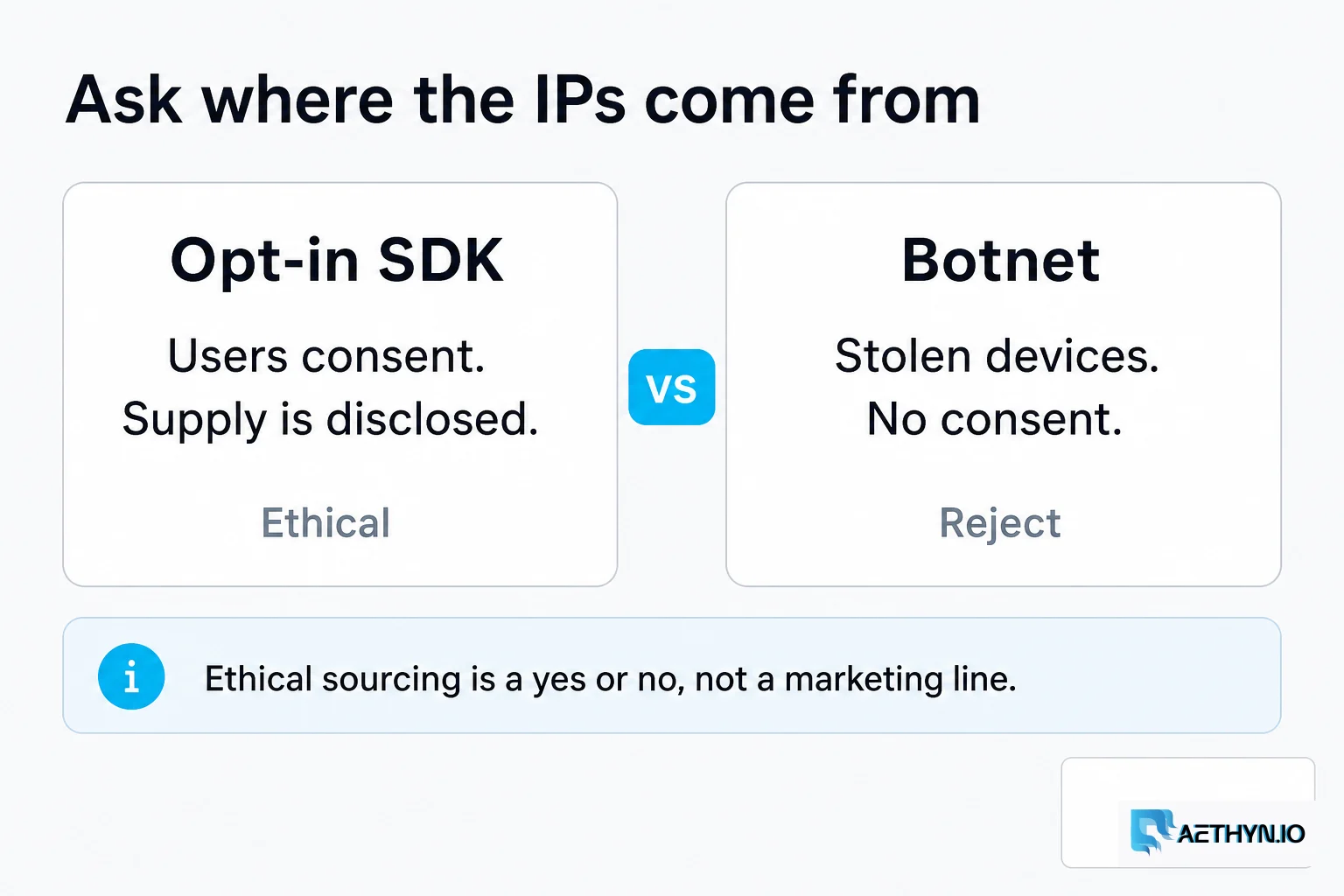
Where do the IPs come from? Ethical providers use SDKs where users opt-in. Shady providers use botnets.
- Check: Ask for their sourcing policy. Ethical sourcing is a yes or no, not a marketing line.
3. Protocol Support
Do they support HTTP, HTTPS, and SOCKS5? SOCKS5 is essential for high-performance scraping and sneaker bots.
4. Targeting Granularity
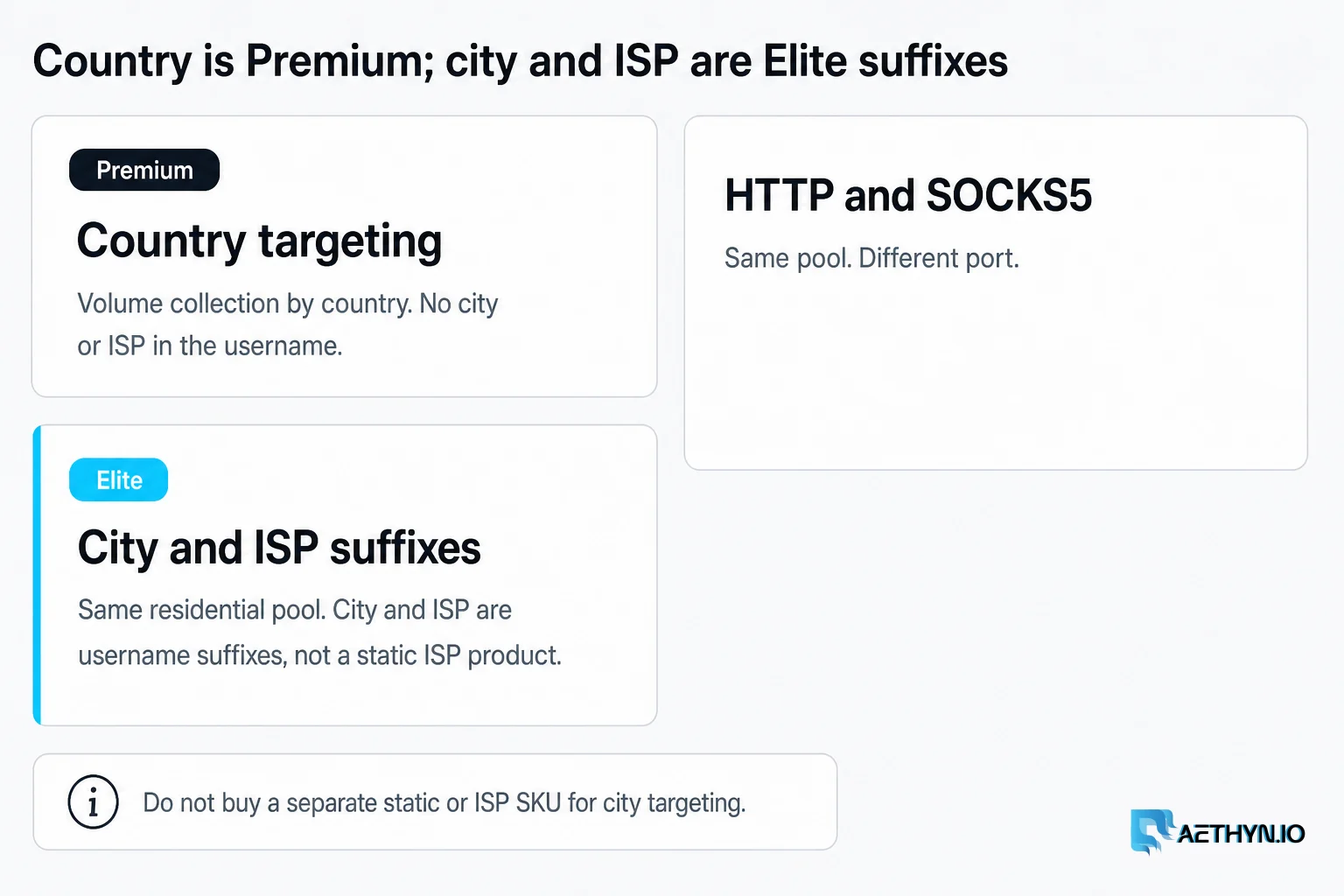
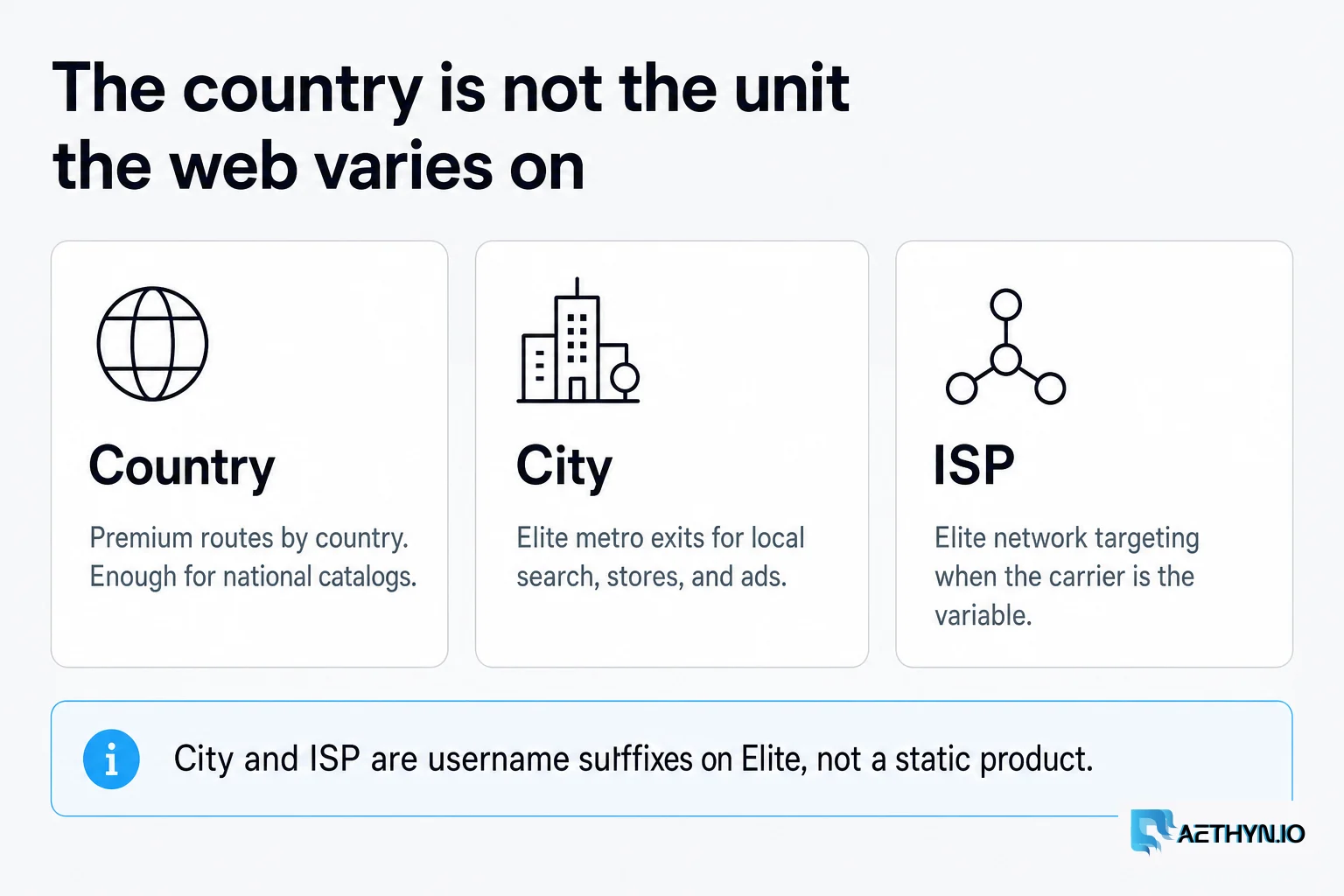
Can you target by country? City? ISP? Country targeting is Premium. City and ISP are Elite username suffixes on the same residential pool — not a separate static or ISP product. HTTP and SOCKS5 share that pool (different port).
5. Success Rate (The "Gold" Metric)
What percentage of requests result in a 200 OK status on high-security targets like Amazon or Google? That number on your pages beats any advertised pool size.
6. Response Time (Latency)
Residential proxies are slower than datacenter ones, but they shouldn't be "dial-up" slow. Look for average response times under 1 second.
7. Concurrent Sessions
Does the provider limit how many requests you can send at once? Aethyn offers unlimited concurrent sessions on all residential plans.
8. Dashboard and API UX
Is it easy to generate credentials? Can you track your usage in real-time? A good API saves hours of developer time.
9. Support Quality
When your scraper breaks at 2 AM, is there a technical team available to help?
10. Pricing Model
Is it transparent? Beware of "hidden fees" for city targeting or specific protocols.
[!TIP] Checklist Tip: Always test a provider with a small balance first. Aethyn allows you to start with a minimal top-up to verify success rates on your specific target.
Why Aethyn Checks Every Box
We built Aethyn specifically to address the failures of legacy providers. We offer ethical sourcing, Premium for cost-efficient collection, Elite for city-level and ISP targeting, and 99.9% success rates at a fraction of the cost of "Enterprise" competitors.
Guides, integrations & docs
Continue reading
Best Residential Proxies in 2026
Nine residential proxy providers compared on published price, targeting, and self-serve signup. A short list if you want to buy residential proxies in 2026.
Aethyn ProxyVero Benchmark: Independent Residential Proxy Performance Test
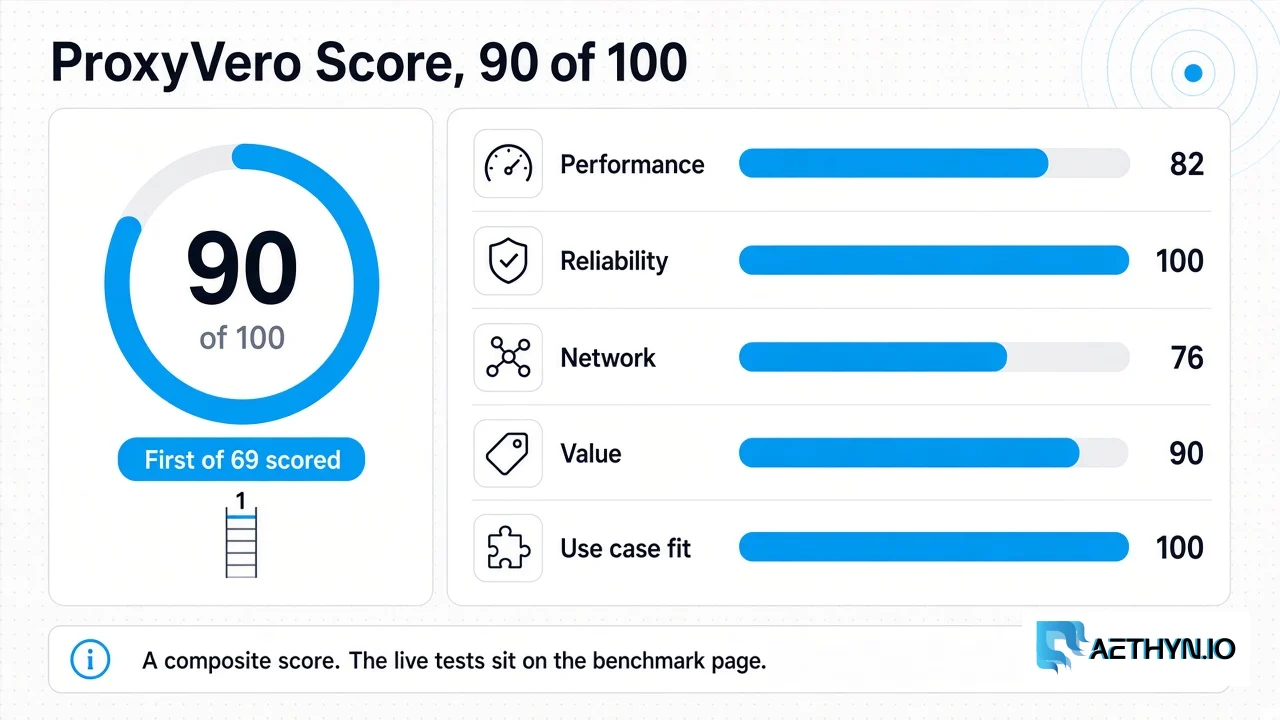
ProxyVero recorded 100% success and a 0% block rate for Aethyn on Google, Instagram, TikTok, Nike, and Amazon. The 90/100 score is a dated snapshot, set next to the August cohort.
Country-Level Targeting Isn't Enough: City and ISP Proxies Explained
Country targeting fails silently. The page renders, the price parses, the row lands in your warehouse — describing a market nobody sells into. Here's when you need city or ISP granularity, when you don't, and how to prove the exit landed where you asked.
Premium or Elite residential proxies
Join developers scaling scraping and automation with Aethyn Premium and Elite pools from €2.00/GB.