

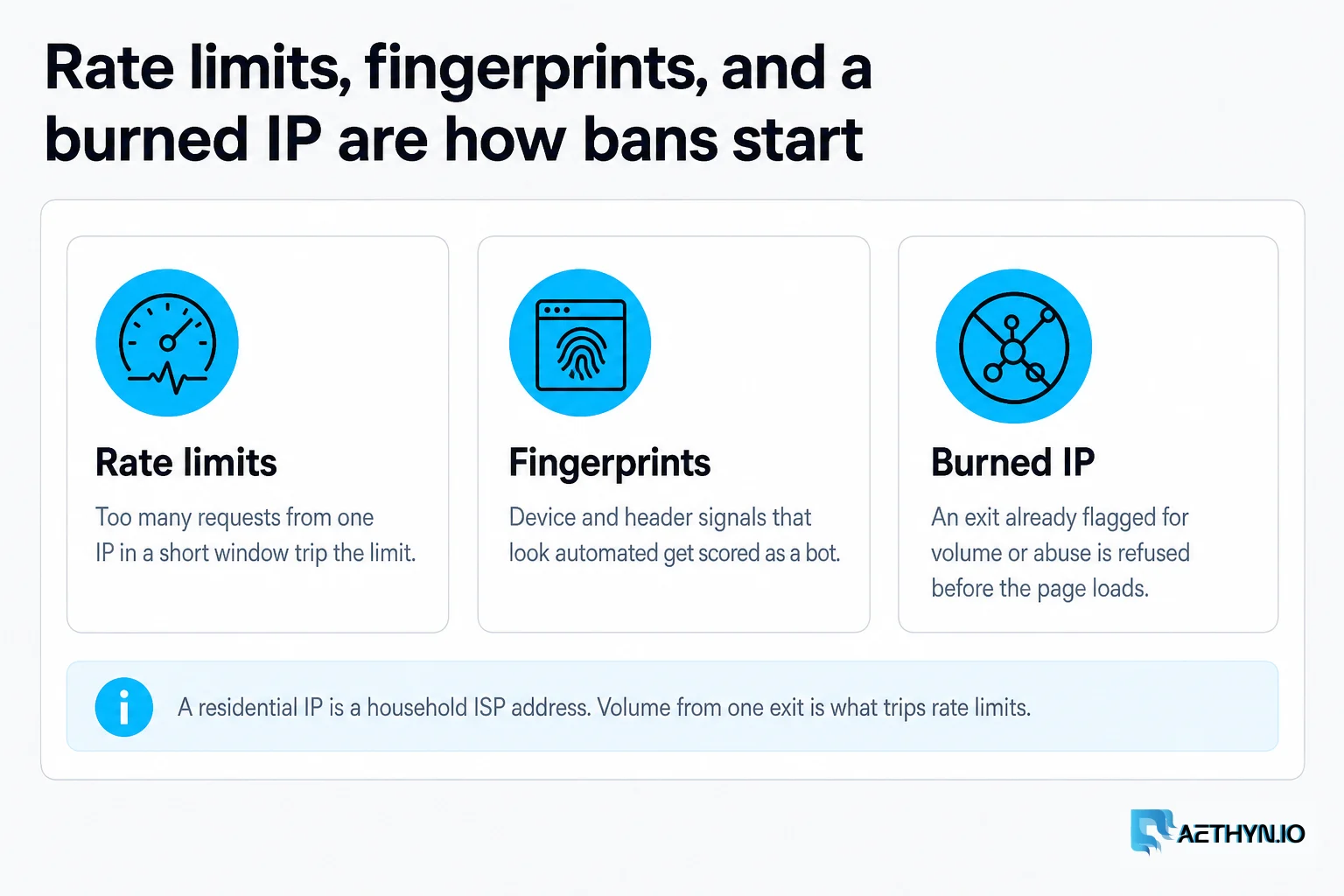
Getting blocked is the ultimate frustration for any developer or data scientist. You spend hours building a scraper, only for it to be shut down by an IP ban within minutes.
In 2026, websites are smarter than ever. They use behavioral analysis, device fingerprinting, and IP reputation to spot bots. If you want to stay invisible, you need to master the art of rotation.
Why Do IP Bans Happen?
Websites don't just block you because they're "mean." They block you to protect their resources and data. Common triggers include:
- Rate Limiting: Sending too many requests from one IP in a short time.
- Bot-like Behavior: Clicking buttons or navigating pages at impossible speeds.
- Bad Reputation: Using datacenter IPs that have already been flagged by security providers.
The Science of Rotation
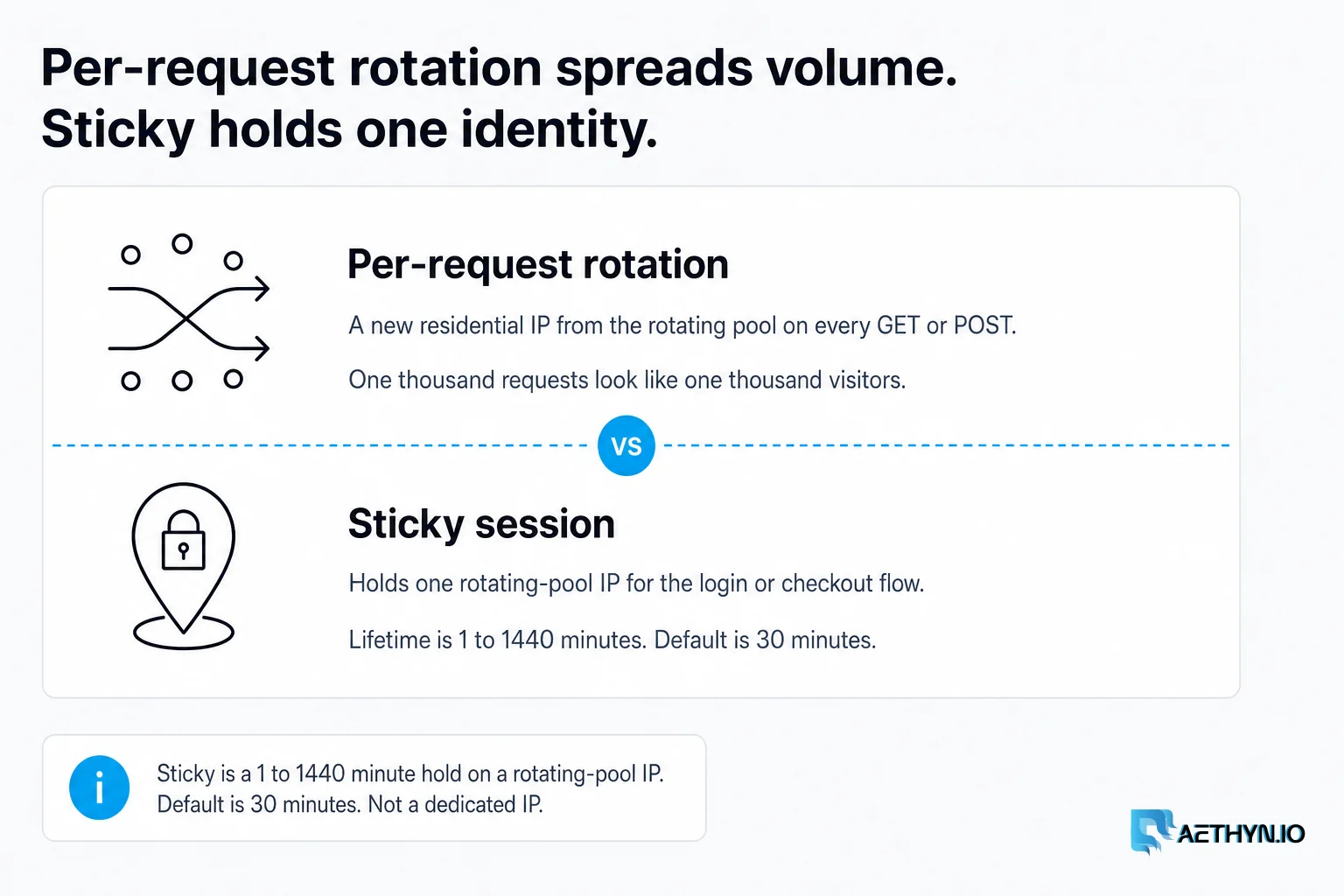
Rotating proxies are the solution to rate limiting. Instead of using one IP for 1,000 requests, you use 1,000 IPs for one request each.
1. Per-Request Rotation
Every time your script sends a GET or POST request, the proxy gateway assigns a new residential IP from the pool. This makes it look like 1,000 different users are visiting the site simultaneously.
2. Sticky Sessions
Sometimes you need to stay on the same IP—for example, when logging into an account or completing a multi-step checkout. Aethyn sticky sessions hold a rotating-pool IP for 1–1440 minutes (default 30) so the identity lasts for the duration of a task.
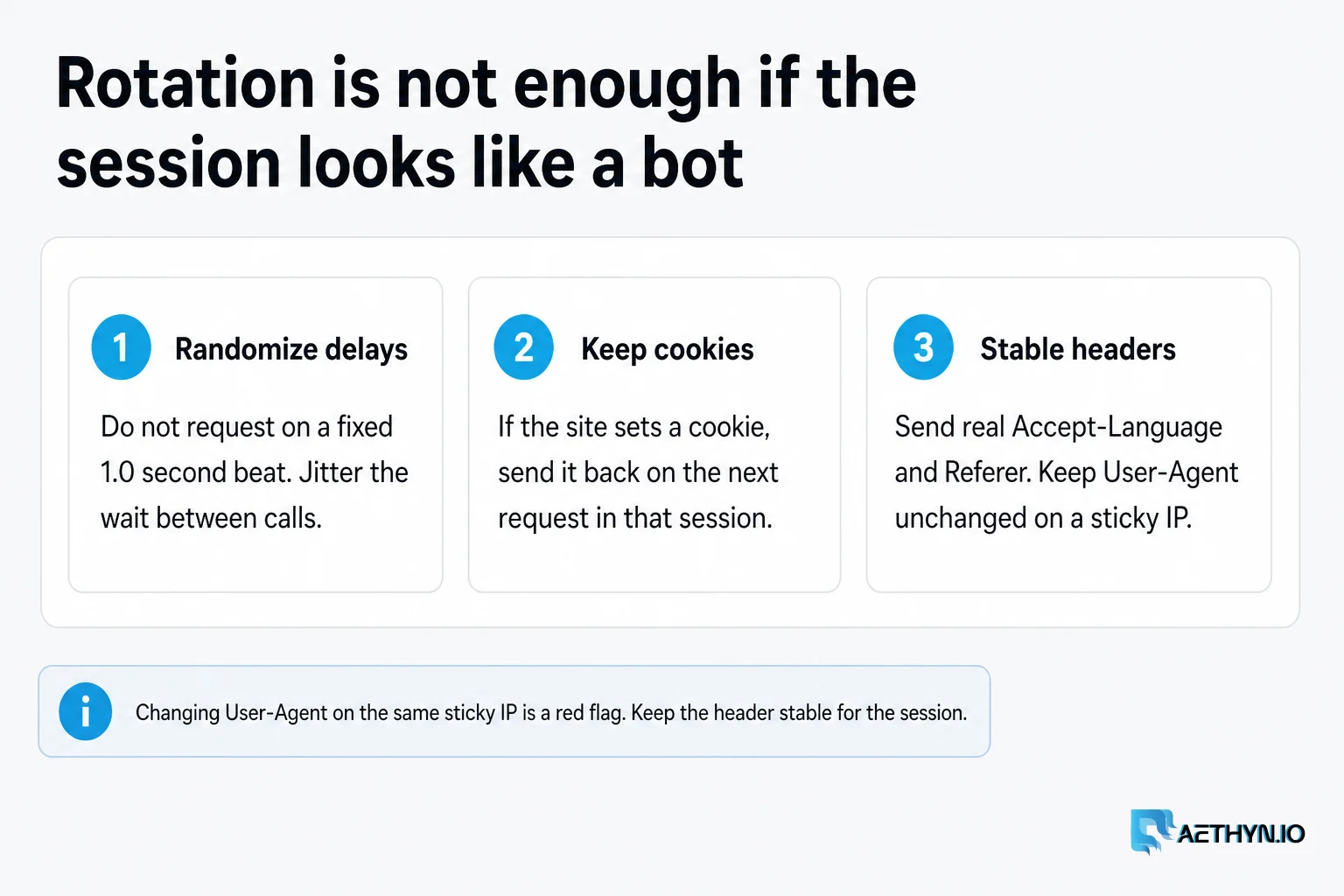
[!TIP] Pro Tip: When using sticky sessions, ensure your User-Agent header stays the same. Switching IPs while keeping the same User-Agent is fine, but switching User-Agents on the same IP is a major red flag for security systems.
Mimicking Human Behavior
Rotation is only half the battle. To truly avoid bans, your scraper must "act" human:
- Randomize Delays: Don't send requests every exactly 1.0 seconds. Use
time.sleep(random.uniform(1, 5)). - Handle Cookies: If a site sets a cookie, your script should send it back in the next request.
- Use Real Headers: Include headers like
Accept-LanguageandRefererto look legitimate.
Why Aethyn is the Ban-Proof Choice
Aethyn's residential network is built on real-user devices. Our "Elite" pool consists of IPs with the highest possible reputation scores, specifically curated for targets with "Perimeter 81" or "Cloudflare Enterprise" protection.
Guides, integrations & docs
Continue reading
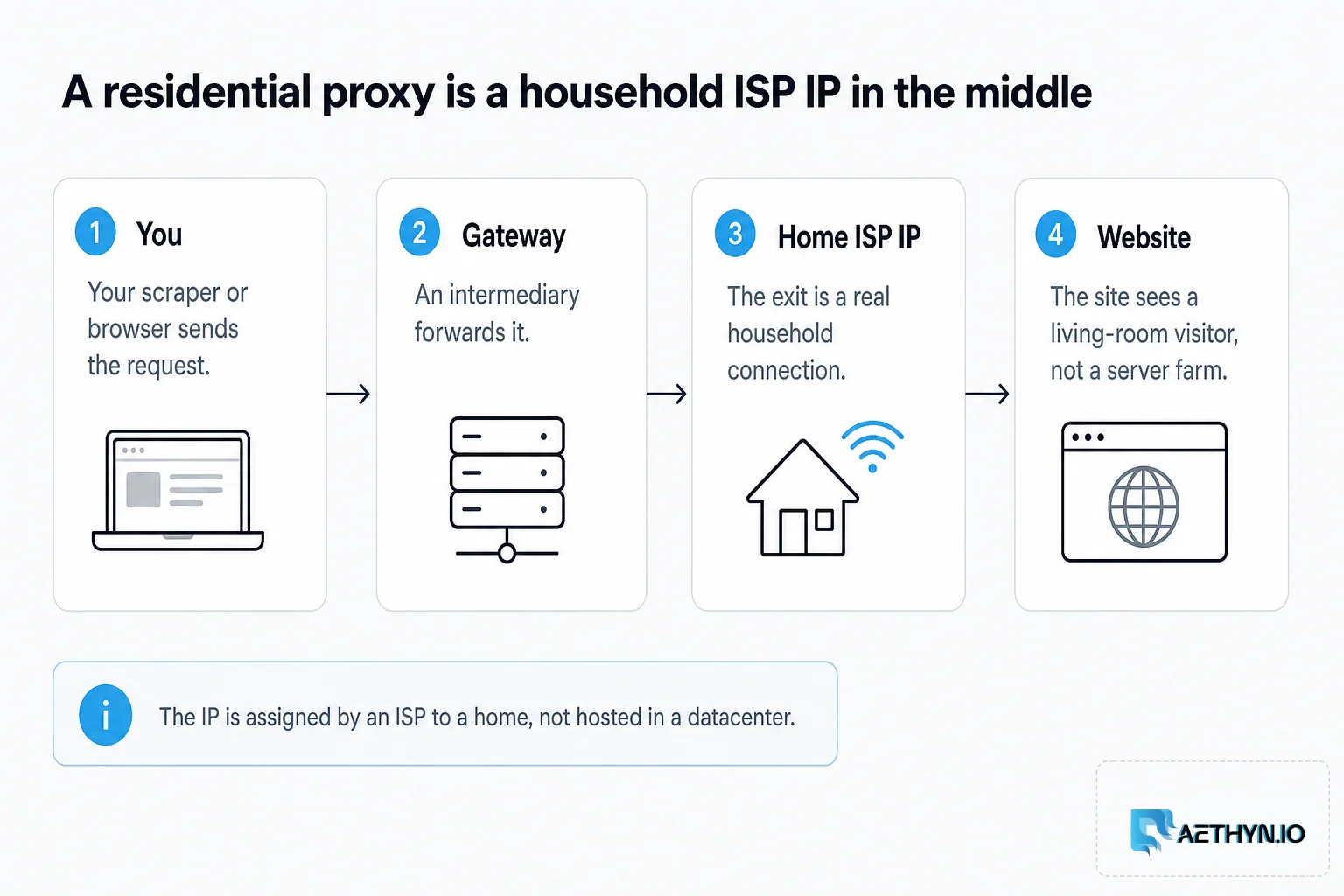
What Are Residential Proxies? Complete Beginner Guide (2026)
Learn everything about residential proxies: how they work, why they are more reliable than datacenter IPs, and how to use them for your business in 2026.

Residential vs Datacenter Proxies: Which One Should You Use?
A residential proxy is an ISP-assigned household IP; a datacenter proxy is a cloud-hosted server IP. Compare trust, speed, cost, and when to switch — Aethyn sells residential only.
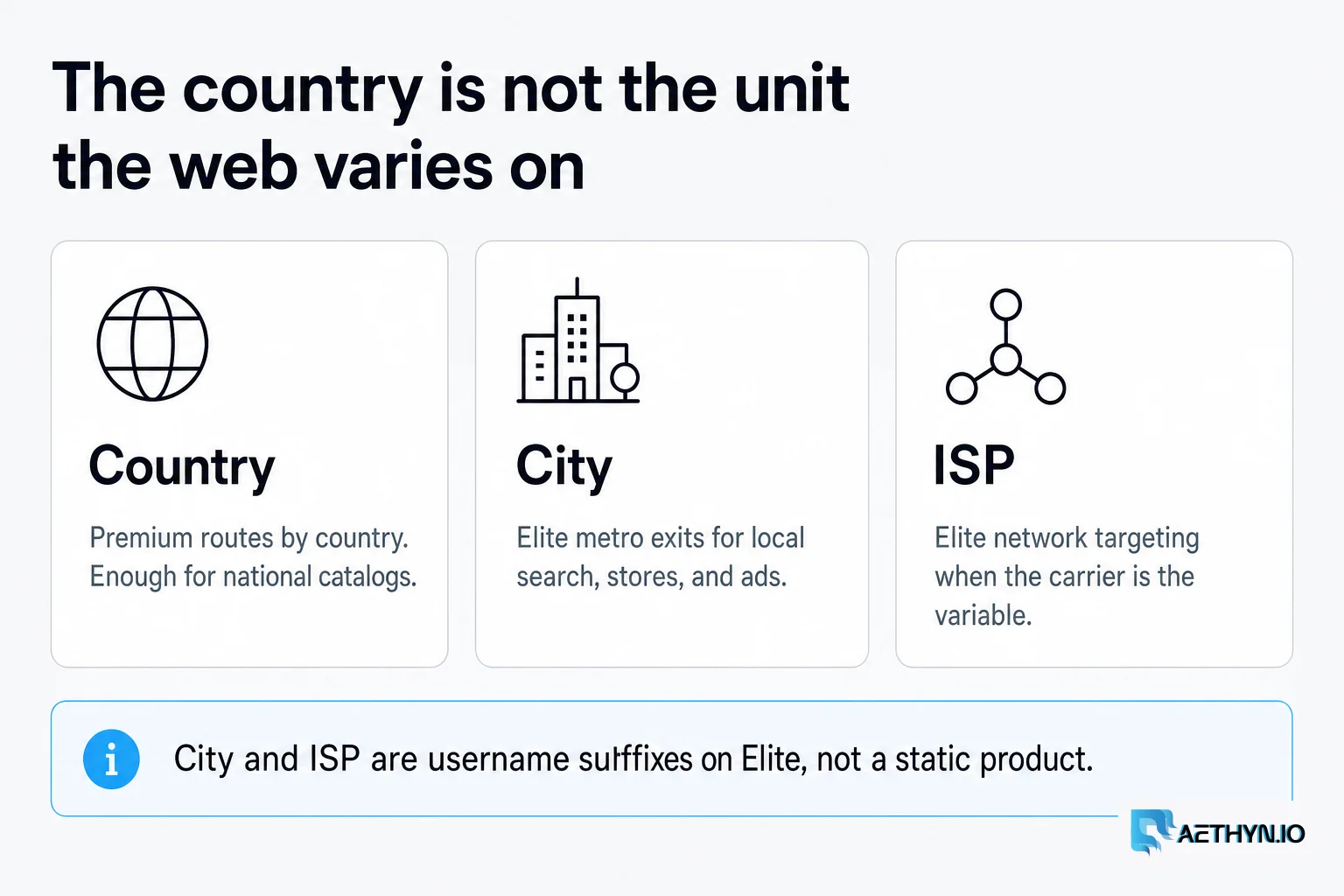
Country-Level Targeting Isn't Enough: City and ISP Proxies Explained
Country targeting fails silently. The page renders, the price parses, the row lands in your warehouse — describing a market nobody sells into. Here's when you need city or ISP granularity, when you don't, and how to prove the exit landed where you asked.
Premium or Elite residential proxies
Join developers scaling scraping and automation with Aethyn Premium and Elite pools from €2.00/GB.