

What goes wrong when this scraper fails
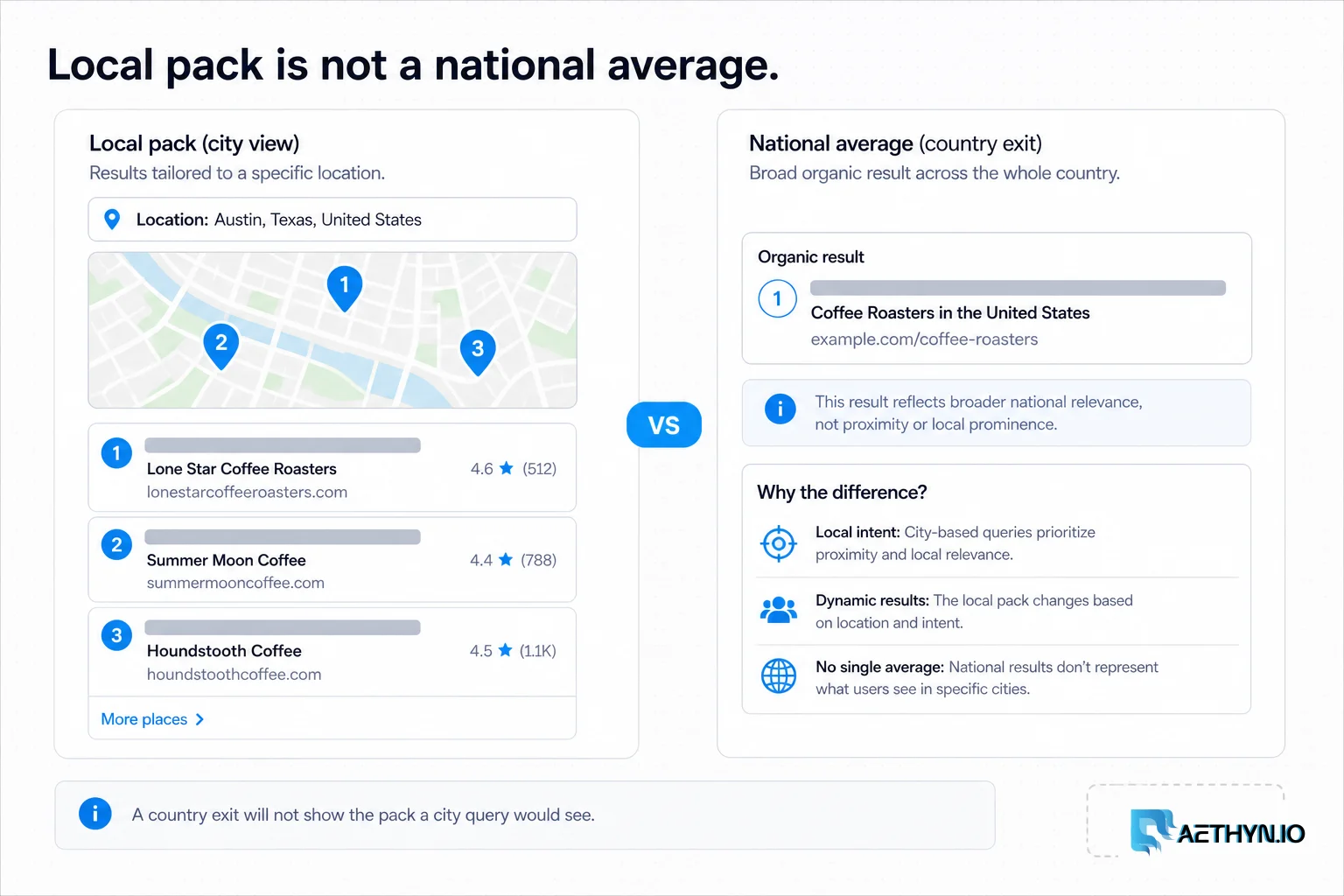
A lead-gen team wants every 'HVAC contractor' across 200 US metros; a local-SEO agency needs to see how a client ranks in the Map Pack from each suburb it serves. Both depend on Maps returning what a resident would see. Pull those queries from a single server and Maps either throttles the feed, redirects to a consent wall, or returns a listing set skewed to the datacenter's location — so the 'Chicago' results come back quietly half-populated with the wrong city.
Why this failure mode happens
Maps personalizes ranking by the viewport and the requester's inferred location, then layers Google's standard anti-automation on top: velocity scoring, consent gating (consent.google.com in the EU), and detection of headless or automated browsers. A datacenter IP fails on two fronts at once — it is low-trust and geographically wrong — so even when it is not outright blocked, the listings it returns do not represent any real local searcher.
Challenges that make this hard to automate
- Ranking is location-sensitive, so the exit IP's city must match the market, not just the country
- The feed is JavaScript-rendered and lazy-loaded — raw HTTP returns almost nothing usable
- Scrolling must continue to the end-of-list sentinel, or you silently truncate the results
- Reviews are personal data, creating GDPR/CCPA obligations distinct from business facts
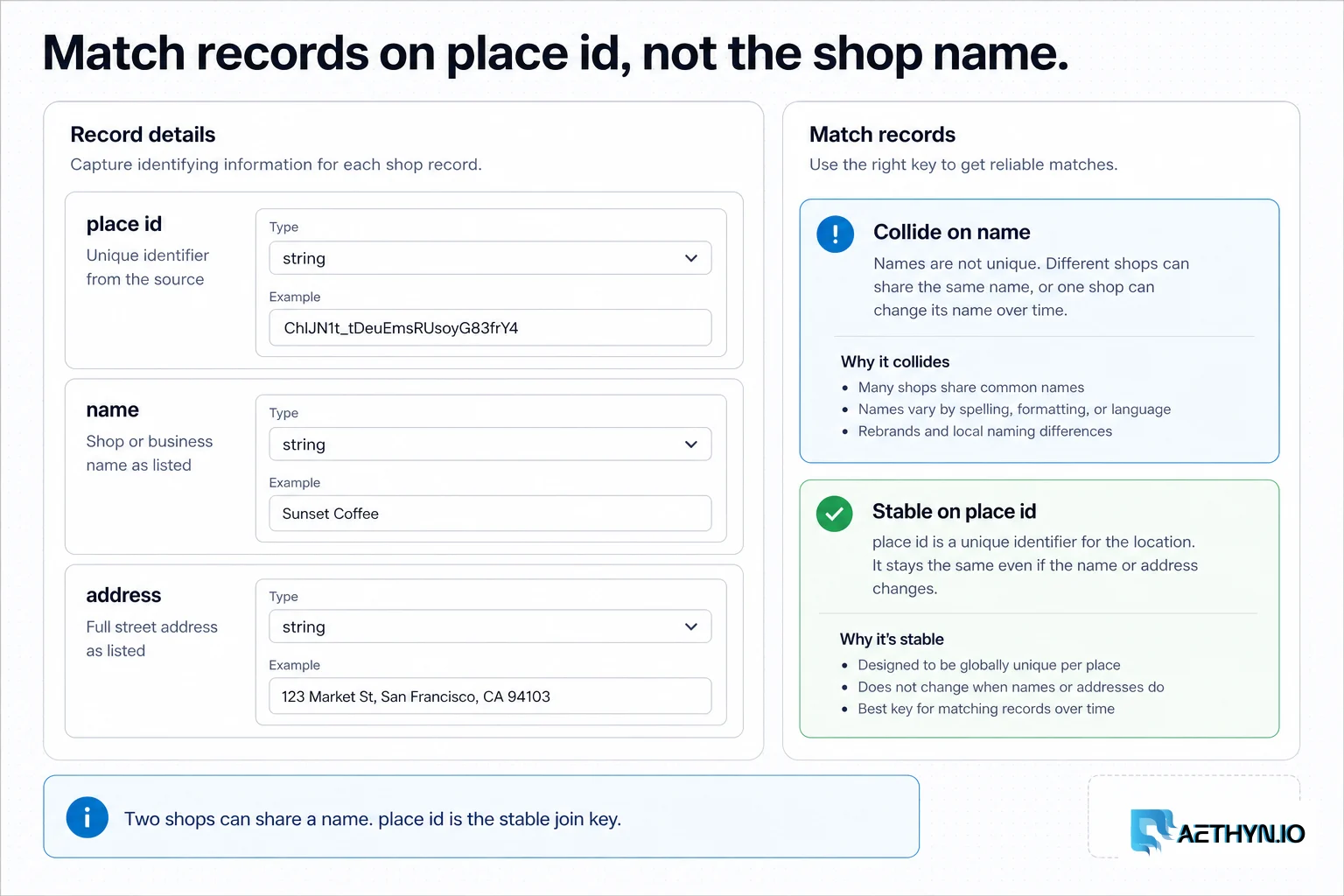
- Business names repeat across locations, so naive name-based dedupe merges distinct places
Approaches that usually fail
- The official Places API — clean and reliable, but metered, field-limited, and costly across hundreds of metros
- Datacenter proxies — wrong geography and throttled before a city sweep even finishes
- A single headless browser on one IP — blocked after a handful of searches
- Manual collection in Maps — accurate but impossible across 200 cities on a schedule
When residential proxies fix this — and when they cannot
Residential IPs in the target city make each search read as a local user and return the listings residents actually see, while a large rotating pool keeps per-IP velocity low enough to sweep many metros without throttling. City-level exits are precisely what datacenter proxies and VPNs cannot replicate — and for Map Pack work, city precision is the entire point.
How Aethyn residential proxies help here
Local data collection needs two things at once: geographic precision and enough IP diversity to query hundreds of areas without tripping limits. Aethyn's Elite tier provides both, controlled through the username.
- Elite city/ISP targeting (-city-) so 'coffee in Chicago' returns Chicago's listings, not a datacenter's
- A large rotating pool to sweep hundreds of metros while keeping per-IP velocity low
- Sticky sessions (-session-…-lifetime-) to hold one exit through a single scroll-and-paginate pass
- 195+ country coverage for international local data from one credential
- Standard auth that drops straight into Playwright/Puppeteer for the JavaScript feed
How to implement this with residential proxies
- 1
Target the city and bias the viewport
On Elite, pin country and city in the username so the request originates locally. Then bias the map itself by appending /@lat,lng,zoomz to the search URL — the IP sets who you appear to be, the coordinates set where the map is centered. Together they pin the result set to a real neighborhood.
cURL# City-targeted exit + viewport centered on downtown Chicago (zoom 13) curl -x "http://aethyn-XXXXX-country-us-city-chicago:PASSWORD@proxy.aethyn.io:5499" \ "https://www.google.com/maps/search/coffee+shops/@41.8781,-87.6298,13z"Field note: Keep a small lookup of lat/lng centroids per metro you crawl. Pairing the right coordinates with a city-matched IP is what separates a clean local data set from one subtly contaminated by a neighboring region's listings.
- 2
Render and scroll the feed to the end (Playwright)
Maps is fully JavaScript-driven, so use a headless browser through the residential proxy. The catch most scrapers miss: the results live in a scrollable side panel (div[role='feed']), not the window — you must scroll that element repeatedly until Google appends the 'You've reached the end of the list' sentinel, otherwise you only ever capture the first dozen listings.
Python (Playwright)from playwright.sync_api import sync_playwright def collect_place_urls(query, lat, lng, max_rounds=40): url = f"https://www.google.com/maps/search/{query}/@{lat},{lng},13z" with sync_playwright() as p: browser = p.chromium.launch(proxy={ "server": "http://proxy.aethyn.io:5499", "username": "aethyn-XXXXX-country-us-city-chicago", "password": "PASSWORD", }) page = browser.new_page(locale="en-US") page.goto(url) feed = page.wait_for_selector("div[role='feed']", timeout=20000) for _ in range(max_rounds): page.eval_on_selector("div[role='feed']", "el => el.scrollBy(0, el.scrollHeight)") page.wait_for_timeout(1500) if page.get_by_text("reached the end of the list").count(): break links = page.eval_on_selector_all( "div[role='feed'] a[href*='/maps/place/']", "els => els.map(e => e.href)") browser.close() return list(dict.fromkeys(links)) # de-dupe, preserve orderField note: Cap the scroll rounds and watch for the sentinel — never loop forever. If the feed stops growing well before the sentinel, that is usually a soft throttle, not the genuine end: drop the session, rotate, and resume the metro later.
- 3
Extract structured fields per listing
Open each place URL (reusing the same sticky session) and read the fields off stable, role-based selectors rather than churned class names. Capture the place_id from the URL as your dedupe key — names like 'Starbucks' appear thousands of times and will collide.
Python (extraction)import re def parse_place(page): name = page.locator("h1").first.inner_text() rating = page.locator("div.fontDisplayLarge").first.inner_text() # e.g. "4.6" reviews = page.get_by_text(re.compile(r"\d[\d,]* reviews")).first.inner_text() category = page.locator("button[jsaction*='category']").first.inner_text() place_id = re.search(r"!1s(0x[0-9a-f:]+)", page.url) return { "place_id": place_id.group(1) if place_id else None, "name": name, "rating": float(rating.replace(",", ".")) if rating else None, "reviews": int(re.sub(r"[^\d]", "", reviews) or 0), "category": category, "url": page.url, }Field note: Selectors like fontDisplayLarge drift over time — wrap each field read in a try/except and log misses. A field that suddenly goes null across every listing is your early-warning that Maps changed its layout, not that every business lost its rating.
- 4
Hold one IP per pass with a sticky session
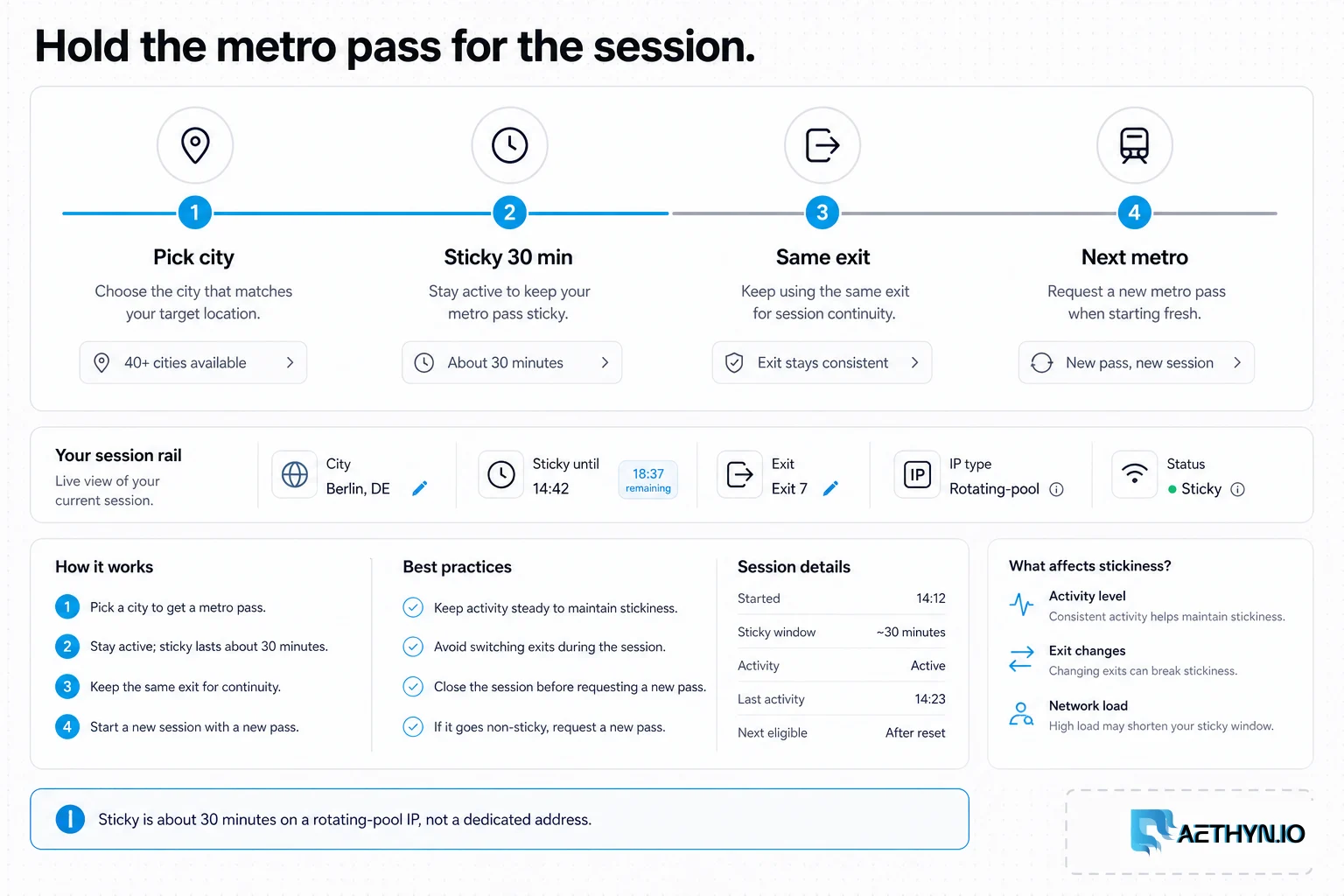
A metro sweep is a multi-step flow — search, scroll, then open each place — so pin one exit for that pass with a session id and a short lifetime. Rotate to a fresh exit for the next metro to keep per-IP velocity low across the whole job.
Username (sticky)aethyn-XXXXX-country-us-city-chicago-session-metro042-lifetime-20Field note: Derive the session id from the metro (session-metro042) so retries of the same city reuse a coherent identity, while different cities never share one. It makes runs reproducible and easier to debug.
- 5
Collect reviews only with care
Ratings and review counts are business facts and safe to store. Individual review text and author names are personal data — if you genuinely need them, collect only what your lawful basis covers, minimize what you retain, and honor deletion. For most ranking and lead-gen work, the aggregates are enough.
Best practices that keep scrapers reliable
- Pair a city-matched Elite IP with a /@lat,lng viewport for true local results
- Scroll the feed element to the end-of-list sentinel — don't stop at the first screen
- Dedupe on place_id, never on business name
- Read fields off role-based selectors and wrap each in try/except for layout drift
- Re-crawl on a cadence and store deltas; ratings move slowly, listings churn
- Treat ratings/counts as facts but review text/authors as personal data
Common mistakes that burn proxy budget
- Scrolling the window instead of the feed panel, capturing only the first dozen listings
- Stopping scroll before the sentinel and silently truncating each metro
- Deduping on name, merging 'Starbucks' locations into one record
- Querying a city with a datacenter IP and trusting the skewed listing set
- Hoarding review text with no lawful basis or retention limit
- Treating a stalled feed as the genuine end of results rather than a soft throttle