

Residential proxies have moved from a niche scraping tool to core infrastructure for data teams, marketers, and AI companies. This page collects the most useful numbers for 2026 in one place — so you can benchmark your own setup or cite a figure in your next report.
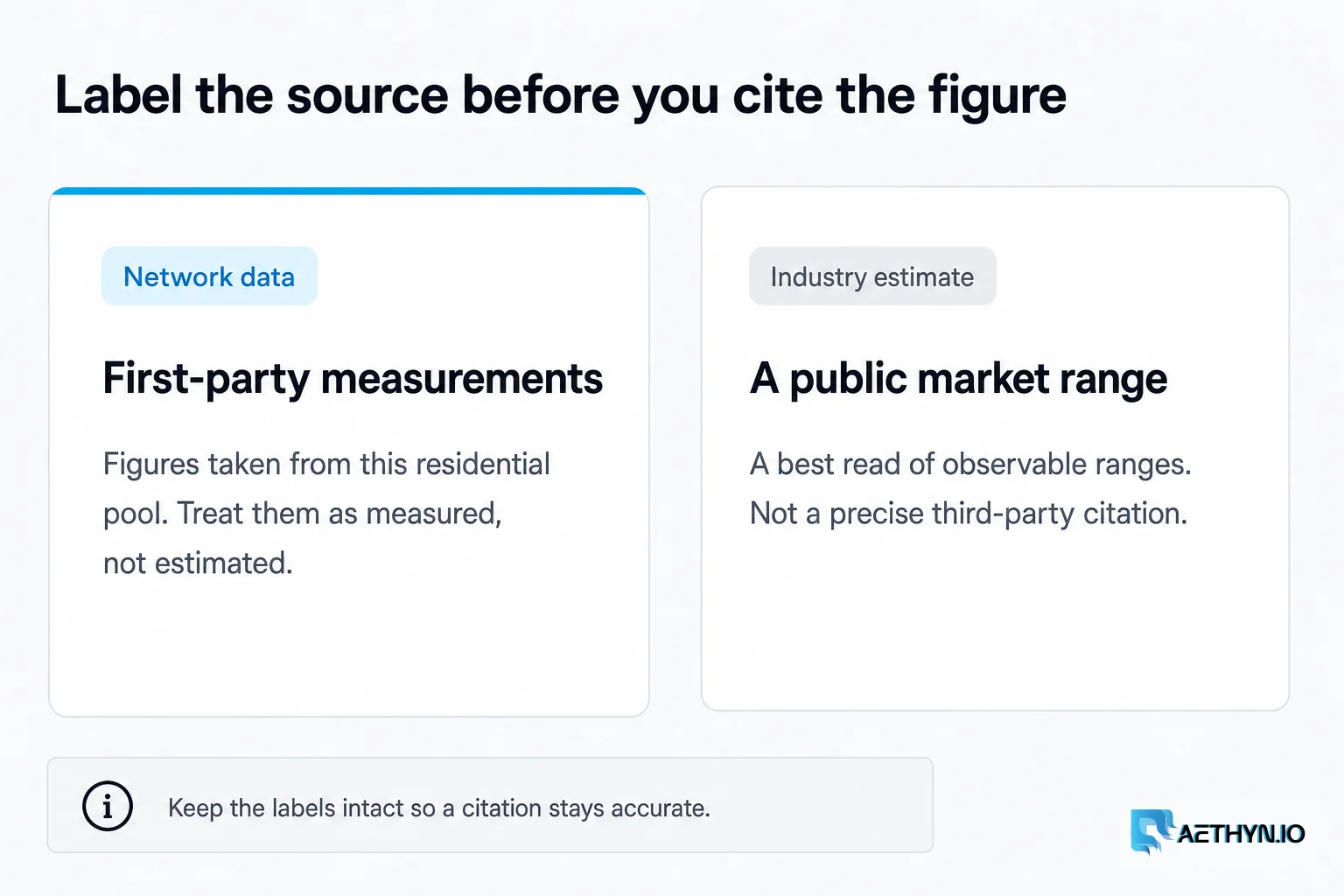
[!NOTE] How to read this page. Figures labelled (Aethyn network data) are first-party measurements from Aethyn residential proxies. Figures labelled (industry estimate) are our best read of publicly observable market ranges, not a precise third-party citation. We separate the two so you can represent each accurately. Everything here is free to cite with a link back to this article.
Market overview
- The residential proxy market continues double-digit annual growth, driven primarily by AI data collection and large-scale price intelligence. (industry estimate)
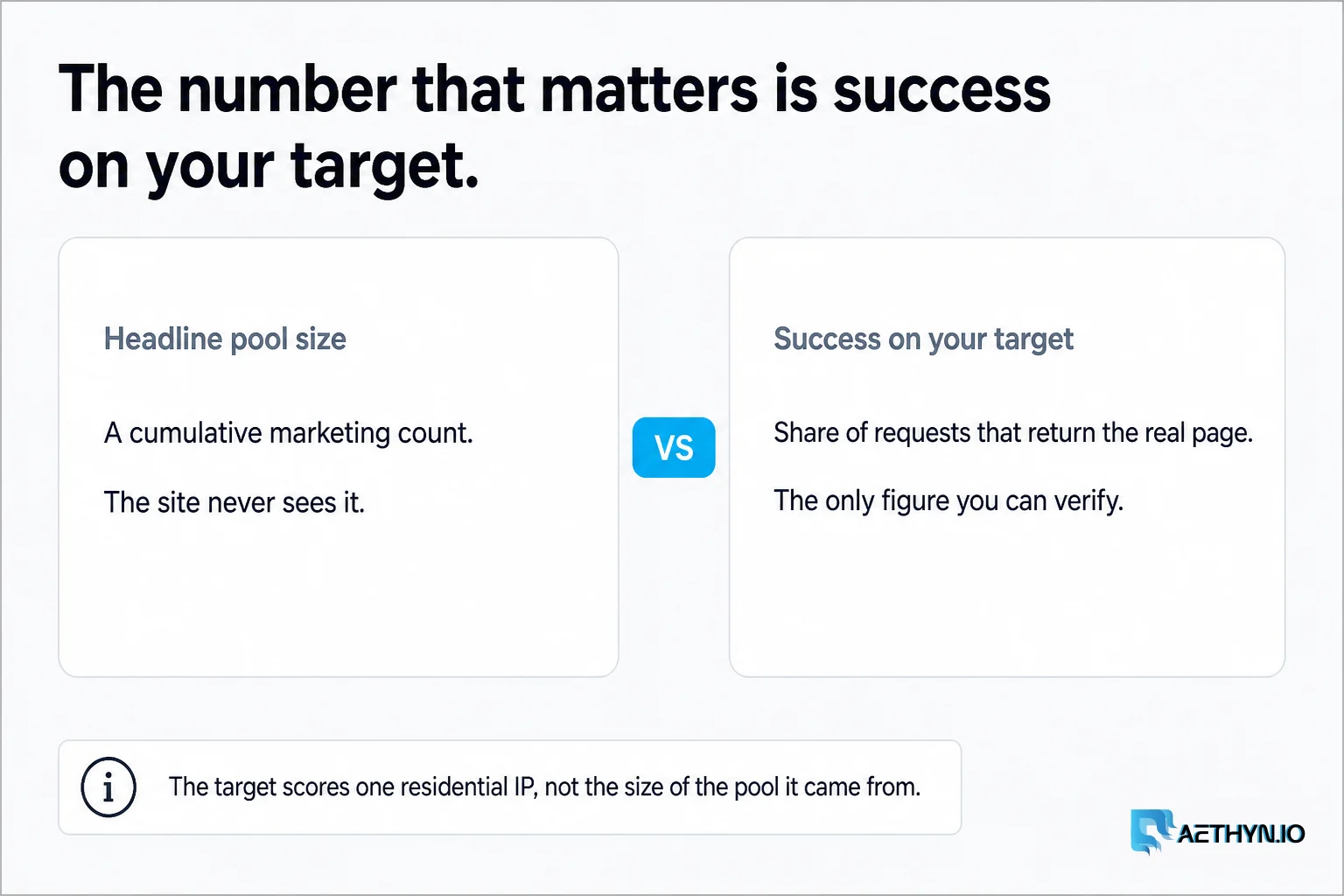
- Demand is increasingly concentrated in high-reputation IPs rather than raw pool size — buyers now optimise for success rate per GB, not headline IP counts. (industry estimate)
- Bandwidth-based (per-GB) pricing has overtaken per-IP pricing as the dominant commercial model for residential traffic. (industry estimate)
Success rates
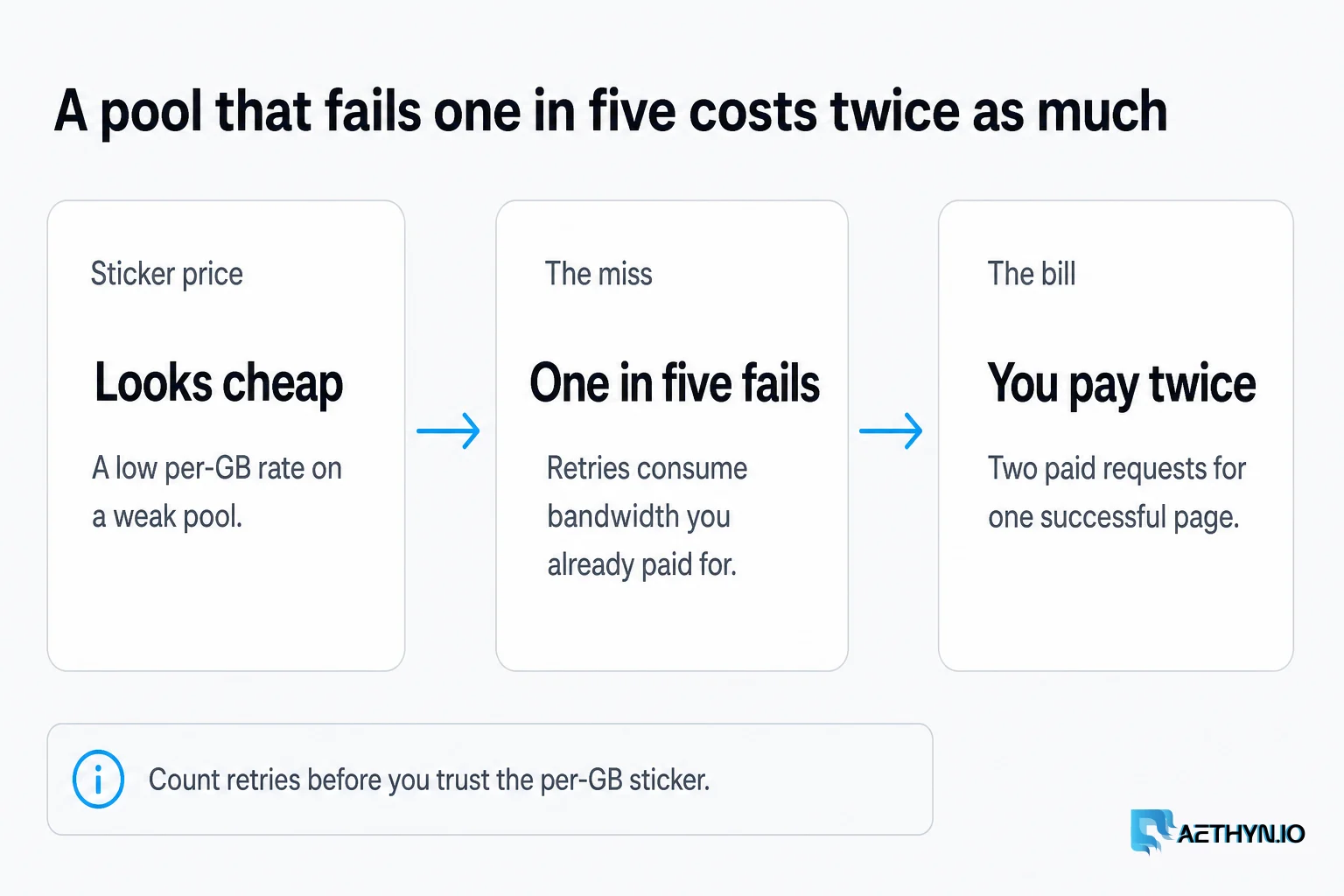
Success rate is the single most important residential proxy metric — a cheaper pool that fails 1 in 5 requests is more expensive in practice once you account for retries.
| Target difficulty | Typical rotating pool | Curated / elite pool |
|---|---|---|
| Low (open sites, APIs) | 99%+ | 99.9% |
| Medium (e-commerce, search) | 95–98% | 99%+ |
| Hard (Cloudflare Ent., Akamai, DataDome) | highly variable | materially higher |
(Aethyn network data, blended across customer traffic.)
- Aethyn's Premium pool sustains a 99.2% success rate; the curated Elite pool sustains 99.9% on demanding targets. (Aethyn network data)
- Most "block" events on residential traffic are not hard IP bans — they are CAPTCHA challenges and soft rate limits that resolve with rotation and pacing. (Aethyn network data)
Latency & performance
- Residential proxies are inherently slower than datacenter IPs because traffic routes through home ISP connections. The trade-off buys trust, not speed.
- Aethyn measures sub-50ms tunnel latency (the overhead our gateway adds, separate from the destination site's own response time). (Aethyn network data)
- For latency-sensitive workloads like sneaker drops, the gateway overhead matters far more than raw pool size.
Pricing trends
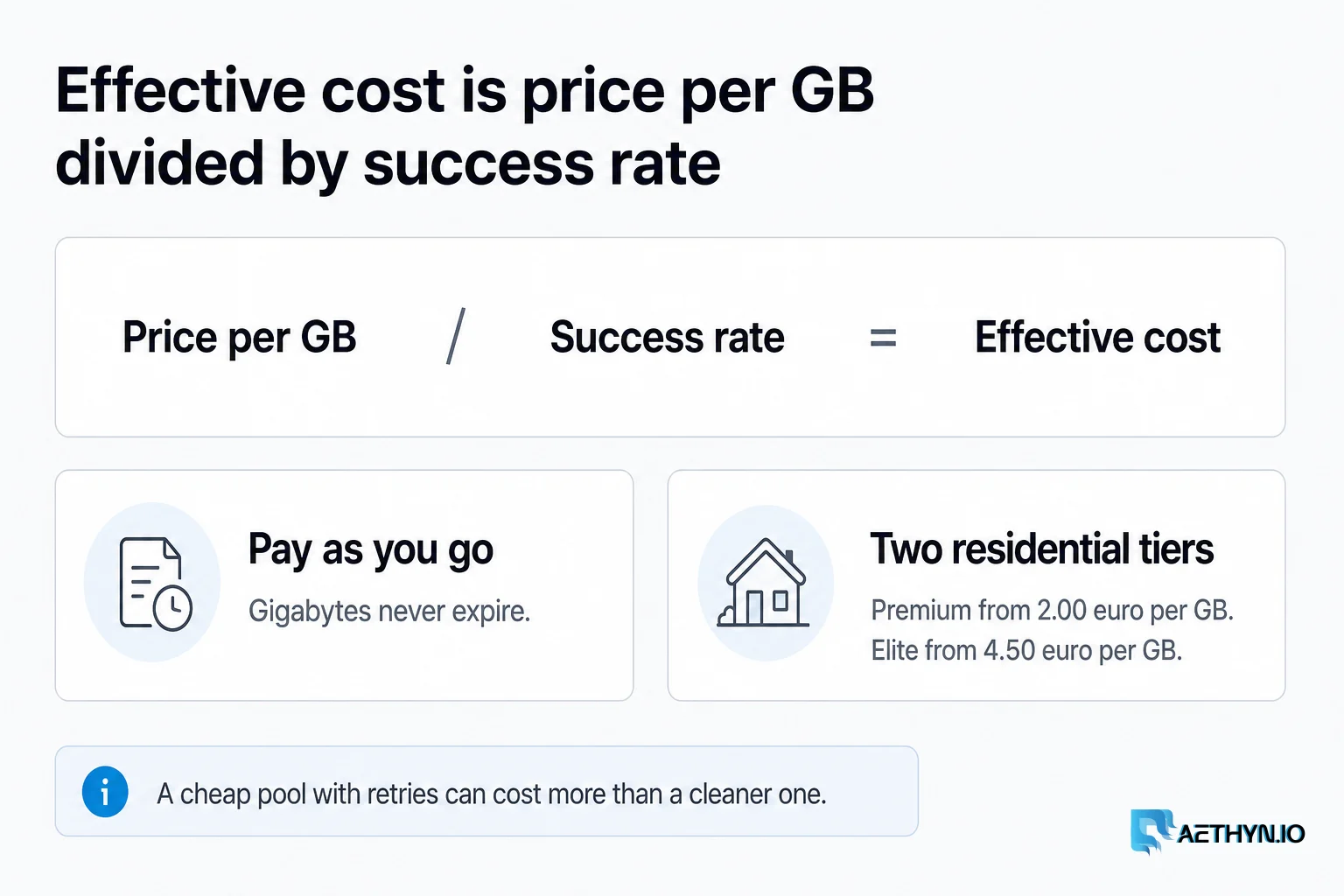
- Pay-as-you-go residential bandwidth commonly sits in the ~€2–€8 / GB range in 2026, with curated high-reputation pools at the top end. (industry estimate)
- Aethyn Premium starts from €2.00/GB and Elite from €4.50/GB at volume (entry plans are €29.00 and €65.00 for 10 GB/month), with no bandwidth expiry on PAYG balances. (Aethyn network data)
- The clearest 2026 trend is value-per-success-rate, not lowest sticker price — teams increasingly calculate effective cost as price-per-GB ÷ success-rate.
Traffic & use-case mix
Where residential proxy bandwidth actually goes, by share of traffic:
| Use case | Share of traffic | Trend |
|---|---|---|
| Web scraping & data collection | Largest segment | Steady |
| AI / LLM dataset collection | Fast-growing | ▲▲ |
| Price & market intelligence | Large | ▲ |
| Ad verification & brand protection | Moderate | ▲ |
| Social & multi-account automation | Moderate | Steady |
(Aethyn network data, directional shares.)
- AI data collection is the fastest-growing category of residential proxy demand in 2026, frequently overlapping with general web scraping. (Aethyn network data)
Protocol & session patterns
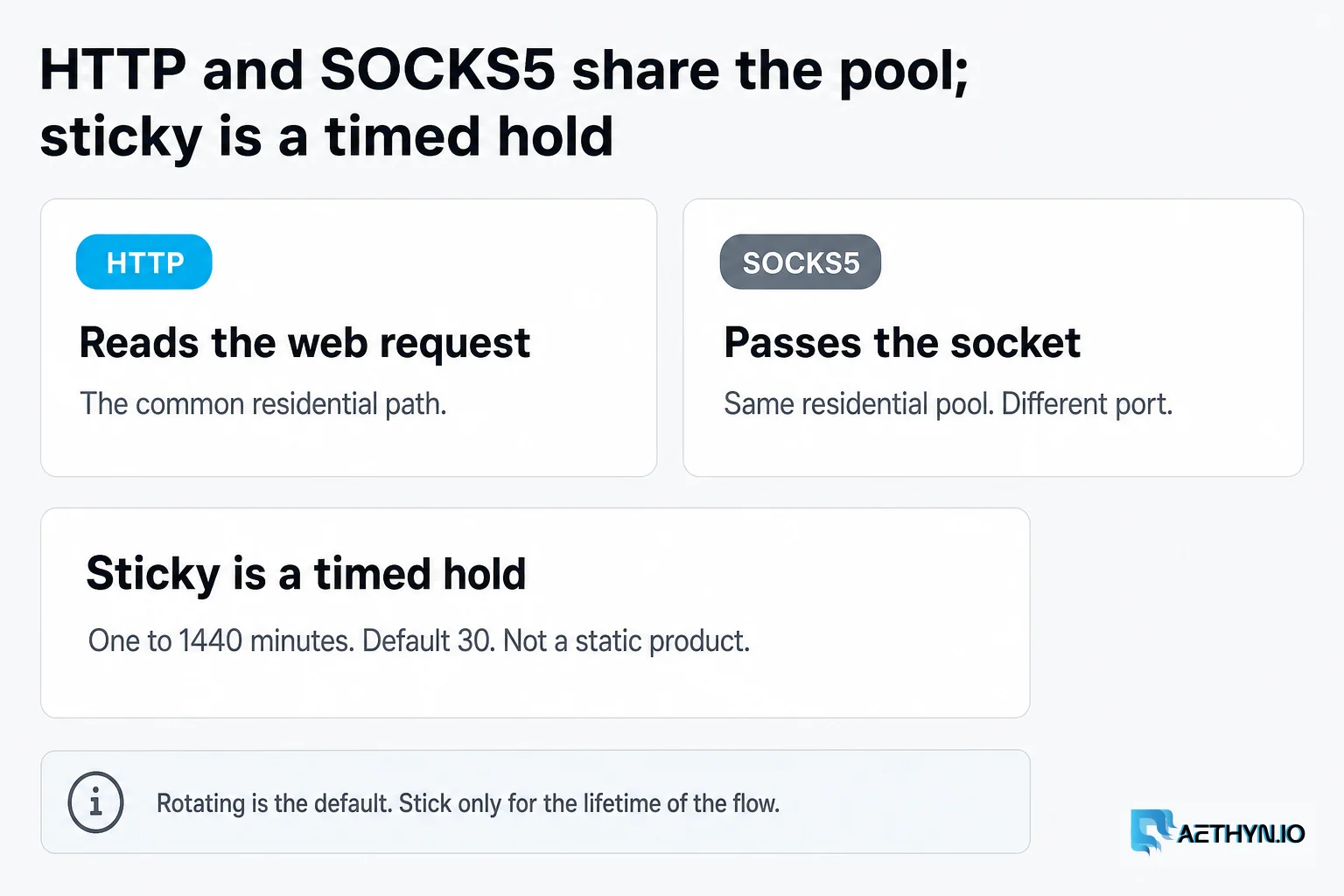
- HTTP/HTTPS still dominates residential proxy traffic, but SOCKS5 usage is rising for non-HTTP workloads and tooling that prefers it — both hit the same residential pool on different ports. (Aethyn network data)
- Rotating sessions account for the majority of requests; sticky sessions are concentrated in account-based workflows (social, multi-account, checkout). Sticky is a timed hold (1–1440 minutes, default 30) on the rotating pool, not a static SKU. (Aethyn network data)
Compliance & sourcing
- Buyers increasingly require documented, consent-based IP sourcing (opt-in SDKs, KYC-verified partners) as a procurement gate — ethical sourcing is now a commercial requirement, not just a talking point. (industry estimate)
- Regulatory attention on data collection (GDPR/CCPA and successors) continues to push the market toward transparent sourcing and clear acceptable-use policies. (industry estimate)
[!IMPORTANT] Benchmark your own stack. The number that matters most is your effective cost: price-per-GB divided by your real success rate on your targets. A pool that looks cheap can be the most expensive option once retries are counted.
Cite this page
These statistics are free to use with attribution to Aethyn and a link to this article (https://www.aethyn.io/blog/residential-proxy-statistics-2026). Please keep the (Aethyn network data) vs (industry estimate) labelling intact so figures are represented accurately.
Common questions about this article
Are these residential proxy statistics free to cite?
What is a good success rate for residential proxies in 2026?
How much do residential proxies cost per GB in 2026?
Guides, integrations & docs
Continue reading
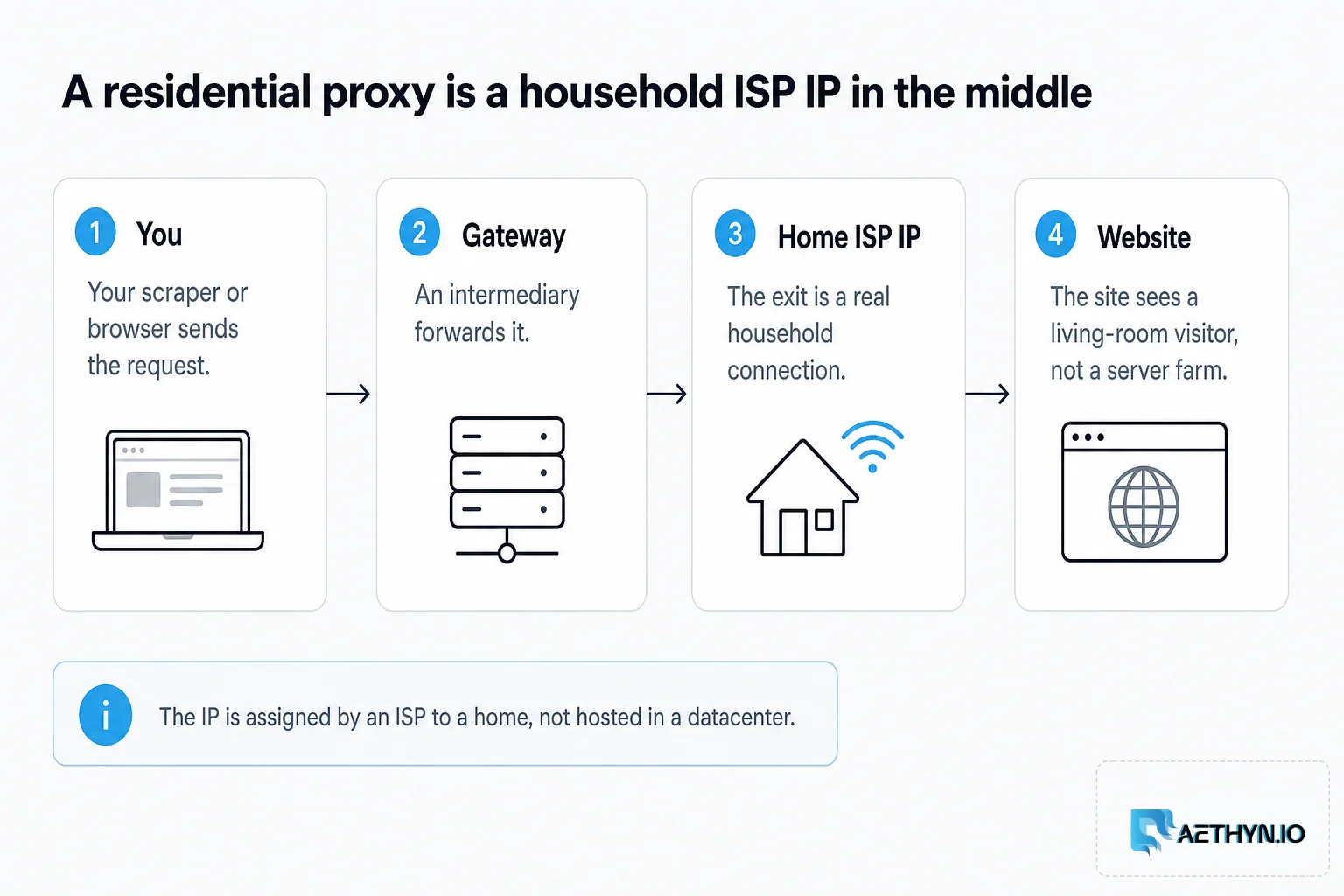
What Are Residential Proxies? Complete Beginner Guide (2026)
Learn everything about residential proxies: how they work, why they are more reliable than datacenter IPs, and how to use them for your business in 2026.
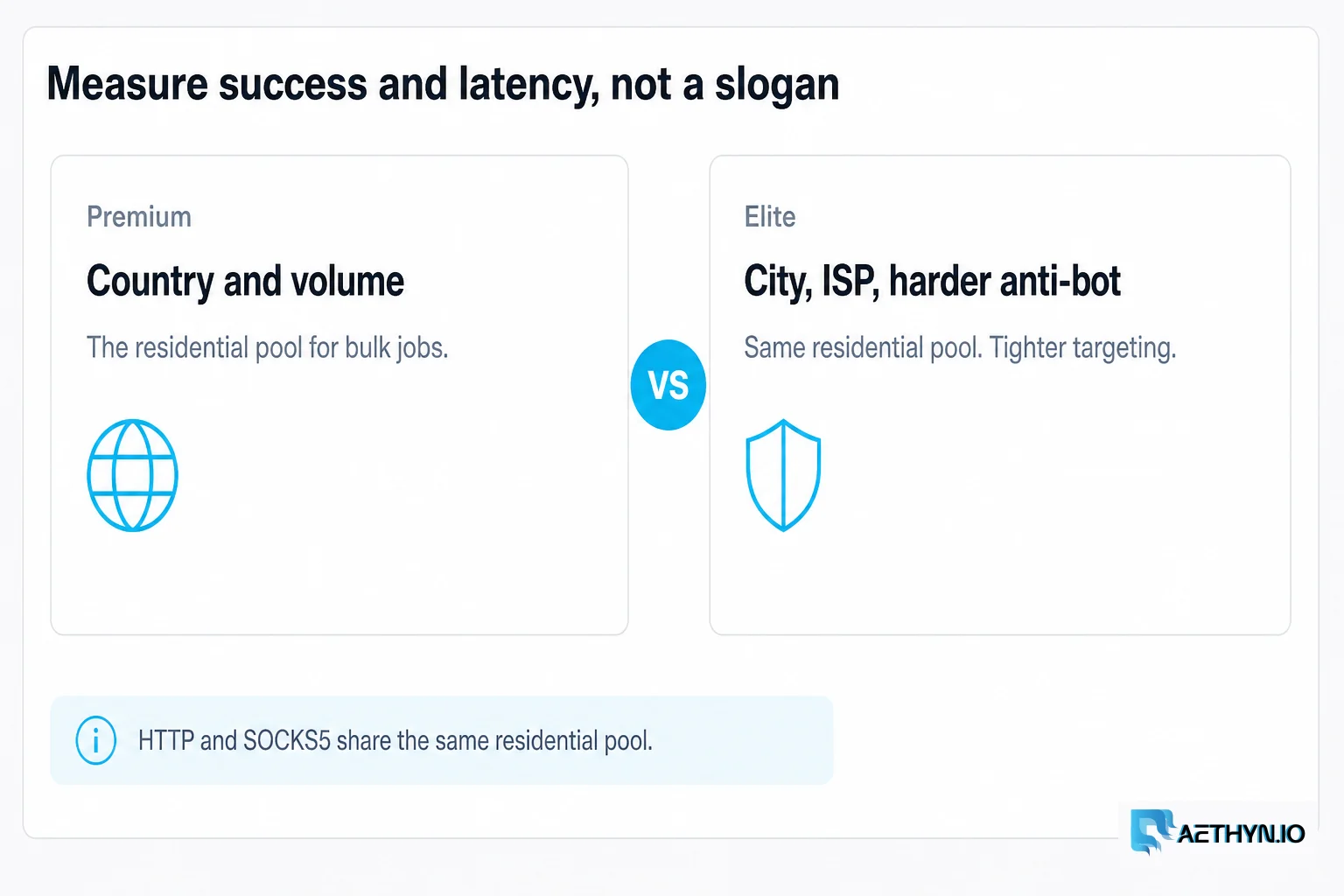
2026 Residential Proxy Benchmarks: Elite vs Premium Pools
We put our own network to the test. See the latest performance data on success rates, latency, and throughput across different pool types.
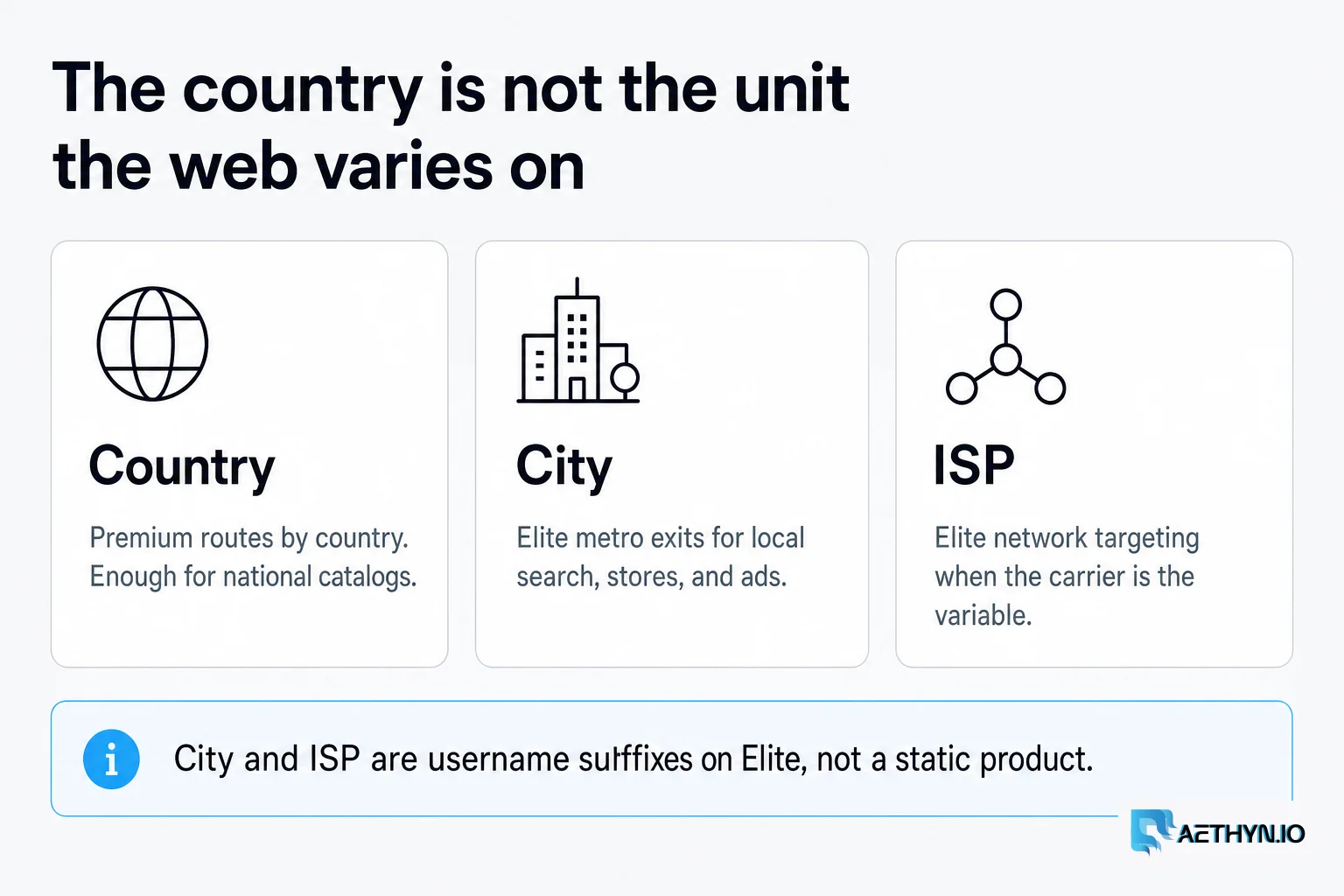
Country-Level Targeting Isn't Enough: City and ISP Proxies Explained
Country targeting fails silently. The page renders, the price parses, the row lands in your warehouse — describing a market nobody sells into. Here's when you need city or ISP granularity, when you don't, and how to prove the exit landed where you asked.
Premium or Elite residential proxies
Join developers scaling scraping and automation with Aethyn Premium and Elite pools from €2.00/GB.