

What goes wrong when this scraper fails
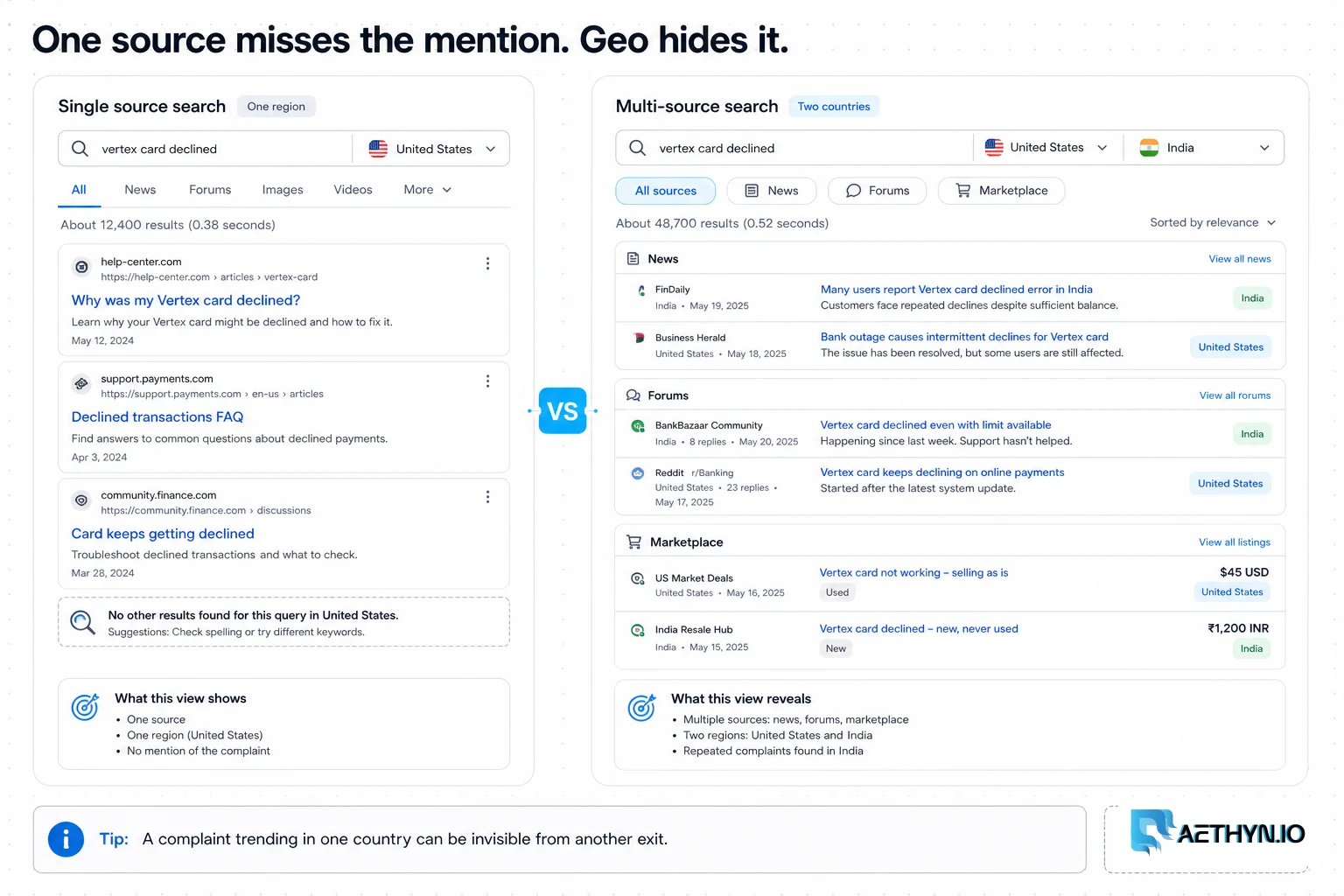
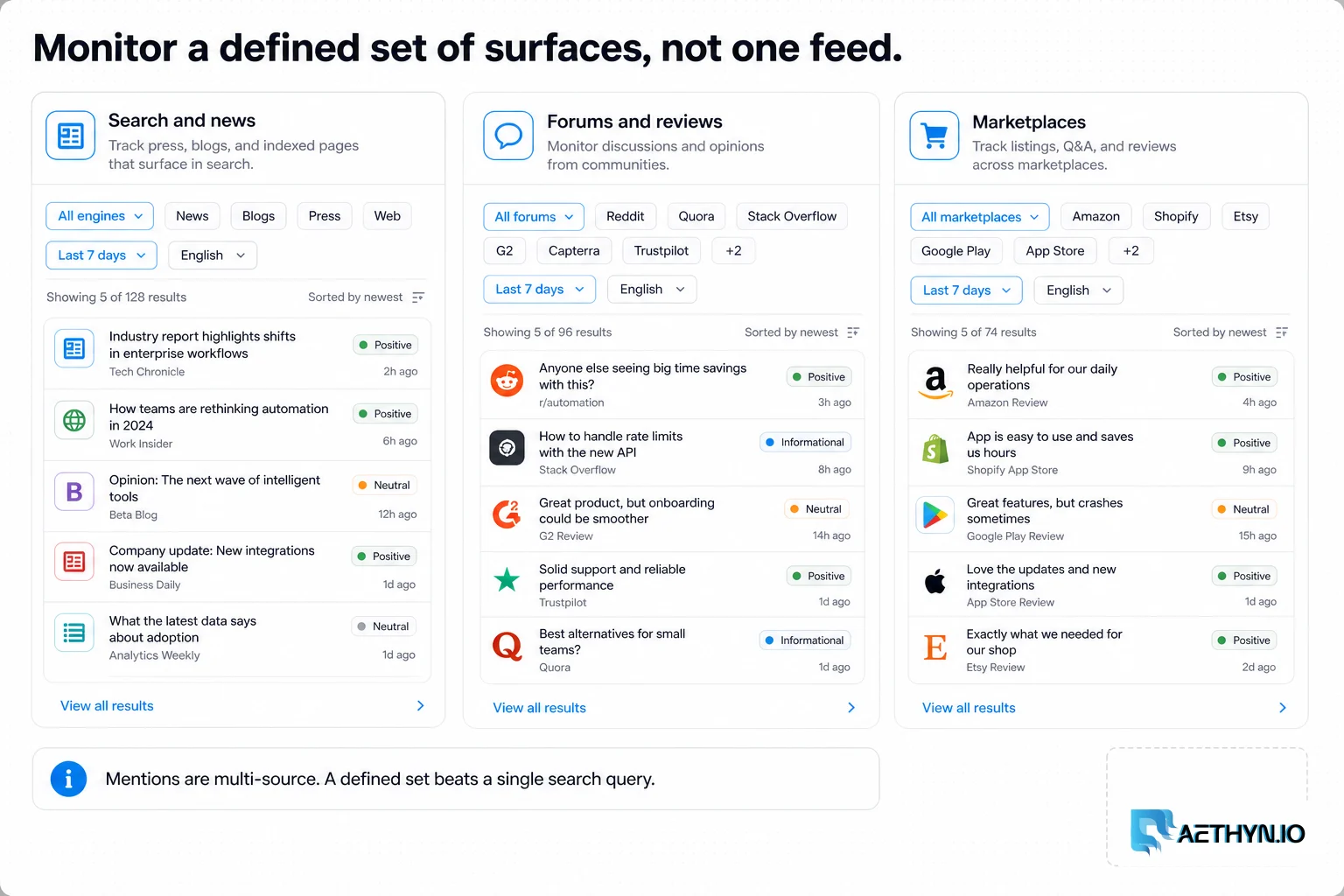
Brand, PR, and trust teams need to know when and where their brand is mentioned — for reputation, crisis response, and competitive intelligence. The hard parts aren't fetching one page: mentions are spread across many source types, results are localized (a complaint trending in one country may be invisible elsewhere), the same story gets syndicated into dozens of near-identical copies, and high-frequency polling across sources gets throttled. Effective monitoring is geo-aware multi-source collection plus disciplined dedup, classification, and alerting.
Why this failure mode happens
Brand conversation is inherently distributed and localized: search and news personalize and regionalize results, forums and marketplaces vary by locale, and syndication multiplies a single story across many domains. So a single-source, single-region monitor misses most mentions and double-counts the rest. And because timely monitoring means frequent polling across many sources, it needs geo-accurate IPs and rotation to stay reliable rather than getting blocked.
Challenges that make this hard to automate
- Covering many source types, not just one search engine
- Localized results that hide region-specific mentions
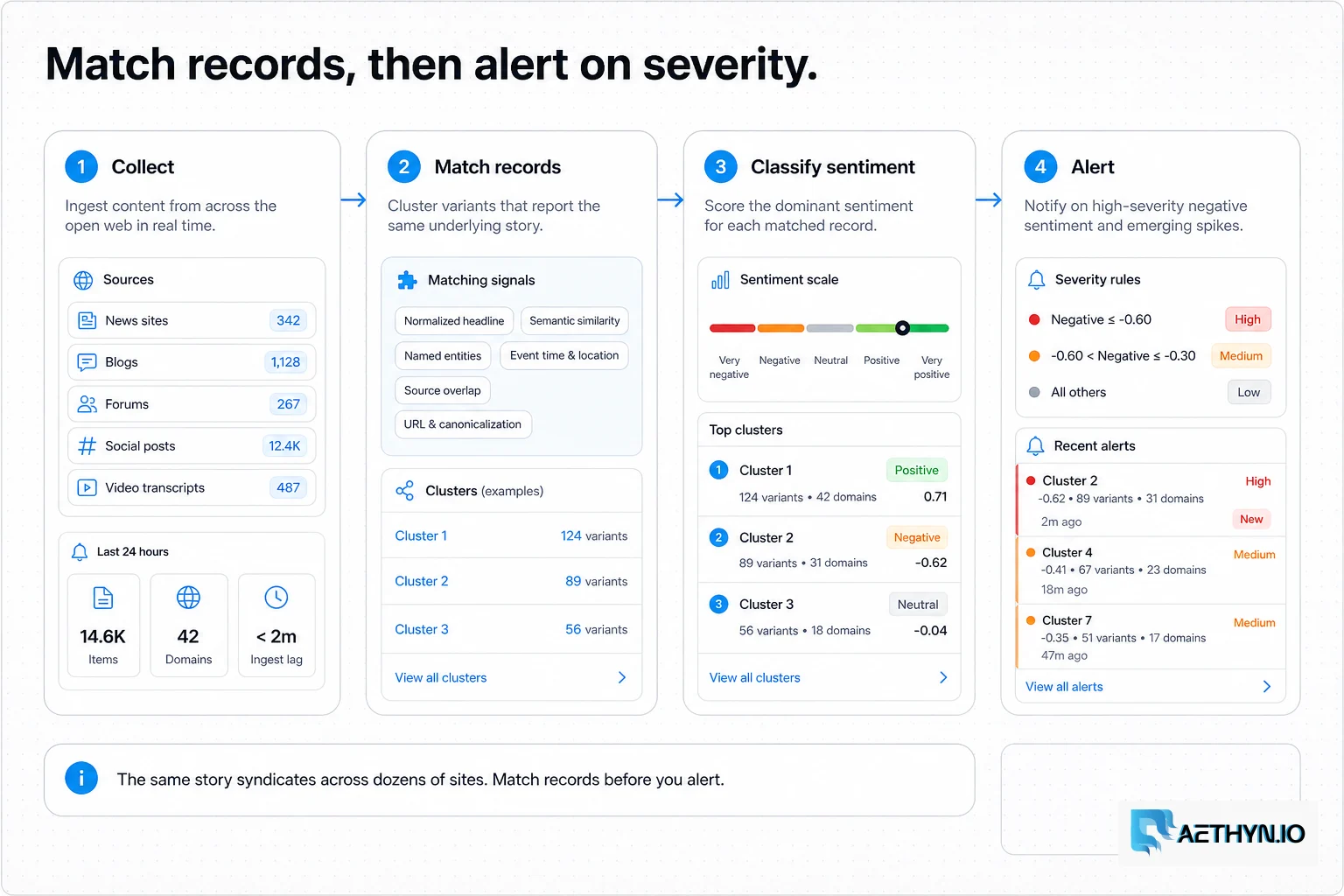
- Syndicated near-duplicates flooding the feed
- Classifying sentiment and severity to prioritize
- Frequent multi-source polling getting throttled
Approaches that usually fail
- Watching one search engine — misses forums, reviews, marketplaces
- Single-region collection — blind to geo-specific mentions
- No dedup — the same syndicated story counted dozens of times
- Manual searching — not timely or comprehensive
When residential proxies fix this — and when they cannot
Residential IPs across the regions you care about return the localized search, news, and forum results a real user there sees, so geo-specific mentions surface. A rotating pool lets you poll many sources frequently — for timely detection — without any single IP hitting velocity limits, which is what makes near-real-time multi-source monitoring practical.
How Aethyn residential proxies help here
Brand monitoring is geo-sensitive, multi-source, and high-frequency. Aethyn supplies geography and volume through the username.
- Country/city targeting to catch region-specific mentions
- Elite high-trust IPs for search/social sources that defend aggressively
- A large rotating pool for frequent polling across many sources
- Sticky sessions for multi-step source flows when needed
- Per-byte billing so continuous monitoring stays cost-predictable
How to implement this with residential proxies
- 1
Define your sources and query set
List the source types that matter for your brand — search engines, news, key forums, review sites, marketplaces — and the queries (brand names, products, misspellings, executives, competitors). This explicit map is what makes coverage measurable instead of accidental.
Python (source/query map)SOURCES = ["google_news", "google_web", "reddit", "review_site", "marketplace"] QUERIES = ["aethyn", "aethyn proxies", "aethyn.io", "aethy proxies"] # incl. misspellings REGIONS = [("us","new york"), ("gb","london"), ("de","berlin")] def jobs(): for src in SOURCES: for q in QUERIES: for region in REGIONS: yield {"source": src, "query": q, "region": region}Field note: Include common misspellings, handles, and product names — a lot of real conversation never uses your exact brand string, and competitors are mentioned in the same breath, which is valuable competitive signal.
- 2
Collect each source from the right region
Run each job through a residential IP in its region so localized results surface. Geo-accurate collection is what lets you catch, say, a complaint trending on a German forum that a US-only monitor would never see.
Python (geo collection)import requests def fetch(job): country, city = job["region"] user = f"aethyn-XXXXX-country-{country}-city-{city.replace(' ','')}" proxy = f"http://{user}:PASSWORD@proxy.aethyn.io:5499" # source-specific URL/params built per job["source"] return requests.get(job["url"], proxies={"https": proxy}, timeout=30).textField note: Keep a consistent region set so mention counts are comparable region-over-region and week-over-week. Ad-hoc geography makes trend lines meaningless.
- 3
Normalize and dedupe across sources
Extract a normalized record per mention (source, url, title, snippet, date) and dedupe aggressively — syndicated stories appear as dozens of near-identical copies. Hash normalized title+snippet for exact dupes and use near-duplicate detection (e.g. MinHash) to collapse reworded syndications into one event.
Python (near-dup collapse)import re, hashlib def norm(text): return re.sub(r"\s+", " ", re.sub(r"[^a-z0-9 ]", " ", text.lower())).strip() def exact_key(m): return hashlib.sha256(norm(m["title"] + " " + m["snippet"]).encode()).hexdigest() # Group exact keys first; then run MinHash/LSH on the survivors to # collapse reworded syndications of the same story into one event.Field note: Cluster by story, not by URL. Leadership wants 'one negative story picked up by 40 outlets', not 40 separate alerts — collapsing syndication into a single event with a reach count is far more actionable.
- 4
Classify sentiment and severity
Tag each mention cluster with sentiment and a severity estimate (reach of the source, negativity, whether it's spreading). This is what turns a firehose into prioritized signal so the team responds to a brewing crisis, not to routine positive chatter.
Field note: Weight severity by source reach and velocity, not just sentiment. A mildly negative post going viral matters more than a scathing one on a dead forum — velocity is the early-warning signal for crises.
- 5
Alert on what matters and trend over time
Fire alerts on high-severity or rapidly-spreading clusters, route the rest to a dashboard, and store everything as a time series so you can trend mention volume, sentiment, and share of voice. Poll on a cadence through rotating IPs and back off on any source that challenges.
Best practices that keep scrapers reliable
- Define an explicit source and query set, including misspellings
- Collect each source from its relevant region for localized mentions
- Dedupe exact, then collapse near-duplicate syndications by story
- Weight severity by source reach and velocity, not just sentiment
- Alert on high-severity/spreading clusters; dashboard the rest
- Store a time series for sentiment and share-of-voice trends
Common mistakes that burn proxy budget
- Monitoring one search engine and missing forums/reviews/marketplaces
- Collecting from one region and missing geo-specific mentions
- No dedup, so syndicated stories flood the feed
- Alerting on volume instead of severity and velocity
- Counting URLs instead of clustering by story
- High-frequency single-IP polling that gets throttled