

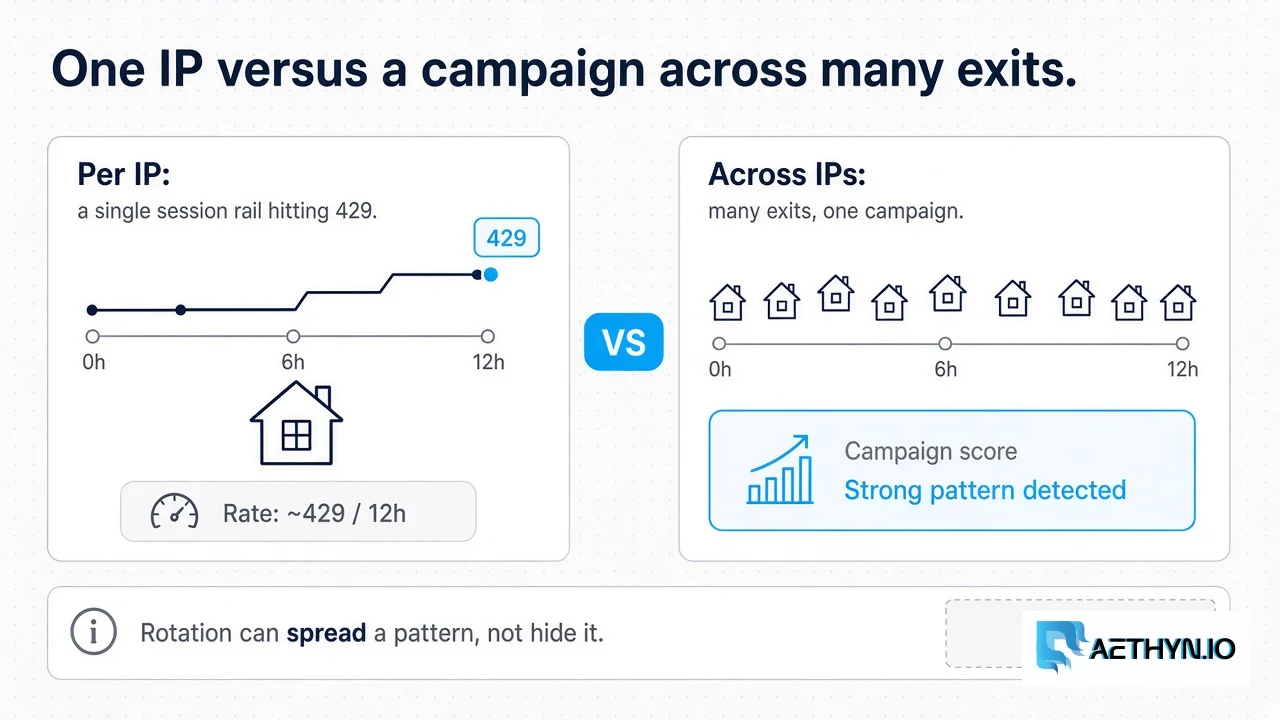
Cloudflare Adaptive Intelligence is a bot-management engine that scores campaigns across IP addresses and time windows, not the request rate of a single exit. Cloudflare announced it on 31 August 2026 as continuous retraining plus multi-window detection aimed at low-and-slow residential-proxy operations — the exact pattern teams adopted after per-IP 429s became the obvious failure.
That sentence is the unit this page exists to make operational. The older mental model was: one IP gets hot, you rotate, the next household is clean. Adaptive Intelligence treats correlated timing, TLS, and navigation across many households as one campaign. Spreading the same Playwright script, the same inter-arrival distribution, and the same JA3 across a thousand exits can raise a campaign score even when no single address is over a classic rate limit. Reddit’s “rotation just spreads the damage” reports are that failure mode in the wild.
This is not a bypass guide. Aethyn sells residential proxies — Premium for country and volume, Elite for city, ISP, and harder anti-bot — and HTTP and SOCKS5 share that pool. Proxies change which class of IP is asking. They do not skip Turnstile, Managed Challenge, or error 1020. The architecture of Cloudflare’s layers still lives in scrape behind Cloudflare. This post is what changed when the edge started scoring the shape of the crawl, not only the heat of one address.
Campaign score is not a per-IP 429
A per-IP rate limit is easy to reason about. You see 429, you back off that exit, you pick another. Adaptive Intelligence adds a second axis: do these exits, over minutes and hours, look like one automated program? Multi-window detection means a polite crawl that would have survived a five-minute bucket can still light up when the same cadence repeats across the pool for an afternoon.
The practical consequence is that rotation is no longer the cheap fix. If every context launches with the same TLS stack, the same HTTP/2 frame order, the same navigation graph (goto listing, goto listing, goto listing), and the same 800 ms wait, you have given the model a signature that survives IP changes. A datacenter JA3 on a residential IP is an especially loud version of that signature — you paid for a household ASN and then presented a Python handshake. Read TLS fingerprinting for scrapers before you add more exits.
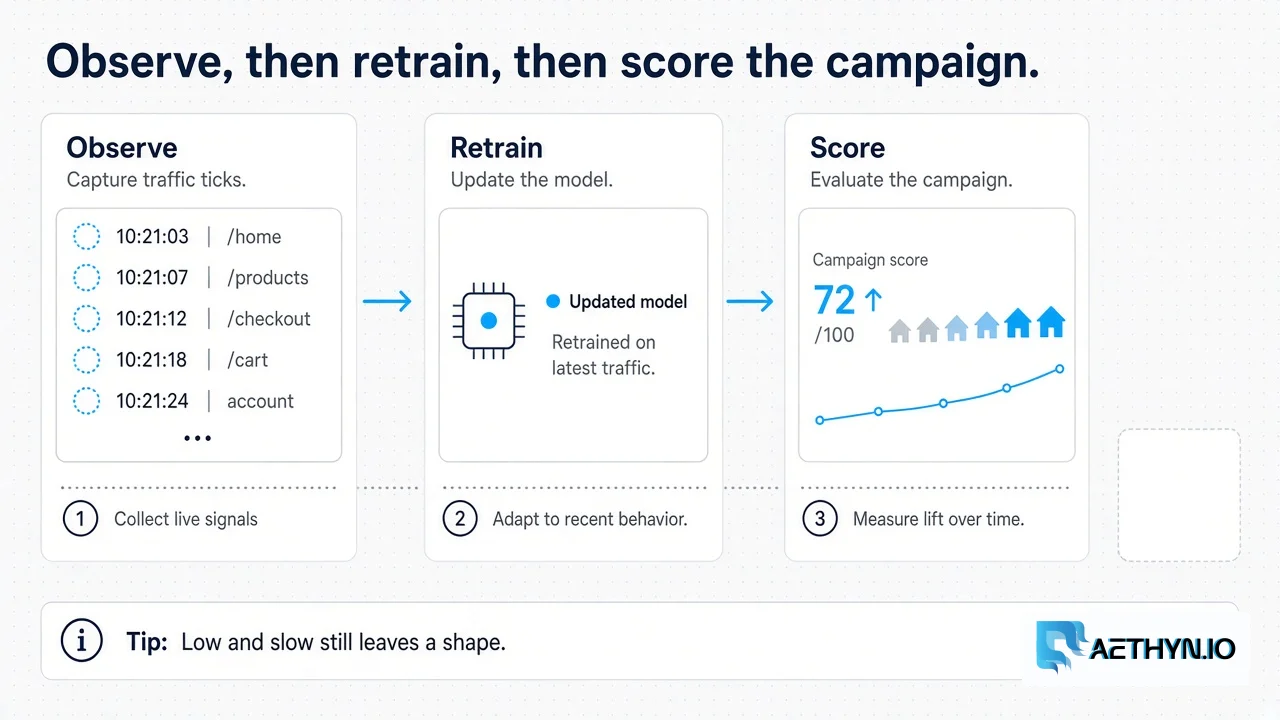
What still works is the unglamorous stack: a real browser (or a TLS impersonation client that actually matches Chrome), a residential exit in the right country, human-paced navigation, and classification so you do not retry a 1020 as if it were a 429. Volume without those is how you teach the model your campaign faster.
Classify the wall before you “fix” it
Teams lose days treating every Cloudflare HTML page as one problem. Adaptive Intelligence does not replace the old documents; it changes how often you see them and whether rotation moves you off them.
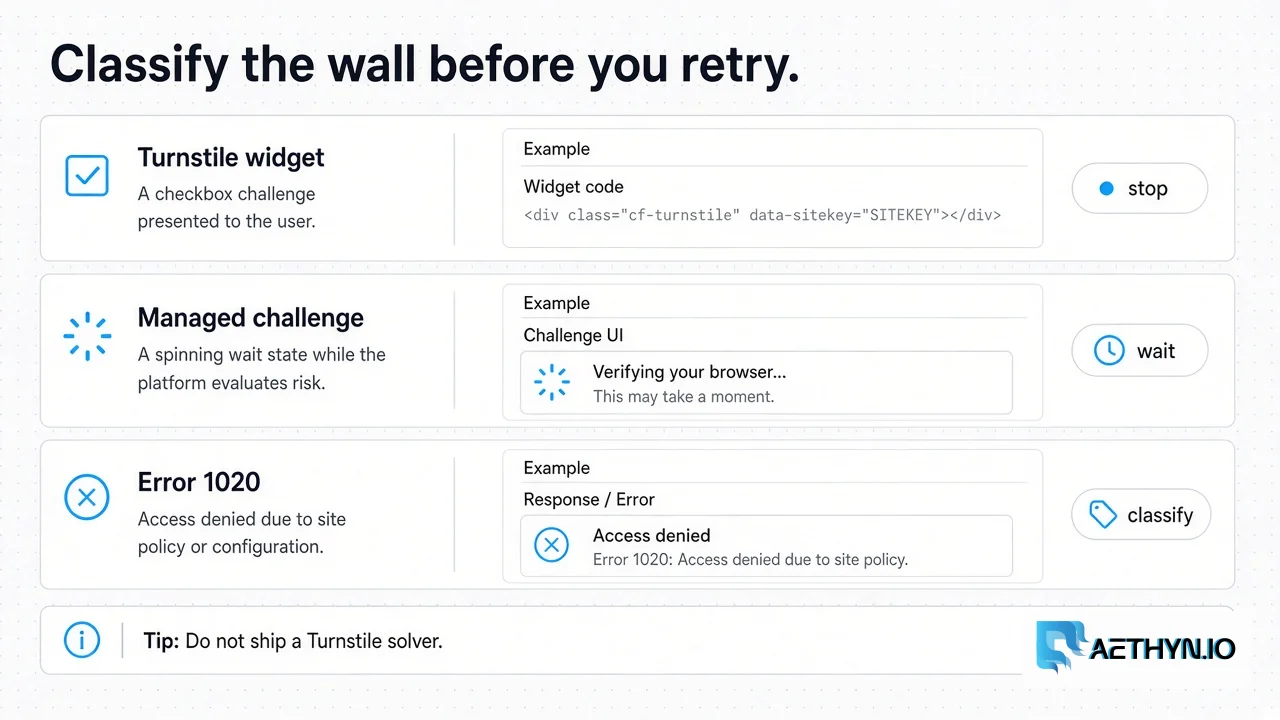
Turnstile is an interactive widget in the page. Do not ship a Turnstile solver — it is out of scope here and a terms problem besides. If you are staring at a checkbox or a widget iframe, stop the worker and decide whether this URL is in-scope public data you can collect another way — different path, published API, or not at all.
Managed Challenge is Cloudflare’s interstitial. A real browser can sometimes complete it; requests cannot. If you pass, you receive cf_clearance bound to that IP and fingerprint. The Playwright residential guide is how you put a household exit on the context so you are not solving (or failing) from a cloud ASN.
Error 1020 is access denied at the edge. The origin never saw you. Reputation, a WAF rule, or a prior campaign score can all land here. Retrying from the same class of client “a bit slower” does not negotiate a 1020. The dedicated playbook is fix Cloudflare error 1020.
If you cannot name which of those three you have, you do not have a fix yet. You have a retry loop that Adaptive Intelligence is happy to watch.
Sticky still exists for one reason: the cookie
cf_clearance is earned by a browser on an IP. Rotate immediately after a challenge and the next household does not inherit that cookie. Sticky sessions hold a rotating-pool residential IP for 1–1440 minutes (default 30) so the identity that passed can finish the listing walk. That is the same rule it was in 2025. Adaptive Intelligence does not retire it; it makes burning clearance more expensive because the replacement exit is scored as part of the same campaign if you keep the same cadence.
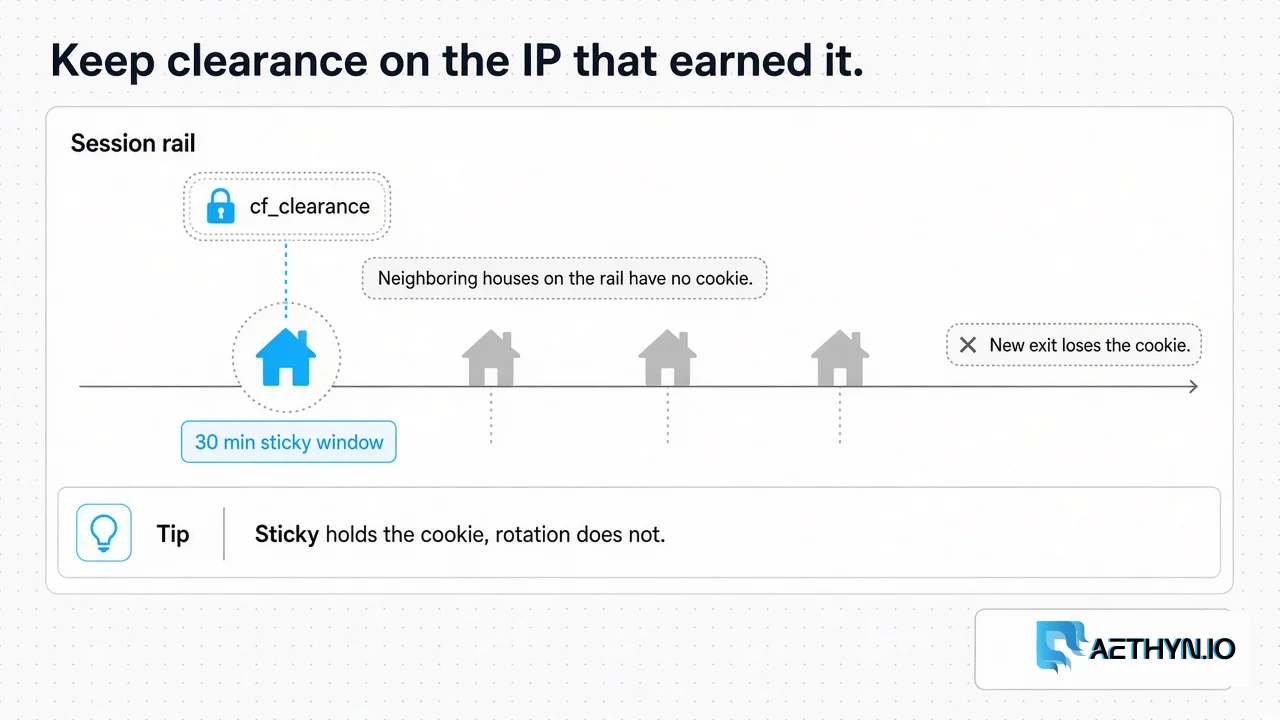
Encode lifetime on the username (-session-job42-lifetime-30). Same session id inside the window reuses the exit. When the walk is done, drop the session and take a new one for the next job — do not pin one IP for a morning of unrelated URLs. This is not a static, dedicated, or ISP product. Elite ISP suffixes are targeting, not a different SKU.
Premium vs Elite, and what proxies do not do
Premium (proxy.aethyn.io:2099 HTTP / 1099 SOCKS5) is country targeting and volume. Use it when the site is orange-clouded but not aggressively challenging cheap residential, and when you already have a browser or curl_cffi in front. Elite (:5499 / :3499) is the higher-reputation pool plus city and ISP when the target already challenges Premium or when geography is finer than a country. HTTP and SOCKS5 are the same pool; pick the client, not a second product.
Neither tier skips Adaptive Intelligence. A residential ASN changes the prior Cloudflare puts on the connection. JA4-coherent TLS and a real page lifecycle still have to look like a browser. If your client is requests and your plan is “more Elite IPs,” you are buying campaign signal.
Pair this post with:
- Scrape behind Cloudflare — DNS, TLS, HTTP/2, JS challenge, behavior
- Cloudflare error 1020 — edge deny, not a timeout
- TLS fingerprinting (JA3/JA4) — why the handshake is a name
- Playwright + residential — credentials in fields, one context per identity
If the widget in front of you is HUMAN / PerimeterX press-and-hold rather than Turnstile, that is a different vendor: PerimeterX press-and-hold. Classify first.
Common questions about this article
What is Cloudflare Adaptive Intelligence?
Does rotating residential IPs bypass Adaptive Intelligence?
Should I still use sticky sessions?
Turnstile, Managed Challenge, or 1020 — which do I have?
Premium or Elite against Cloudflare?
Guides, integrations & docs
Continue reading
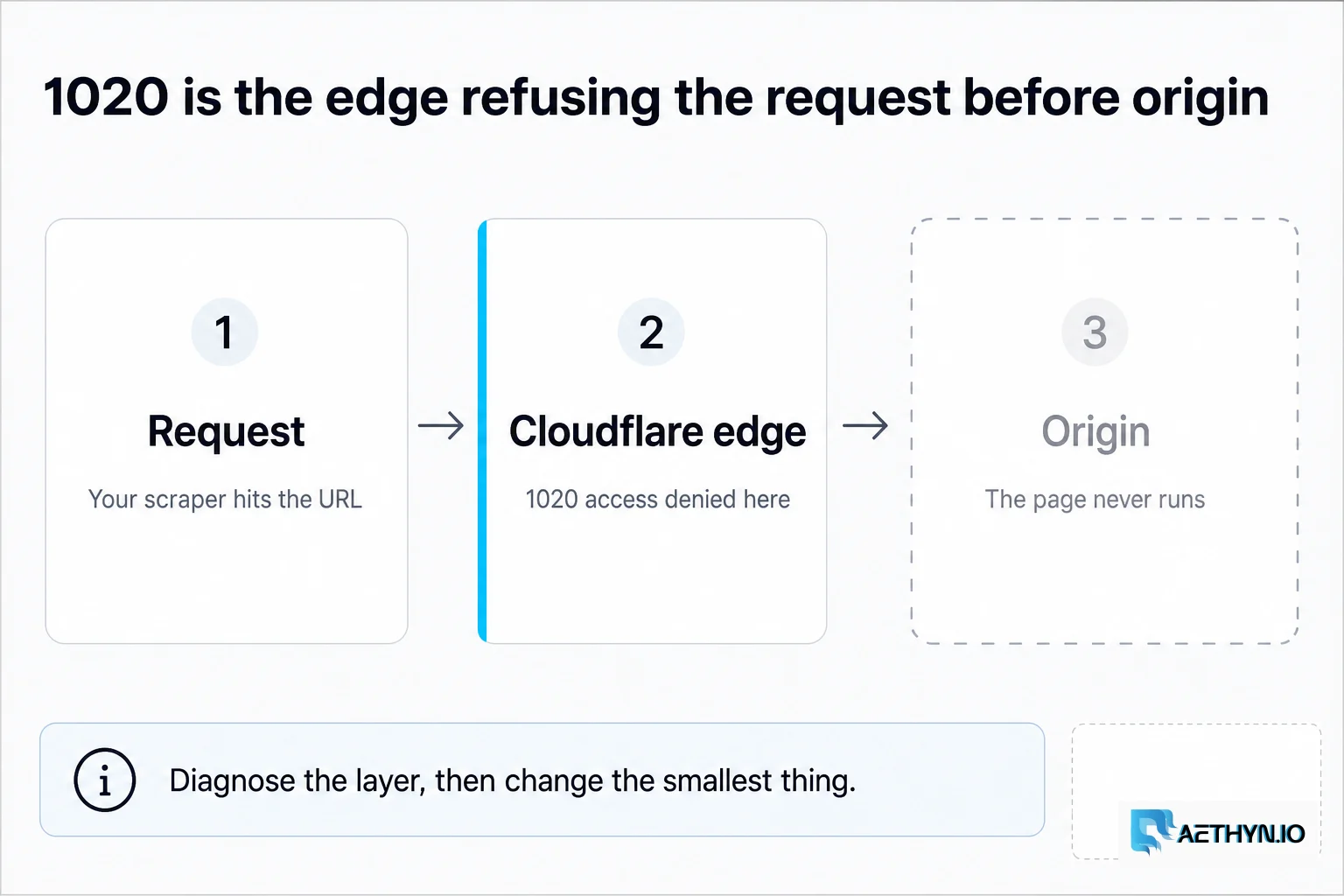
How to Fix Cloudflare Error 1020 When Scraping (2026 Guide)
Cloudflare error 1020 means access denied — usually IP reputation, TLS fingerprint, or behavior scoring. Here is a practical fix order for scrapers in 2026.
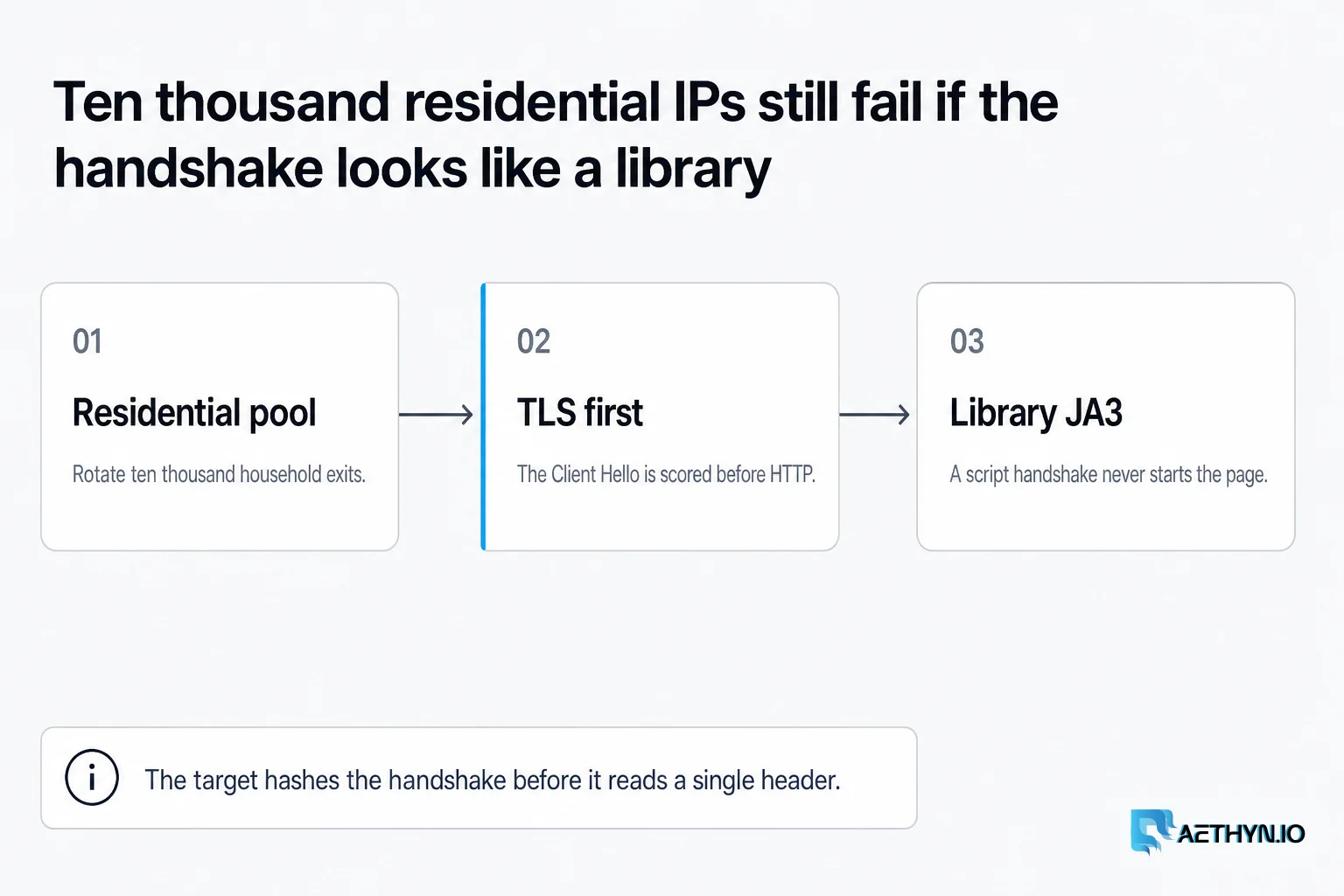
TLS Fingerprinting (JA3/JA4) Explained for Web Scrapers (2026)
Anti-bot systems fingerprint your TLS handshake — not just your IP. Learn what JA3 and JA4 measure and how to pass checks with browsers and Elite residential proxies.
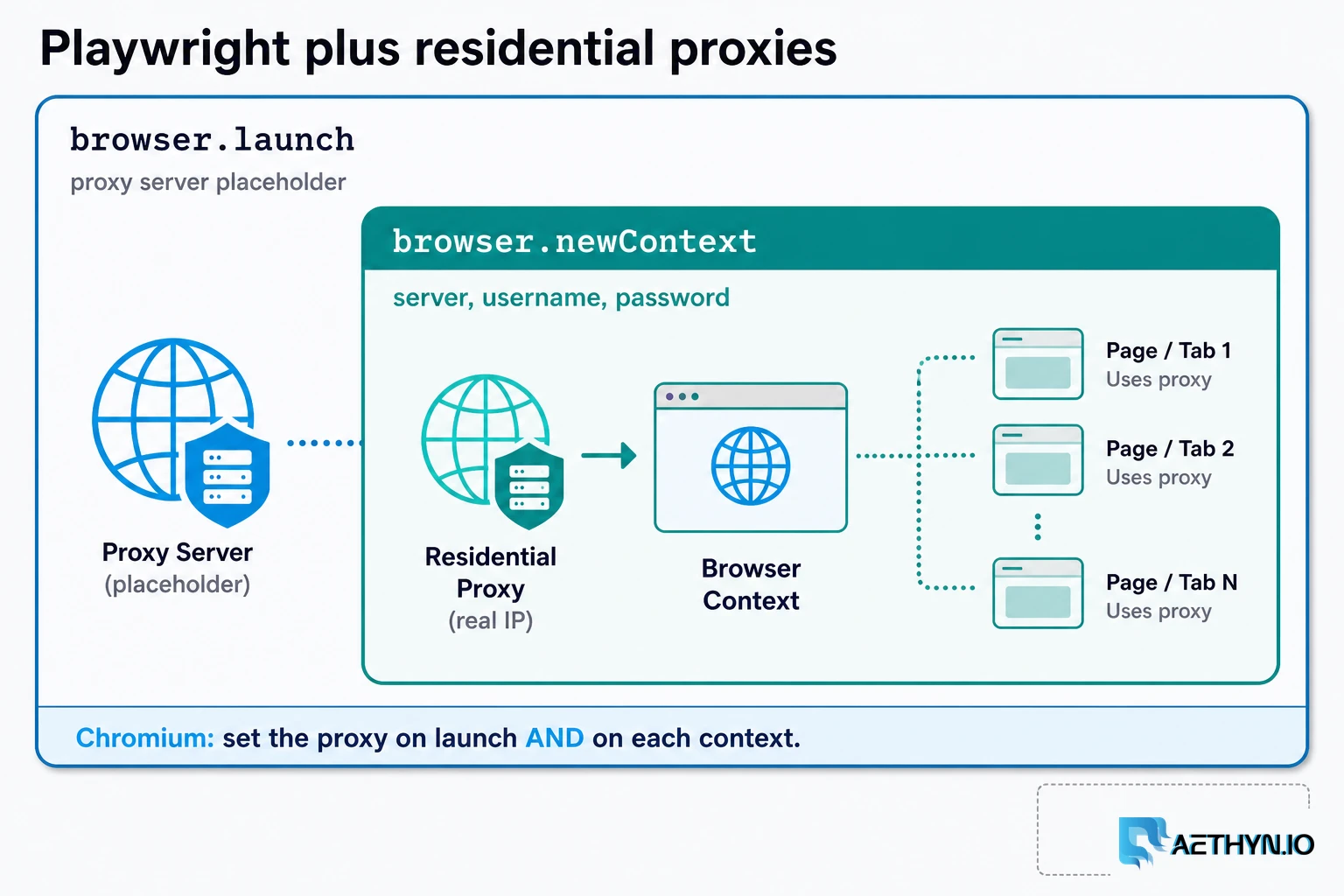
How to Use Residential Proxies with Playwright (2026)
A Playwright residential proxy is a browser context whose traffic exits through an ISP-assigned household IP. Credentials go in fields, rotation is a new context, and locale must match the exit.
Residential exits, not a Cloudflare skip
Elite when the target scores reputation. Premium when volume is the constraint. Sticky holds cf_clearance on the IP that earned it. Free trial, no card.